
Food App Development: Key Features, Benefits and Trends for Modern Businesses
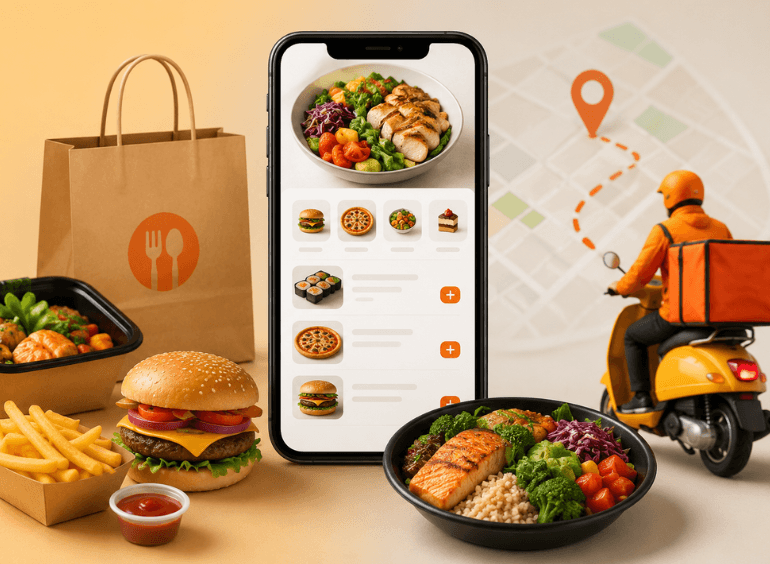
Ordering food has become one of those everyday activities that can be finished before you have even decided what to watch on TV.
A customer in Hyderabad can search for biryani, compare restaurants, check reviews and place an order in a few minutes. In Bengaluru, office-goers can arrange breakfast before reaching work. In Mumbai, late-night food orders can arrive at the doorstep without a phone call to the restaurant.
This convenience has changed more than the way people order meals. It has influenced how restaurants manage menus, communicate with customers, handle payments, coordinate deliveries and understand demand.
For food businesses, having a digital presence is no longer simply about being visible online. The bigger question is whether technology can make the entire food-ordering journey easier and more reliable.
That is where food apps come in.
Why Food Apps Matter to Modern Food Businesses
The Indian food market is incredibly diverse. Customer preferences can change from one neighbourhood to another, and eating habits vary considerably across cities.
Someone in Hyderabad may have a strong preference for biryani and regional cuisine. A customer in Bengaluru may prioritise healthy breakfast options during a busy workday. In Mumbai, convenience can become especially important for late-night orders.
Food apps provide a way for businesses to serve these different preferences while keeping the ordering process organised.
Instead of depending entirely on walk-in customers or phone orders, restaurants can give customers access to menus, offers, ordering, payments and delivery information through their phones.
The app becomes a digital extension of the restaurant.
Online Food Ordering Is the Foundation
At the heart of most food apps is online ordering.
Customers expect to browse a menu, select dishes, customise their order and complete payment without unnecessary steps.
A good ordering system should provide accurate dish descriptions, prices, availability and customisation choices.
For example, a customer ordering dosa may want extra chutney, while someone ordering biryani may want to select a particular portion size or add-on.
Small details like these can make the difference between a smooth order and a frustrating one.
Restaurants also benefit because digital orders can be sent directly into their operational workflow rather than relying on handwritten notes or phone conversations.
Restaurant Discovery Has Become Part of the Experience
Customers do not always open a food app knowing exactly what they want.
Sometimes they simply want to explore.
They may search for restaurants near them, browse cuisines, look at photographs, read reviews or check delivery times.
This gives smaller restaurants an opportunity to reach customers who may never have noticed their physical location.
A restaurant tucked away on a side street in Chennai can potentially attract customers from several kilometres away if its digital presence is strong and its food receives good feedback.
Discovery, therefore, has become almost as important as ordering.
Digital Menus Make Updating Easier
Menus change frequently.
Restaurants introduce seasonal dishes, adjust prices, add special combinations or temporarily remove items based on ingredient availability.
A printed menu cannot adapt instantly.
Digital menus can.
Restaurants can update dishes, descriptions, photographs and prices without reprinting anything. They can also highlight popular meals or create special sections for festive offerings.
During occasions such as Diwali, Eid, Pongal or Christmas, restaurants can introduce relevant menus and meal combinations without changing their entire ordering system.
For customers, accurate menus also reduce disappointment. Nobody likes selecting a dish only to discover after placing the order that it is unavailable.
Personalised Recommendations Can Improve Discovery
Food choices are often driven by habit.
A customer who regularly orders vegetarian meals may prefer seeing vegetarian options first. Someone who frequently orders desserts may be interested in new sweets or bakery items.
Food apps can use previous purchases and browsing behaviour to provide relevant recommendations.
AI-powered systems can analyse these patterns on a larger scale. They can identify combinations customers frequently purchase, popular dishes at particular times and products that may appeal to specific customer groups.
For instance, an app might recommend breakfast items in the morning and lighter meals later in the evening.
The important thing is to keep recommendations useful.
If every screen turns into a sales pitch, customers will quickly lose interest.
Digital Payments Keep Checkout Simple
India’s widespread adoption of UPI has made digital payments a natural part of food ordering.
Customers can pay without carrying cash, while restaurants receive transaction records that are easier to track.
Food apps can support UPI along with other payment methods, depending on the business model.
A smooth checkout should minimise unnecessary steps. The customer has already chosen the food; there is little reason to make payment complicated.
This becomes particularly important for repeat customers, where saved addresses and preferred payment options can make ordering considerably faster.
Real-Time Delivery Tracking Builds Confidence
Once the food leaves the restaurant, customers want to know what is happening.
Is the order being prepared? Has it been picked up? Is the delivery partner nearby?
Real-time tracking and automated status updates can answer these questions without requiring customers to call the restaurant.
For a customer waiting for dinner in Mumbai, even a simple update saying that the order has been picked up can reduce uncertainty.
Restaurants also gain visibility into the delivery process, which can help them identify recurring delays.
Loyalty Programmes Encourage Repeat Business
Getting the first order is only part of the challenge.
Restaurants ultimately want customers to return.
Food apps can support loyalty programmes through points, rewards, special offers and personalised benefits.
A customer who orders regularly could receive a relevant reward instead of a generic discount.
This is especially useful in a price-sensitive market such as India, where discounts can influence purchase decisions but excessive discounting can hurt profitability.
The smarter approach is to understand what actually encourages repeat orders.
Sometimes it is a discount. Sometimes it is convenience. Sometimes it is simply consistently good food.
Table Reservations Bring Apps Into Dine-In Experiences
Food apps are not restricted to delivery.
Customers can also use them to discover restaurants, view menus and reserve tables.
For popular restaurants, digital reservations can make weekend dining easier for customers and help restaurants manage expected demand.
A family planning a dinner in Bengaluru, for instance, can check availability before travelling across the city.
This creates a more connected dining journey, beginning with discovery and ending at the restaurant table.
Customer Reviews Have Real Influence
Before trying a new restaurant, many customers check ratings and reviews.
They want to know whether the food is good, portions are reasonable and delivery is reliable.
Reviews can be valuable for restaurants as well.
If customers repeatedly mention that food arrives cold, packaging leaks or a particular dish is too salty, those comments provide useful signals.
Restaurants should not treat every negative review as a personal attack. Looking for recurring patterns is far more useful.
In the digital food market, customer feedback is visible — and it can influence future orders.
Cloud Kitchens Depend Heavily on Digital Ordering
Cloud kitchens have become an important part of India’s food ecosystem.
Without the same dependence on dine-in space, these businesses can focus heavily on takeaway and delivery. Some may operate multiple concepts from one kitchen, each targeting a different audience.
Food apps make it possible for such businesses to reach customers without needing a prominent high-street location.
But the competition is intense.
Customers can compare menus, prices and ratings in seconds. A cloud kitchen therefore has to get the basics right: food quality, consistency, packaging, pricing and delivery.
An app may generate the order, but the food determines whether the customer returns.
Subscription-Based Food Services Are Gaining Attention
Food subscriptions are another area where apps can make a difference.
Meal plans for office workers, healthy-food subscriptions, regular breakfast services and monthly meal packages can all be managed digitally.
Consider a professional in Hyderabad who wants lunch delivered every weekday. A subscription can remove the need to place an order manually each day.
For food businesses, subscriptions can provide more predictable demand, making it easier to plan ingredients and kitchen capacity.
But the trade-off is clear: customers expect consistency.
If the quality or delivery experience changes frequently, subscriptions lose their appeal.
Data Helps Restaurants Understand Their Customers
Food apps generate information that restaurants can use to make better decisions.
They can identify:
- Popular dishes
- Peak ordering periods
- Repeat customers
- Frequently cancelled orders
- Popular delivery areas
- Successful promotions
- Items customers view but rarely purchase
Suppose a restaurant discovers that biryani orders peak on Friday evenings. It can prepare ingredients and staff accordingly.
Or perhaps a restaurant sees strong demand from one neighbourhood but frequent delivery delays there. That may point to a delivery scheduling or capacity problem.
Data becomes valuable when it helps answer practical questions.
Food App Development Is About the Entire Experience
This is where Food App Development needs to be viewed as more than simply creating a mobile ordering interface.
A modern food app may need to connect customers, restaurants, kitchens, delivery partners, payment systems and business analytics.
A typical order could involve several steps:
A customer places an order. The restaurant receives it. The kitchen begins preparation. A delivery partner is assigned. The food is picked up. The customer receives tracking updates. Payment is confirmed and the order is completed.
For the customer, this should feel like one simple process.
Behind the scenes, however, several systems may be working together.
That integration is what makes the digital experience useful.
Delivery Partners Need Practical Tools Too
Delivery partners operate in the real world, where traffic, weather and unclear addresses can quickly disrupt schedules.
A useful food app ecosystem can give delivery partners accurate pickup locations, customer details, navigation and order status.
If a restaurant is running late, the delivery partner should be informed. If a customer is unavailable, the delivery status should be updated.
The technology should reduce confusion rather than add to it.
This is particularly important in busy cities such as Bengaluru and Mumbai, where traffic can turn a short trip into a much longer journey.
The Benefits Come With Challenges
Food apps bring convenience, but they also create new responsibilities.
Restaurants need to manage digital orders alongside dine-in customers. High order volumes can put pressure on kitchens. Discounts can affect margins. Delivery delays can lead to negative reviews.
Customers may also face issues such as incorrect orders, changing delivery times or additional charges.
There are data and privacy considerations too. Businesses handling customer information and payment details need to take security seriously.
So, an app should not be treated as a magic solution.
If the kitchen is disorganised or food quality is inconsistent, technology cannot hide the problem for long.
What Businesses Should Prioritise
A restaurant does not need every possible feature from day one.
It is better to focus on the things customers actually need.
Start with an accurate digital menu and simple ordering process. Make payment straightforward. Provide reliable delivery information. Add loyalty features once there is enough customer activity to make them useful.
Restaurants should also monitor customer feedback and operational data regularly.
If customers repeatedly abandon orders during checkout, investigate why.
If one dish receives many complaints, look at the preparation process.
If delivery times are consistently longer during a particular period, adjust staffing or order capacity.
The best digital strategy is often the one that solves everyday problems quietly.
The Future Will Be More Personal and Connected
Food apps are likely to become increasingly intelligent.
AI can help restaurants predict demand, personalise recommendations and identify purchasing patterns. Automated systems can improve order management, while better data integration can connect kitchens, delivery operations and customer platforms.
At the same time, Indian food preferences will continue to shape the market.
A customer in Hyderabad may want biryani for dinner. Someone in Bengaluru may look for a quick breakfast before work. A Mumbai customer may place a late-night order after returning home.
There is no single Indian customer.
Regional cuisines, budgets, festivals, family habits and lifestyles all influence food choices.
The most useful technology will be flexible enough to accommodate these differences.
Food Apps Are Changing More Than Ordering
The growth of food apps represents a broader change in the restaurant industry.
Customers can discover restaurants without physically passing them. Digital menus can change instantly. UPI makes payment simple. Personalised recommendations help customers decide. Loyalty programmes encourage repeat business. Delivery tracking creates transparency, while data helps restaurants understand what their customers actually want.
Cloud kitchens and subscription-based food businesses are also finding new ways to operate because digital ordering has become so accessible.
But the fundamentals remain unchanged.
Food still has to taste good. Prices still need to feel reasonable. Delivery still needs to be reliable. Customers still want value for money.
Technology simply changes how these expectations are delivered.
From breakfast orders in Bengaluru to biryani in Hyderabad and late-night meals in Mumbai, food apps are becoming part of everyday life. The businesses that benefit most will not necessarily be those with the most features, but those that use technology thoughtfully to make eating and ordering simpler, more reliable and more relevant to the customer.