
The Future of Food Delivery: How Mobile Apps Are Changing Customer Experiences
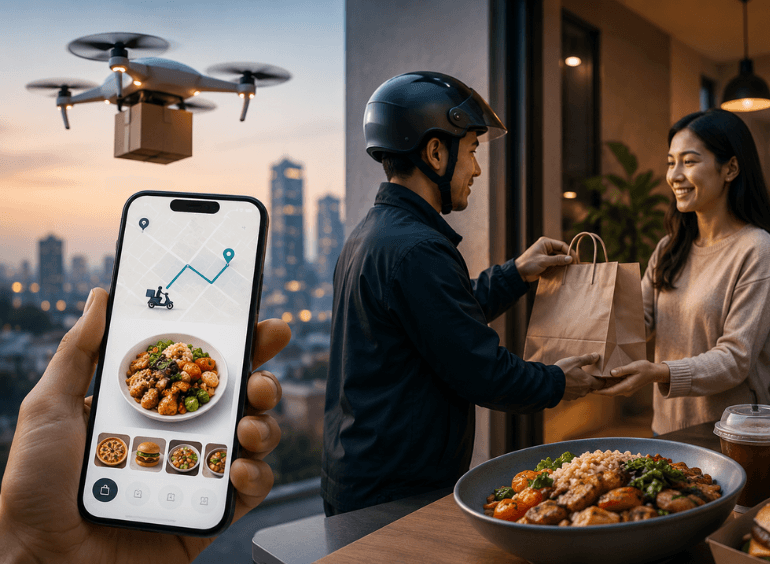
It is a familiar scene in many Indian cities. You have had a long day at work, there is nothing ready in the kitchen, and cooking feels like one task too many. So you open your phone, search for something you like, compare a few options, place an order and wait.
In Hyderabad, it might be biryani. In Bengaluru, it could be idli and dosa before an early office meeting. In Mumbai, it might be a late-night meal after getting home from work.
What has changed is not simply the ability to order food online. Mobile apps have gradually changed the entire customer experience — from discovering restaurants and comparing menus to making payments, tracking deliveries and receiving personalised recommendations.
As food delivery becomes a bigger part of everyday life, the industry is moving towards experiences that are faster, more convenient and increasingly tailored to individual customers.
The Customer Journey Starts Before the Order
Food delivery used to begin when a customer called a restaurant.
Today, it often starts much earlier.
A customer may discover a restaurant through an app, search by cuisine, look at photographs, read reviews and compare prices before deciding what to order.
This has made restaurant discovery a major part of the digital food experience.
A small restaurant in Chennai that may not have much visibility from the main road can reach customers across nearby neighbourhoods through digital platforms. A cloud kitchen operating from a less prominent location can also find an audience without depending entirely on foot traffic.
The smartphone has effectively become a new kind of restaurant guide.
Digital Menus Give Customers More Choice
Printed menus have one major limitation: they are difficult to change.
Digital menus are much more flexible.
Restaurants can add seasonal dishes, update prices, mark items as unavailable and highlight popular combinations. Customers can also see photographs, descriptions and customisation options before ordering.
This is particularly useful in a diverse market like India.
A customer looking for South Indian breakfast in Bengaluru may want to compare dosa, idli, vada and pongal. Someone ordering biryani in Hyderabad may want to choose between different portion sizes or add-ons.
The more accurate and informative the menu, the easier the decision becomes.
And when customers know exactly what they are ordering, restaurants have fewer opportunities for misunderstandings.
Personalisation Is Changing What Appears on the Screen
Food is deeply personal.
People have favourite dishes, preferred cuisines and ordering habits. Some customers want vegetarian meals, others regularly look for high-protein options, while many simply want something familiar after a tiring day.
Mobile apps can learn from previous purchases and browsing behaviour to make recommendations more relevant.
AI-powered recommendation systems can go beyond simple purchase history. They can identify patterns based on time, location, preferences and previous interactions.
Someone who regularly orders breakfast around 8 AM might see breakfast options first. A customer who frequently orders desserts may discover new additions from restaurants they already like.
The trick is not to make everything personalised.
It is to make the experience feel genuinely useful.
Convenience Remains the Biggest Attraction
The popularity of food delivery in India is closely tied to convenience.
Customers can order from home, the office, a hotel or almost anywhere else. They do not have to travel to the restaurant, wait for a table or spend time preparing a meal.
For busy professionals in Bengaluru, this can be especially useful during working days.
For families in Hyderabad, ordering can be a convenient option when everyone wants something different.
For people working late in Mumbai, food delivery can solve a very practical problem: finding dinner when most of the day is already over.
Convenience sounds simple, but it is powerful.
UPI Has Made Food Payments Easier
The growth of digital payments has also changed food ordering.
UPI has become part of everyday spending for millions of Indians, and customers increasingly expect payment to be quick and straightforward.
A food app can integrate familiar payment options so customers do not have to go through a complicated checkout process.
For restaurants, digital payments also create easier-to-manage transaction records.
This becomes particularly useful when an app is handling a large number of orders every day.
The less effort required between choosing a dish and completing payment, the better the overall experience.
Customers Want to Track Their Food
Waiting for food is easier when you know what is happening.
Modern food apps can provide updates throughout the journey — from order confirmation and preparation to pickup and delivery.
For a customer waiting for dinner in Mumbai, seeing that the food has been picked up can provide some reassurance.
Tracking also gives customers a better idea of when they need to be available.
For restaurants, these systems can highlight operational problems. If orders are repeatedly taking too long to leave the kitchen, the restaurant has useful information to investigate.
Visibility, in this case, benefits everyone.
Discounts Still Influence Indian Customers
There is no denying that discounts matter.
Indian consumers are often price-conscious and willing to compare offers before placing an order. A good combination deal or limited-time offer can encourage someone to try a restaurant they have never ordered from before.
But there is a catch.
If customers become dependent on heavy discounts, restaurants can find it difficult to maintain healthy margins.
The future of food delivery is therefore unlikely to be based entirely on who offers the biggest discount.
Restaurants will need to balance price with food quality, convenience, reliability and customer loyalty.
After all, a cheap meal that disappoints is not really a bargain.
Loyalty Programmes Can Build Long-Term Relationships
A first order is useful, but repeat customers are often more valuable.
Food apps can support loyalty programmes through points, rewards, exclusive menu items and personalised offers.
For example, someone who regularly orders from the same restaurant may receive a reward based on their actual purchasing behaviour rather than a generic promotion.
This creates an opportunity for restaurants to move beyond one-time transactions.
A loyalty programme can also provide insights into customer behaviour — which dishes customers reorder, how frequently they visit and what kinds of offers influence their choices.
The objective should be to reward loyalty, not simply encourage more discount hunting.
Table Reservations Are Part of the Digital Food Experience
Food apps are also changing the way people dine in restaurants.
Customers can discover a restaurant, explore its menu, check reviews and reserve a table before leaving home.
This is especially useful for busy restaurants during weekends or festive periods.
A family planning dinner in Chennai, for example, can check availability before travelling across the city.
For restaurants, advance reservations can make it easier to manage seating and anticipate demand.
The customer journey now begins well before the first dish reaches the table.
Customer Reviews Carry Considerable Weight
When trying a new restaurant, customers often want reassurance.
Reviews provide it.
A customer may check ratings, photographs and comments before deciding whether a restaurant is worth trying.
This has made customer feedback an important part of the food business.
Reviews can also help restaurants identify recurring problems. If customers repeatedly complain about packaging, portion sizes or food temperature, the business has a clear signal that something needs attention.
Not every review will be accurate, of course. But patterns are difficult to ignore.
Cloud Kitchens Are Changing the Restaurant Model
Cloud kitchens have grown alongside app-based food ordering.
Without relying heavily on dine-in space, these businesses can focus on preparing food for delivery and takeaway. Some operate multiple brands or cuisines from a single kitchen.
For customers, this means more choices.
For entrepreneurs, it can provide a different way to enter the food business without opening a traditional restaurant in a high-footfall location.
However, competition is intense.
Customers can compare several restaurants within minutes, so food quality, consistency, pricing and delivery experience all become important.
A cloud kitchen may not have a dining room, but it still needs to create a memorable customer experience.
Quick Commerce Is Raising the Bar
The growth of quick commerce is also influencing food delivery expectations.
Customers are becoming increasingly comfortable with short delivery windows for certain food and grocery categories.
That does not mean every restaurant needs to promise extremely fast delivery.
In fact, unrealistic delivery promises can create more frustration than satisfaction.
A customer is likely to prefer a reliable 45-minute delivery over a promised 20-minute delivery that takes an hour.
The future will therefore be about balancing speed with reliability.
Subscription-Based Food Services Offer Predictability
Food subscriptions are another emerging part of the market.
Meal plans for office workers, healthy-food subscriptions, regular breakfast services and monthly meal packages can all be managed through mobile applications.
For a professional in Hyderabad who wants lunch delivered every weekday, a subscription can remove the hassle of ordering manually every day.
Restaurants benefit from more predictable demand, which can help with ingredient purchasing and kitchen planning.
But subscriptions come with a simple expectation: consistency.
Customers who pay regularly expect the same level of service throughout the subscription period.
Food App Development Is Becoming More Connected
This is where Food App Development plays a broader role.
The modern food app is not simply a digital menu with an ordering button. It may connect customers with restaurants, kitchens, delivery partners, payment systems, loyalty programmes, reservations and business analytics.
A single order can involve many steps.
The customer places the order. The restaurant receives it. The kitchen starts preparing it. A delivery partner is assigned. The order is picked up. Tracking information reaches the customer. Payment is confirmed and the delivery is completed.
When these systems communicate properly, the customer experiences a simple process even though several operations are happening behind the scenes.
That connection is becoming increasingly important as food businesses grow.
Data Will Shape the Next Stage of Food Delivery
Every order tells a story.
Restaurants can learn which dishes are popular, what time customers order, where demand is strongest and which promotions actually work.
This information can help businesses make better decisions.
A restaurant might discover that its breakfast menu performs strongly on weekdays but not weekends. Another may find that a particular dish is popular in one neighbourhood but rarely ordered elsewhere.
Such insights can influence menu planning, staffing, inventory and delivery operations.
AI can take this further by helping businesses forecast demand and identify patterns across large datasets.
But data is useful only when it leads to sensible action.
The Challenges Should Not Be Ignored
Food delivery may look effortless from the customer’s side, but the industry faces plenty of challenges.
Restaurants have to manage food costs, packaging, staff and delivery-related expenses. High order volumes can put pressure on kitchens during peak periods.
Delivery partners face traffic, weather, parking problems and difficult addresses.
Customers may encounter delayed orders, incorrect items or food that does not arrive in the expected condition.
There are also concerns around customer data and privacy.
Technology can improve operations, but it cannot fix poor food quality or unrealistic business practices.
The fundamentals still matter.
What Restaurants Can Do to Adapt
Restaurants do not need to chase every new trend.
Instead, they can focus on improving the parts of the customer journey that cause the most friction.
Keep the digital menu accurate. Make ordering simple. Offer familiar payment options. Provide realistic delivery estimates. Listen to customer feedback.
Use data to understand which dishes sell and when demand rises.
Personalise recommendations where they genuinely help, but do not overwhelm customers with notifications.
And perhaps most importantly, make sure the digital experience reflects the quality of the food.
A beautifully designed app cannot rescue a disappointing meal.
What the Future May Look Like
Food delivery is moving towards greater personalisation and convenience.
AI-powered recommendations could make discovery more relevant. Predictive analytics could help restaurants prepare for demand spikes. Better tracking could make delivery times more predictable. Subscription models could become more common for customers with regular meal requirements.
Cloud kitchens may continue experimenting with different cuisines and business models, while quick-commerce services will keep influencing expectations around speed.
Yet Indian food culture will remain wonderfully unpredictable.
People will continue ordering biryani in Hyderabad, dosa in Bengaluru, seafood in Chennai and late-night meals in Mumbai. Festivals, family gatherings, office routines and regional preferences will continue to shape what people eat.
Technology has to work around those realities.
The Future Is About the Experience, Not Just the Delivery
The future of food delivery is not simply about getting a meal from a restaurant to a customer’s doorstep faster.
It is about everything that happens around that delivery.
Finding the right restaurant should be easy. Menus should be accurate. Recommendations should be useful. Payments should be simple. Delivery should be transparent. Loyalty programmes should provide genuine value. Restaurants should have enough information to understand their customers and improve operations.
Mobile apps are bringing these pieces together.
From a breakfast order in Bengaluru to a biryani delivery in Hyderabad or a late-night meal in Mumbai, the customer increasingly expects food ordering to fit naturally into everyday life.
And that is where the industry is heading: towards food experiences that are more connected, more personal and more convenient, without losing sight of the one thing that ultimately matters most — good food.