
How Logistics Apps Are Transforming the Future of Delivery and Supply Chains
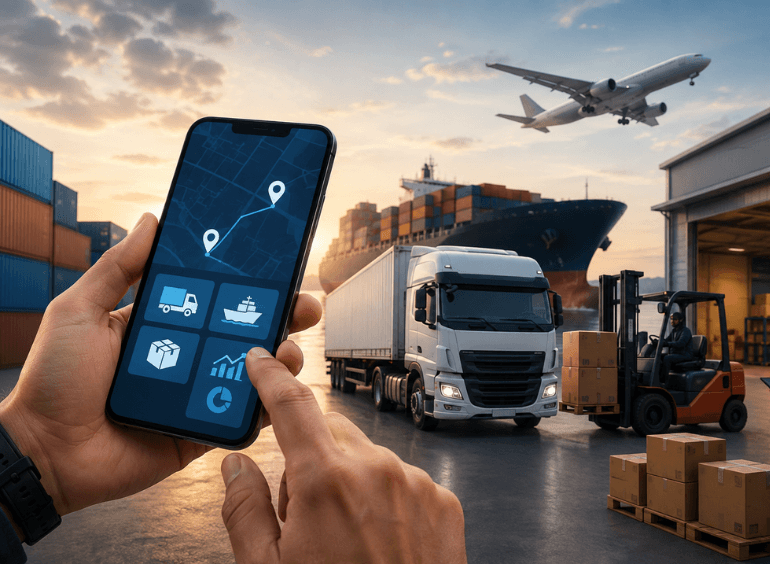
A delivery vehicle leaving a warehouse in Hyderabad may have several stops to complete before the end of the day. The driver has to deal with traffic, changing delivery addresses, fuel costs, customer calls and, sometimes, the familiar problem of reaching a location that is technically correct but somehow still difficult to find.
Multiply that by thousands of vehicles moving across Indian cities every day, and the scale of the logistics challenge becomes clear.
India’s logistics sector is changing rapidly, and mobile technology is playing an increasingly important role in that transformation. Logistics apps are helping businesses track vehicles, plan routes, communicate with drivers, monitor deliveries and give customers better visibility into where their orders are.
The impact goes beyond faster deliveries. When the right information reaches the right person at the right time, an otherwise complicated supply chain can become considerably easier to manage.
Why Logistics in India Needs Better Digital Tools
India’s logistics network operates across a vast and diverse geography. A shipment may travel from a manufacturing unit in Gujarat to a warehouse in Mumbai, move to a distribution centre and finally reach a customer’s doorstep in Pune.
At every stage, there are opportunities for delays and inefficiencies.
Urban traffic is one obvious challenge. A route that looks straightforward on a map can take much longer during peak hours in Bengaluru or Mumbai. Road conditions, weather, construction work and local restrictions can also affect delivery schedules.
Then there are operational issues such as vehicle utilisation, fuel consumption, driver availability, warehouse coordination and incomplete delivery information.
Managing all of this through phone calls, spreadsheets and paper records can quickly become messy. This is where mobile logistics applications can make a practical difference.
GPS Tracking Brings Visibility to the Road
One of the most useful features of a logistics app is real-time GPS tracking.
Fleet managers can see where vehicles are, whether they are following planned routes and how far they are from their next destination. Businesses can also use this information to provide customers with more accurate delivery updates.
For a fleet operator in Chennai, for example, knowing that a vehicle has been delayed in traffic gives the operations team an opportunity to adjust the delivery schedule rather than discovering the problem hours later.
The same information can help identify recurring delays. If a particular route regularly takes longer than expected, the business can investigate whether a different route, delivery window or vehicle allocation would work better.
Visibility does not eliminate delays, but it makes them easier to manage.
Route Optimisation Can Save Time and Fuel
A driver delivering ten orders across a city does not necessarily need to follow the same route every day.
Traffic conditions, delivery priorities and the location of individual customers can change. Route optimisation tools can analyse these factors and suggest a more efficient sequence of stops.
Consider a delivery executive handling orders across Hyderabad. Visiting locations in Secunderabad, Banjara Hills, Kukatpally and Gachibowli in a poorly planned sequence can mean unnecessary kilometres and lost time. A better route can reduce both.
The benefits can add up across a large fleet.
Fewer kilometres can mean lower fuel consumption, while shorter travel times can allow drivers to complete more deliveries during the same working day.
For logistics businesses operating on tight margins, these seemingly small improvements matter.
Delivery Tracking Has Become a Customer Expectation
Customers today are used to tracking everything from food orders to high-value parcels.
Instead of simply receiving a message saying that an order has been dispatched, they increasingly expect information such as when the package left the warehouse, where it is currently located and when it is likely to arrive.
Logistics apps can connect this information with customer-facing notifications.
A customer in Delhi might receive an alert when the parcel leaves the distribution centre and another when the delivery executive is approaching. If a delay occurs, the customer can be informed rather than left wondering what happened.
Good communication can make a delayed delivery less frustrating.
People are generally more understanding when they know what is happening.
Digital Proof of Delivery Reduces Paperwork
Traditional delivery processes often depend on signatures, paper receipts and manual data entry.
Mobile apps can replace much of this with digital proof of delivery.
A driver may confirm a delivery using a digital signature, photograph, OTP or other approved verification method. The information can then be stored electronically and made available to the business.
This can reduce paperwork and make it easier to resolve disputes.
For example, if a business customer claims that an order was never received, the logistics team can check the digital delivery record instead of searching through stacks of documents.
It is a simple change, but one that can save considerable administrative effort when thousands of deliveries are involved.
Drivers Become More Connected to the Operation
A logistics system is only as effective as the people using it.
Drivers and delivery partners are at the centre of the operation, and mobile apps can give them access to information that was previously communicated through phone calls or printed instructions.
An app can show:
- Delivery addresses and order details
- Optimised routes
- Customer instructions
- Delivery priorities
- Status updates
- Proof-of-delivery options
- Navigation support
- Communication tools
Drivers can also report issues from the road. If a vehicle breaks down or a customer is unavailable, the operations team can receive an update immediately.
This reduces the familiar back-and-forth of “Where are you?” and “What happened to this delivery?”
Warehouse Teams Also Benefit
Logistics does not begin when a vehicle leaves the warehouse.
A poorly coordinated warehouse can create delays throughout the delivery chain. Orders need to be picked, packed, labelled and assigned to the correct vehicles.
Mobile applications can help warehouse teams update inventory, scan packages and confirm that shipments are ready for dispatch.
When warehouse information is connected to transport operations, teams can coordinate vehicle departures more efficiently.
For a distribution centre handling hundreds or thousands of orders a day, even a small reduction in loading or processing time can have a noticeable impact.
Inventory Visibility Helps Businesses Plan Better
A logistics app can also provide businesses with better visibility into inventory movement.
Companies can see when goods leave a warehouse, when they reach a distribution point and when they are delivered. This creates a clearer picture of where stock is at different stages of the supply chain.
For businesses operating across multiple locations, this information can be particularly useful.
A retailer may discover that one warehouse has excess stock while another location is running short. Rather than relying on delayed reports, managers can use current information to make replenishment decisions.
This is where logistics moves from simply transporting goods to actively supporting business planning.
Fleet Management Is Becoming More Data-Driven
Managing a fleet involves much more than knowing where vehicles are.
Businesses need to consider vehicle utilisation, maintenance, fuel consumption, driver behaviour and operating costs.
Logistics apps can collect data that helps fleet managers identify patterns.
For instance, if a particular vehicle consistently consumes more fuel than comparable vehicles, it may need maintenance. If a driver regularly spends excessive time waiting at certain locations, the delivery process may need to be reviewed.
Data can also help businesses decide when vehicles should be serviced and how efficiently their fleet is being used.
Instead of making decisions based purely on assumptions, managers can work with actual operational information.
Fuel Costs Make Efficiency Even More Important
Fuel is a major operating expense for many logistics businesses.
Every unnecessary kilometre adds to the cost of delivering goods. Poor route planning, idle time and inefficient vehicle utilisation can quietly eat into margins.
GPS data and route optimisation can help businesses understand where fuel is being consumed and identify opportunities to improve efficiency.
For a fleet moving between Bengaluru and surrounding industrial areas, for example, better route planning may help reduce avoidable detours and waiting time.
The idea is not complicated: when you save kilometres across hundreds of vehicles, the savings can become significant.
Automated Notifications Reduce Communication Gaps
Logistics involves many moving parts, and communication gaps can cause problems.
Automated notifications can keep everyone informed without requiring operations teams to make dozens of phone calls.
Customers can receive delivery updates. Drivers can receive changes to delivery instructions. Warehouse teams can be informed about dispatch schedules. Businesses can receive alerts about failed deliveries or delays.
This creates a common flow of information.
Of course, automation should not replace human communication completely. When something unusual happens — an address problem, vehicle breakdown or urgent shipment — people still need to step in.
Technology should handle routine communication so teams have more time to deal with exceptions.
Payments Can Also Become Part of the Process
For certain logistics operations, mobile apps can simplify payment collection.
Delivery partners may be able to record cash collections, confirm digital payments or update payment status immediately after completing an order.
This reduces the delay between a transaction taking place and the business receiving confirmation.
For businesses handling cash-on-delivery shipments, accurate digital records can be especially important because they help reconcile collections and identify discrepancies more quickly.
Logistics App Development Is About Connecting the Pieces
The real value of Logistics app development lies in connecting different parts of the operation rather than creating another standalone application.
A useful system may need to connect drivers, fleet managers, warehouse teams, customers and business administrators. GPS tracking, inventory systems, order management, payments and notifications may all need to exchange information.
That means the focus should be on the workflow behind the app.
A visually attractive interface will not solve much if the driver receives outdated delivery information or the warehouse cannot see current order status.
The technology has to reflect how logistics actually works on the ground.
What Logistics Businesses Should Prioritise
Businesses looking to modernise their logistics operations do not necessarily need every new technology available. They should start with the problems causing the most operational friction.
Improve visibility first. Know where vehicles, shipments and inventory are.
Make routes smarter. Use real-time information instead of relying entirely on fixed routes.
Reduce manual paperwork. Digital delivery records can save time and make information easier to retrieve.
Give drivers useful tools. An app should simplify their work, not create additional steps.
Keep customers informed. Accurate delivery updates build confidence.
Track operational costs. Fuel, vehicle utilisation and delivery times should be measurable.
Use data for decisions. Look for recurring delays, failed deliveries and inefficient routes rather than simply collecting numbers.
The Future of Logistics Will Be More Connected
The logistics industry is moving towards a model where information travels almost as quickly as the goods themselves.
A shipment moving from Mumbai to Hyderabad can generate updates at multiple stages. A fleet manager can monitor vehicles remotely. A warehouse team can prepare the next batch of orders based on live information. A customer can receive a delivery update without calling customer support.
Emerging technologies such as artificial intelligence, predictive analytics, IoT sensors and increasingly automated warehouses are likely to push this transformation further.
But technology alone will not solve every logistics problem.
India’s roads will still be busy. Monsoon weather will still cause disruptions. Drivers will still encounter difficult addresses. Vehicles will still break down from time to time. As the saying goes, the best-laid plans can go awry.
What technology can do is help businesses respond faster when they do.
That is ultimately why logistics apps matter. They bring visibility, communication and decision-making closer to the people who need it. From the warehouse floor to the driver’s phone and finally the customer’s doorstep, mobile technology is helping create a logistics network that is more connected, measurable and responsive.
And in an industry where every minute, kilometre and delivery counts, that can make all the difference.