
The Growing Role of Mobile Apps in Modern Logistics Management
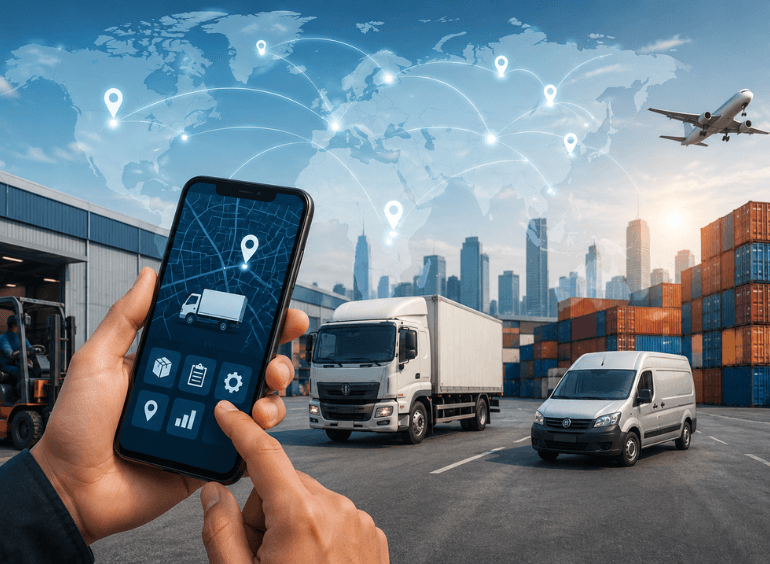
A delivery that arrives on time often looks simple from the customer’s side. An order is placed, a notification appears, and a delivery executive arrives at the doorstep. But behind that seemingly routine experience is a complicated chain of warehouses, vehicles, drivers, inventory, routes and people working against the clock.
In a city such as Hyderabad, a delivery vehicle can lose valuable time in traffic between Gachibowli and Secunderabad. In Bengaluru, a route that looks short on a map may take much longer during peak hours. Mumbai adds its own challenges with congestion and dense urban areas, while deliveries across Delhi can involve long distances and changing traffic conditions.
As India’s logistics sector grows, mobile apps are becoming an important part of managing this complexity. They are helping businesses move from scattered phone calls, paperwork and spreadsheets towards connected, real-time operations.
The change is not only about making deliveries faster. It is about giving everyone involved — from warehouse staff and fleet managers to drivers and customers — better information at the right time.
Why Mobile Technology Matters in Logistics
Logistics has always depended on coordination. A warehouse needs to know when a vehicle will arrive. A driver needs the correct delivery details. A business needs to know where its shipment is. The customer wants to know when the package will reach them.
When these pieces of information are disconnected, small problems can quickly become bigger ones.
A delayed vehicle can hold up several deliveries. An incorrect address can waste a driver’s time. A stock mismatch can result in an order being cancelled after the customer has already been promised delivery.
Mobile apps can bring these activities into a shared digital workflow.
Instead of calling a driver to ask where the vehicle is, a fleet manager can check the location. Instead of maintaining handwritten delivery records, a driver can update the status directly from a smartphone.
It may sound like a small change, but across hundreds or thousands of deliveries, the difference can be substantial.
GPS Tracking Gives Fleet Managers Better Visibility
One of the most practical applications of mobile technology in logistics is GPS tracking.
A logistics app can provide the location of vehicles and delivery personnel in near real time. Fleet managers can monitor active trips, identify delays and understand whether vehicles are following planned routes.
Suppose a vehicle carrying products from a warehouse in Hyderabad is delayed because of unexpected congestion. The operations team can see the delay instead of waiting for the driver to call.
This visibility can also help businesses analyse historical patterns. If a particular route regularly causes delays at certain times, delivery schedules can be adjusted accordingly.
GPS is therefore useful for more than simply watching a moving dot on a map. It creates operational information that can support better planning.
Route Planning Is More Complicated Than It Looks
Delivering five orders across a city is not simply a matter of finding the shortest distance.
Traffic, delivery time windows, vehicle capacity, road restrictions and the sequence of stops all need to be considered.
This is where route optimisation can become valuable.
A delivery executive handling multiple orders in Bengaluru may have customers spread across Whitefield, Indiranagar and Koramangala. A poorly planned sequence can mean unnecessary travel and more time spent in traffic.
Route optimisation tools can analyse delivery locations and other constraints to suggest a more practical route.
The benefit is straightforward: fewer unnecessary kilometres can mean less fuel consumption, shorter delivery times and better vehicle utilisation.
For logistics businesses working with narrow margins, those savings can add up quickly.
Last-Mile Delivery Remains a Major Challenge
The final stretch of a delivery journey is often the most unpredictable.
A truck can travel hundreds of kilometres efficiently and still face difficulties during the last few kilometres. Finding the correct building, contacting a customer, navigating narrow roads or dealing with parking can all affect delivery times.
Indian cities make this particularly challenging because addresses are not always straightforward. A location pin may point to a large apartment complex, commercial building or neighbourhood rather than the exact entrance.
Mobile apps can help drivers access navigation, customer instructions and contact information from one place.
Customers can also provide delivery notes, such as a gate number or landmark, reducing unnecessary calls and confusion.
It does not solve every last-mile problem, but it can make the process considerably smoother.
Real-Time Updates Improve the Customer Experience
Customers today have become used to tracking their orders.
Whether they are waiting for groceries in Chennai or an electronics shipment in Mumbai, they often want to know whether the package has been dispatched, where it is and when it is likely to arrive.
Mobile logistics systems can provide these updates automatically.
Notifications can be triggered when an order is shipped, when it reaches a local distribution centre, when it is out for delivery and when it is successfully delivered.
This reduces uncertainty.
More importantly, it reduces the number of customers contacting support simply to ask, “Where is my order?”
Digital Proof of Delivery Reduces Disputes
Paper-based delivery records can be difficult to manage at scale.
Drivers may have to collect signatures, maintain documents and later submit paperwork to the office. If a customer disputes a delivery, finding the relevant record can take time.
Mobile apps can provide digital proof of delivery through options such as signatures, photographs, OTP verification or delivery confirmation, depending on the nature of the business.
Once recorded, the information can be linked to the relevant order.
For businesses, this creates a clearer audit trail. For customers, it can provide greater confidence that their delivery has been properly recorded.
It is one of those behind-the-scenes improvements that customers may not notice when everything works well — but businesses certainly do.
Warehouse Coordination Becomes More Connected
Logistics does not begin when a delivery vehicle reaches the road.
Warehouses are responsible for receiving goods, storing inventory, picking orders, packing shipments and preparing them for dispatch. Delays at any one of these stages can affect the entire delivery operation.
Mobile applications can help warehouse teams scan packages, update stock levels and mark orders as ready for dispatch.
When warehouse information is connected to transport operations, fleet teams can better understand which shipments are ready and when vehicles need to be allocated.
For a large distribution centre, even saving a few minutes per shipment can have a meaningful impact over an entire working day.
Inventory Visibility Helps Avoid Unpleasant Surprises
Imagine a customer places an order because the system shows an item as available, only to discover later that the warehouse has run out of stock.
This kind of mismatch can damage customer trust.
Connected logistics systems can provide better visibility into inventory movement. Businesses can track when goods enter a warehouse, move between facilities and leave for delivery.
This becomes especially useful for companies managing inventory across multiple locations.
A business operating warehouses in Hyderabad, Bengaluru and Chennai, for example, can use inventory information to understand where stock is available and where replenishment may be needed.
Better visibility can support more informed decisions about storage and distribution.
Drivers Need Technology That Helps, Not Hinders
The driver is one of the most important people in the logistics chain, yet poorly designed technology can make their job harder.
A useful mobile application should give drivers the information they need without forcing them through unnecessary screens.
Essential information may include:
- Delivery addresses
- Customer instructions
- Navigation
- Delivery sequence
- Order details
- Contact information
- Delivery status
- Proof-of-delivery options
- Payment information
- Issue reporting
Drivers should also be able to report problems quickly.
If a vehicle breaks down, a customer is unavailable or an address cannot be located, the operations team should know what happened without relying on a long chain of phone calls.
Payments Can Be Managed Through Mobile Workflows
For logistics operations involving cash-on-delivery or collection-based services, payment management is another area where mobile apps can help.
Drivers can record payments, confirm digital transactions and update collection status from the field.
This allows businesses to reconcile transactions more quickly and reduces dependence on manual records.
With UPI already deeply integrated into everyday commerce in India, mobile-based payment workflows can fit naturally into the delivery process.
Automated Notifications Keep Everyone in the Loop
Logistics involves several stakeholders, and everyone needs different information.
Customers need delivery updates. Drivers need route changes. Warehouse teams need dispatch information. Managers may need alerts about delayed shipments or failed deliveries.
Automated notifications can handle many routine updates.
For example, a customer can receive an alert when an order is out for delivery, while an operations manager can receive a notification if a delivery remains delayed beyond a defined threshold.
This does not mean every situation should be automated. When something unusual happens, human judgement is still essential.
The idea is to automate routine communication so teams can spend more time solving actual problems.
Data Can Help Control Fleet and Fuel Costs
Fuel costs are an important concern for logistics businesses.
Every unnecessary kilometre, prolonged idling period or poorly planned trip adds to operating expenses. Mobile apps can collect information about routes, distances, vehicle usage and delivery times.
Fleet managers can use this data to identify inefficient patterns.
For example, if one vehicle regularly travels significantly more kilometres than others covering similar delivery areas, the business can investigate the reason. It could be poor route planning, uneven order allocation or another operational issue.
The same data can contribute to better maintenance planning and vehicle utilisation.
Instead of relying on gut feeling, businesses can make decisions based on what is actually happening on the road.
Logistics App Development Connects the Entire Workflow
This is where logistics app development becomes more than simply building an application for drivers.
A modern logistics system may need to connect fleet operators, drivers, warehouses, businesses, delivery partners and customers. GPS tracking, order management, inventory information, payments and notifications may all need to work together.
The quality of the experience depends heavily on these connections.
A driver receiving outdated information is a problem. A warehouse not knowing whether an order has been dispatched is a problem. A customer seeing an inaccurate delivery status is also a problem.
The technology therefore needs to be designed around the actual logistics workflow rather than treated as a separate digital layer.
How Logistics Businesses Can Adapt
Businesses do not have to implement every new technology at once. A practical approach is to identify the biggest operational pain points first.
If vehicles are difficult to track, start with GPS visibility.
If drivers are spending too much time finding locations, improve navigation and delivery instructions.
If customers frequently call about delayed orders, introduce better tracking and automated notifications.
If warehouses struggle with stock mismatches, improve inventory visibility.
If fuel costs are rising, analyse routes and vehicle utilisation.
In other words, solve the problem first, then choose the technology.
This approach is often more effective than adopting technology simply because it is the latest trend.
The Future of Logistics Will Be Increasingly Data-Driven
Mobile apps are gradually turning logistics into a more connected and measurable operation.
A fleet manager can monitor vehicles remotely. A warehouse can update shipment status in real time. A driver can receive route changes instantly. A business can see where its goods are. A customer can track an order without making a phone call.
As artificial intelligence, predictive analytics, IoT devices and automation become more accessible, these capabilities are likely to expand further.
AI could help predict delivery delays or demand patterns. IoT sensors can provide information about vehicle conditions or sensitive shipments. Predictive maintenance can help identify potential vehicle problems before they lead to breakdowns.
But technology will not remove every challenge.
Traffic will still be unpredictable. Monsoons will still disrupt roads. A driver will still occasionally struggle to find an apartment entrance. As we say in India, the best-laid plans can go for a toss.
The advantage of connected technology is that businesses can respond faster when things do go wrong.
A More Connected Logistics Ecosystem
The growing role of mobile apps in logistics is ultimately about visibility and coordination.
From a warehouse in Chennai to a delivery route in Bengaluru, from a fleet manager’s dashboard in Mumbai to a customer’s smartphone in Hyderabad, information can now move alongside the physical shipment.
This helps businesses reduce unnecessary delays, improve communication and make more informed decisions.
The future of logistics is not simply about delivering faster. It is about delivering smarter, more reliably and with greater visibility.
For India’s rapidly evolving logistics sector, mobile apps are becoming an important part of that journey — connecting people, vehicles, warehouses and customers in ways that were difficult to imagine only a few years ago.