
Why Food App Development Matters for Restaurants, Cloud Kitchens and Food Businesses
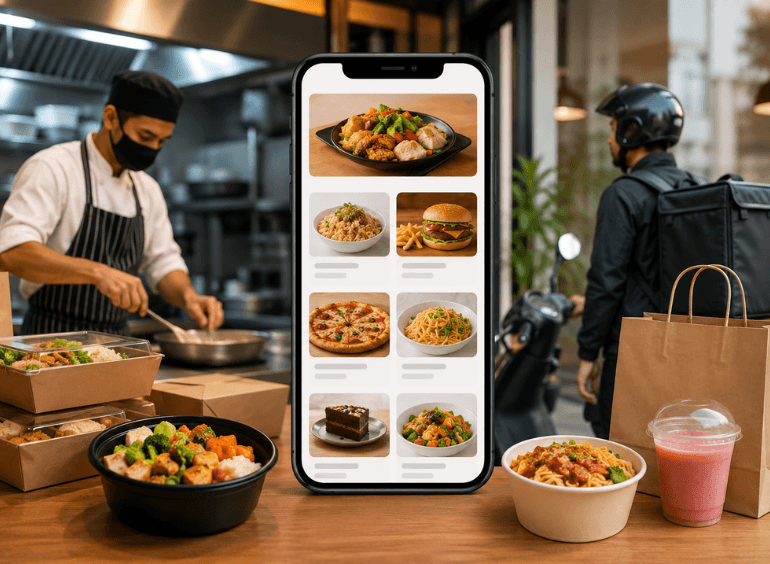
For many Indian customers, deciding what to eat has become almost as easy as unlocking a phone.
A professional in Bengaluru can order breakfast before starting work. A family in Hyderabad can bring biryani home without travelling across the city. In Mumbai, someone returning from a late shift can order dinner at an hour when most restaurants would have stopped taking phone orders.
This change has created a new reality for restaurants and food businesses. Customers are not just looking for good food anymore. They also expect convenient ordering, accurate menus, easy payments, reliable delivery and quick updates.
For restaurants, cloud kitchens and other food businesses, mobile apps can bring many of these expectations together. They can also provide something that traditional ordering methods struggle to offer at scale: a direct, data-driven connection with customers.
Food Ordering Has Become a Digital Habit
The way people discover and order food has changed significantly.
Earlier, customers relied on recommendations from friends, newspaper advertisements, restaurant boards or simply the places they already knew. Today, a customer can open an app and discover dozens of restaurants nearby.
They can compare cuisines, prices, ratings, photographs and delivery times before making a decision.
This has made convenience a major part of the food business.
A customer may be craving biryani but not have a particular restaurant in mind. An app can help narrow the options quickly. Similarly, someone looking for breakfast in Bengaluru can browse restaurants that deliver early rather than calling several establishments.
For businesses, digital discovery has become an important part of attracting new customers.
Digital Menus Give Restaurants More Flexibility
A printed menu is relatively fixed.
A digital menu can change whenever the business needs it to.
Restaurants can introduce seasonal dishes, update prices, remove unavailable items, add photographs or highlight popular meals. They can also offer different combinations depending on the time of day.
A restaurant in Chennai might promote breakfast items in the morning and switch its focus to lunch specials later. A Hyderabad restaurant may highlight family biryani packages during weekends.
Customers benefit from having current information rather than discovering at checkout that a dish is unavailable.
For restaurants, fewer menu-related misunderstandings can also mean fewer cancelled or incorrect orders.
Personalisation Can Make Food Discovery Easier
Food preferences are often based on habit.
Someone who orders vegetarian meals regularly may not want to scroll through pages of meat-based dishes. A customer who frequently orders South Indian breakfast may appreciate seeing those options quickly.
Mobile apps can use previous orders and browsing behaviour to provide personalised recommendations.
AI-powered systems can identify patterns across large volumes of customer activity. They may help restaurants understand which dishes appeal to different customer groups or what people tend to order together.
But there is a fine line.
Customers want relevant suggestions, not constant pushing.
Personalisation works best when it saves time rather than creating more noise.
UPI Has Changed the Payment Experience
Digital payments have become part of everyday Indian life, and food ordering is no exception.
Customers increasingly expect UPI and other familiar payment methods to be available during checkout.
For restaurants, digital payments can also make transaction records easier to manage.
A well-designed ordering process should allow customers to choose their food, confirm the order and complete payment without unnecessary steps.
This becomes even more important when customers are ordering repeatedly.
If a regular customer has to enter the same information every time, the convenience of digital ordering quickly starts to disappear.
Loyalty Programmes Can Bring Customers Back
Getting someone to place their first order is only half the story.
Restaurants need customers to return.
Mobile apps can support loyalty programmes through points, rewards, special offers and personalised benefits.
For example, a customer who orders regularly from the same restaurant could receive a reward based on their actual ordering pattern.
This can be more useful than sending the same discount to every customer.
Price sensitivity remains important in India. Discounts can influence purchasing decisions, particularly when customers have many restaurants to choose from. But relying entirely on discounts is not a sustainable strategy.
Food quality, portion size, reliability and overall value still matter.
A customer may try a restaurant because of a coupon, but they return because the experience was worth it.
Delivery Tracking Has Become an Expectation
Waiting for food becomes frustrating when customers have no idea what is happening.
Mobile apps can provide updates from order confirmation to delivery.
Customers can see when the restaurant accepts the order, when preparation begins, when the food is picked up and when it is approaching their location.
For someone waiting for a late-night order in Mumbai, these updates provide a clearer idea of when the food will arrive.
Restaurants also benefit because delivery information can help identify bottlenecks.
If orders are regularly waiting too long for pickup, the business can investigate whether the issue lies in kitchen preparation, packaging or delivery coordination.
Cloud Kitchens Are Naturally Suited to Digital Ordering
Cloud kitchens have changed the traditional idea of a restaurant.
Instead of relying heavily on dine-in customers, these businesses can focus on preparing food for delivery and takeaway. Some operate several brands or cuisines from the same kitchen.
Mobile apps make this model easier to manage.
Customers can discover a cloud kitchen without ever seeing its physical location. Orders can move directly from the digital platform to the kitchen, while delivery partners receive the necessary information to complete the order.
But this model comes with plenty of competition.
When customers can compare several restaurants in a few minutes, cloud kitchens have to pay attention to food quality, packaging, pricing and consistency.
The digital channel may bring the customer in, but the meal determines whether they come back.
Table Reservations Extend the App Beyond Delivery
Food apps are increasingly becoming useful for dine-in experiences too.
Customers can search for restaurants, browse menus, read reviews and reserve tables from their phones.
This can be particularly useful during weekends, holidays and special occasions.
Imagine a family in Bengaluru planning a dinner. Instead of travelling to a restaurant and hoping for a table, they can check availability beforehand.
For restaurants, advance reservation information can help with seating and staffing.
The digital journey can therefore begin well before the customer enters the restaurant.
Reviews Have Become Part of the Decision
Customers often want some reassurance before trying an unfamiliar restaurant.
Reviews provide that reassurance.
Ratings, photographs and customer comments can influence whether someone places an order or chooses another restaurant.
For food businesses, reviews also provide useful feedback.
If customers repeatedly mention that food arrives cold, portions are small or packaging is poor, those comments may point to a genuine operational issue.
Not every review needs to be taken at face value. But recurring feedback deserves attention.
In a competitive food market, ignoring what customers are saying can be costly.
Subscription Food Services Are Creating New Opportunities
Food subscriptions are another area where mobile applications can be useful.
Businesses can offer regular meal plans for office workers, students, families or health-conscious customers.
A professional in Hyderabad who needs lunch every weekday may find a subscription more convenient than placing a new order each afternoon.
For restaurants, predictable subscriptions can make demand planning easier.
Ingredient purchasing, staffing and kitchen preparation can all benefit from knowing roughly how many meals are expected.
But subscriptions also raise customer expectations. If someone has committed to a monthly plan, consistency becomes especially important.
Data Can Help Restaurants Make Better Decisions
Every order creates information.
Restaurants can learn which dishes are popular, when orders peak, which locations generate demand and which promotions lead to actual purchases.
This can influence everyday decisions.
Suppose a restaurant discovers that breakfast orders are strongest between 8 AM and 10 AM. It can plan staffing and ingredient preparation around that period.
Or perhaps a particular neighbourhood generates a high number of orders but also a high number of delivery complaints. That may indicate a problem with delivery scheduling.
Data is useful when it helps answer practical questions.
The goal is not to create endless reports. It is to understand what customers are doing and why.
Food App Development Connects the Business
This is where Food App Development becomes relevant beyond simply putting a restaurant menu online.
A modern food app may connect customers, restaurant staff, kitchens, delivery partners, payment systems, loyalty programmes and business analytics.
Consider a typical order.
A customer selects a meal. The restaurant receives the order. The kitchen starts preparing it. A delivery partner is assigned. The food is collected. The customer receives tracking updates. Payment is recorded and the order is completed.
If each step operates separately, mistakes and delays can creep in.
When the systems are connected, the customer sees a simple ordering experience while the business gets better visibility into what is happening behind the scenes.
That connection is particularly important for growing restaurants and food businesses handling larger order volumes.
Delivery Partners Need a Smooth Workflow
Food delivery is not easy work.
Delivery partners have to deal with traffic, weather, parking issues, unclear addresses and changing customer instructions.
A connected mobile workflow can give them access to accurate pickup locations, navigation, order details and customer information.
If the restaurant is running late, the delivery partner can receive an update. If the customer is unavailable, the delivery status can be recorded immediately.
The technology should reduce uncertainty for delivery partners rather than add to their workload.
The Benefits Come With Challenges
Food apps offer plenty of advantages, but they also introduce challenges.
Restaurants need to manage digital orders alongside dine-in customers. During busy periods, kitchens can struggle with sudden order spikes.
Discounts can increase order volumes but reduce margins. Delivery delays can result in poor reviews. Technical problems can interrupt ordering at exactly the wrong time.
Customers also face their own frustrations, including incorrect orders, unexpected charges and delayed deliveries.
There are data security and privacy considerations as well.
An app may make ordering easier, but it does not replace the fundamentals of running a good food business.
The food still needs to be fresh. The order needs to be accurate. The customer needs to feel they received fair value.
How Food Businesses Can Adapt
Restaurants do not need to adopt every available feature.
A sensible approach is to start with the customer problems that occur most often.
If customers struggle to find dishes, improve the digital menu.
If checkout abandonment is high, simplify payments.
If people frequently call asking about orders, introduce clearer tracking.
If repeat purchases are low, explore a loyalty programme.
If the kitchen struggles during peak hours, use order data to understand demand and adjust capacity.
Technology should support the business’s actual needs.
There is little point having an impressive app if the basic ordering process remains confusing.
The Future Will Be More Personalised
The food industry is likely to become increasingly data-driven.
AI can help restaurants predict demand, personalise recommendations and understand customer preferences. Better analytics can help businesses plan inventory and staffing. Subscription services may become more common, particularly among customers with predictable meal routines.
Cloud kitchens may continue experimenting with different brands and cuisines.
Quick-commerce food services will also influence customer expectations around convenience and speed.
But Indian food habits will remain diverse.
A customer in Hyderabad may want biryani for a family gathering. A Bengaluru professional may need breakfast before an early meeting. Someone in Mumbai may place a late-night order after work.
Regional preferences, festivals, budgets and lifestyles will continue to influence food choices.
Technology needs to accommodate those differences rather than treating every customer the same.
The App Is Only Part of the Experience
The growing importance of food apps does not mean restaurants can afford to focus only on technology.
Customers remember the complete experience.
They remember whether the food tasted good, whether the portion was reasonable, whether the order arrived on time and whether the price felt justified.
The app simply connects many of those touchpoints.
For restaurants, cloud kitchens and food businesses, the real opportunity lies in using that connection intelligently.
A good digital experience should make discovery easier, ordering simpler, payment quicker and delivery more transparent. It should also give businesses useful information to improve their operations.
From a breakfast order in Bengaluru to biryani in Hyderabad or a late-night meal in Mumbai, mobile apps are becoming part of how India eats.
The future of food businesses will not be about technology for technology’s sake. It will be about using technology to deliver what customers have always wanted: good food, fair value, convenience and an experience worth coming back for.