
Why Retail App Development Matters for Businesses in the Digital Age
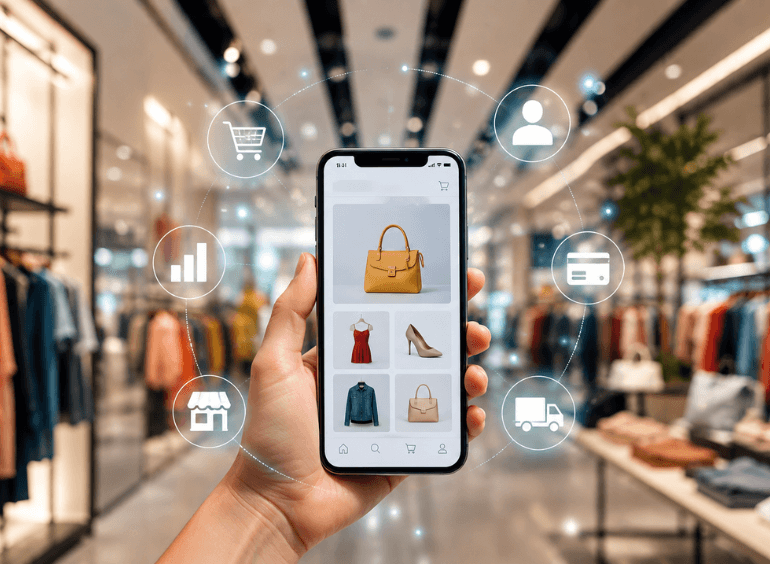
Shopping in India has changed dramatically. A customer in Hyderabad can order groceries from the sofa, pay through UPI and have the items delivered before dinner. Someone in Bengaluru might browse a pair of shoes on a mobile app, check its availability at a nearby store and visit the outlet to try them on. In Mumbai, a shopper may wait for a festive sale to compare prices across several apps before finally making a purchase.
For retailers, these habits point to a larger change: the mobile phone has become part of the shopping journey.
This is why retail app development matters today. A retail app is no longer simply a digital storefront. When planned properly, it can connect customers, stores, inventory, payments, loyalty programmes and business data in one ecosystem. More importantly, it can help retailers respond to what customers now expect — convenience, speed, personalisation and consistency.
Customers Expect Retail to Be Convenient
People have always valued convenience, but smartphones have raised the bar.
Customers do not necessarily want to visit a store just to find out whether a product is available. They may want to check prices before travelling, reorder frequently purchased items with a few taps or choose between home delivery and store pickup.
This behaviour is visible across Indian cities. A working professional in Chennai might order household essentials during a lunch break. A family in Delhi could compare televisions online before visiting a showroom. A student in Hyderabad may discover a fashion product on social media and complete the purchase through a retailer’s app.
The common factor is simple: customers want less friction.
Retailers that make everyday shopping easier have a better chance of staying relevant as these habits become more deeply embedded.
Personalised Shopping Can Make a Real Difference
Walk into a small neighbourhood shop and the owner may already know what a regular customer usually buys. Digital retail is bringing a larger-scale version of that familiarity to mobile shopping.
Retail apps can use purchase history, browsing patterns and preferences to make product discovery more relevant. Instead of showing every customer the same catalogue, an app can highlight products that are more likely to interest a particular shopper.
For instance, someone who regularly purchases sportswear could receive recommendations for running shoes or fitness accessories. A customer who buys baby products frequently might find relevant essentials easier to discover.
AI-powered recommendation systems can take this a step further by identifying patterns that are difficult to spot manually.
However, personalisation should be useful rather than intrusive. If customers feel that every click is being watched simply to push another offer, the experience can quickly become uncomfortable. Retailers need to strike the right balance between relevance and privacy.
UPI Has Made Mobile Payments Second Nature
Digital payments have become a normal part of shopping in India.
From a roadside tea stall to a large supermarket, UPI has made cashless payments accessible to customers and businesses of all sizes. Retail apps naturally fit into this ecosystem by supporting familiar payment methods and simplifying checkout.
A good mobile shopping experience should not make customers jump through hoops after they have decided to buy something. Product selection, address entry, payment and order confirmation should feel like one continuous process.
For repeat purchases, features such as saved addresses, preferred payment methods and quick reordering can make a noticeable difference.
Sometimes it is the small things that win customers over.
Loyalty Programmes Are Becoming More Useful
Traditional loyalty cards often ended up forgotten in wallets or drawers. Mobile apps can make loyalty programmes much easier to use.
Customers can check their rewards, redeem offers and receive personalised benefits without carrying a physical card.
Retailers can also use purchase patterns to make loyalty programmes more relevant. Someone who shops every weekend may receive a weekend-specific reward, while a frequent electronics customer might receive early access to a new product launch.
Festive periods offer another opportunity. During Diwali, Eid, Pongal or Onam, retailers can create targeted campaigns instead of sending the same discount message to everyone.
The goal should not be to give away discounts endlessly. A loyalty programme works best when customers feel that being a regular customer actually has some value.
Inventory Visibility Can Improve the Shopping Experience
Few things annoy shoppers more than seeing a product marked as available and then discovering that it is actually out of stock.
Retail apps can help address this problem by connecting the customer-facing platform with inventory systems.
Imagine someone in Mumbai searching for a particular laptop. Instead of calling several stores, the customer could check availability at nearby outlets, place an order online or choose store pickup.
For retailers, the benefits go beyond convenience. Accurate inventory information can help businesses understand which products are moving quickly, where stock is sitting idle and when replenishment may be required.
This can reduce one of the most common disconnects in modern retail: the difference between what the system says is available and what the customer can actually buy.
Quick Commerce Has Changed Expectations
The growth of quick commerce has had a wider effect on retail than simply making grocery deliveries faster.
Customers have become accustomed to opening an app, selecting a product and receiving it within a short window. While every retailer cannot — and does not need to — promise ultra-fast delivery, the expectation of speed has influenced shopping behaviour.
A customer ordering from a local supermarket in Hyderabad may now expect convenient digital ordering and reliable delivery. A fashion retailer in Bengaluru may need to provide accurate delivery estimates. A pharmacy or electronics retailer may need to communicate stock and fulfilment information more clearly.
Speed is important, but reliability matters just as much.
Promising a 20-minute delivery and failing repeatedly can be worse than offering a realistic one-hour window and meeting it consistently.
Omnichannel Retail Brings Online and Offline Together
One of the biggest changes in retail is that customers no longer think in terms of separate online and offline channels.
They simply shop wherever it is convenient.
A customer might discover a product through an app, visit a physical outlet, purchase online and later return the product to the store. Another customer might order online and choose to collect the item from a nearby branch.
This is where an app can become much more than an ordering platform.
It can act as the connection between the retailer’s digital presence and physical stores. Product information, pricing, inventory, customer accounts, orders and returns can be brought together to create a more consistent experience.
For Indian retailers with multiple outlets, this can be particularly valuable because customers often move between channels depending on location, urgency and product category.
Retail Apps Also Create a Direct Customer Connection
Social media can help retailers reach customers, but an app provides a more direct relationship.
Retailers can use apps for order updates, personalised recommendations, product information, feedback, loyalty rewards and customer support.
For example, after purchasing an appliance, a customer could receive installation information and warranty details through the app. A grocery customer could reorder frequently purchased products without starting from scratch.
This kind of engagement can turn an app from a place where customers simply buy things into a useful part of their everyday routine.
But retailers should resist the temptation to send notifications for every little thing. Too many irrelevant messages can lead customers to switch them off altogether.
Data Helps Retailers Make Better Decisions
One of the less visible benefits of retail apps is the data they generate.
Retailers can learn what customers are searching for, which products are viewed frequently, which offers lead to purchases and where customers abandon their shopping journeys.
Suppose customers in one part of Hyderabad repeatedly search for a particular product but rarely complete the purchase. The problem may not be demand. It could be price, availability, delivery charges or some other friction point.
Similarly, if customers consistently buy a product after receiving a particular type of recommendation, retailers can use that information to refine future campaigns.
Retail data is most valuable when it leads to action.
Collecting dashboards full of numbers is not the same as understanding customers.
The Role of Retail App Developers
Building a useful retail app involves more than creating attractive screens.
Retail app developers have to consider how the app connects with payment systems, inventory platforms, order management, customer accounts, analytics and sometimes existing store infrastructure.
This becomes particularly important as a retailer grows. An app that works well for a small catalogue may struggle when thousands of products, multiple stores and large numbers of simultaneous customers are involved.
Developers therefore need to think about performance, security, scalability and the practical realities of retail operations.
The technology should support the business rather than become a separate project that looks impressive but creates more complexity behind the scenes.
What Retailers Should Get Right
Retailers do not need to add every new technology simply because it is available. The better approach is to start with genuine customer problems.
Keep the interface simple. Customers should find products, prices and offers without getting lost in menus.
Make search useful. Good filters, accurate product information and relevant results can save customers considerable time.
Keep inventory accurate. Showing products that cannot actually be purchased quickly damages trust.
Make payments easy. Support popular payment methods and avoid unnecessary checkout steps.
Connect physical and digital stores. Customers should be able to move between channels without starting the process all over again.
Use personalisation carefully. Relevant recommendations are useful; excessive targeting can feel intrusive.
Protect customer information. Security and responsible data handling are essential for maintaining trust.
Measure customer behaviour. Look beyond app downloads and focus on repeat purchases, conversion, retention and customer satisfaction.
Small Retailers Can Benefit Too
It would be a mistake to assume that mobile retail is only for large chains.
India’s local retail sector has always been adaptable. Many small businesses already use WhatsApp, UPI, social media and delivery services to stay connected with customers.
A clothing shop in Chennai might showcase new arrivals digitally. A grocery store in Hyderabad may accept repeat orders through a mobile channel. A local electronics dealer in Delhi could use digital tools to share product information and coordinate deliveries.
These businesses do not need to imitate large e-commerce companies.
Their competitive advantage often comes from trust, personal relationships and local knowledge. Technology can strengthen those advantages rather than replace them.
The Future Is About Better Experiences, Not More Technology
Retail is becoming increasingly digital, but the underlying customer expectations are surprisingly straightforward.
People want to find what they need, pay easily, receive their purchases on time and feel that the retailer understands their needs.
Mobile apps can help retailers deliver all of this, but only when technology is built around real shopping behaviour.
The next stage of retail in India will likely be less about choosing between a physical store and a mobile app. Instead, both will become parts of the same shopping experience.
A customer in Bengaluru may browse on a phone before walking into a store. Someone in Mumbai may order online and collect the product from a branch. A shopper in Hyderabad may rely on quick delivery for essentials but still visit a neighbourhood market for fresh produce.
That is the real importance of retail app development in the digital age. It is not simply about putting a store on a smartphone. It is about making retail more convenient, connected and responsive to the way people actually shop today.