
Custom Software and AI Systems Built for Indian and Global Enterprises
From Hyderabad. 500+ engineers. Production-grade delivery across healthcare, fintech, logistics, and SaaS.
We Build. We Automate. We Transform.From Thoughts to Implementation.
Selected Works
Case Studies
Partnering with global brands to craft digital experiences that drive measurable impact.
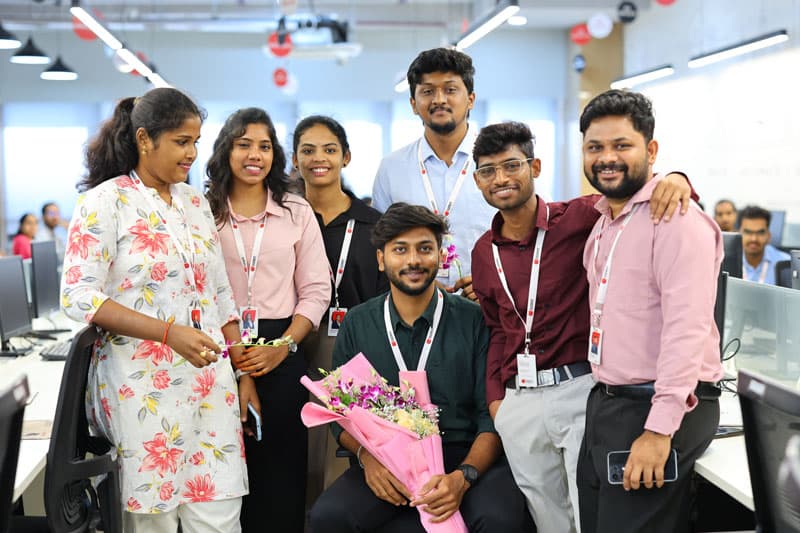
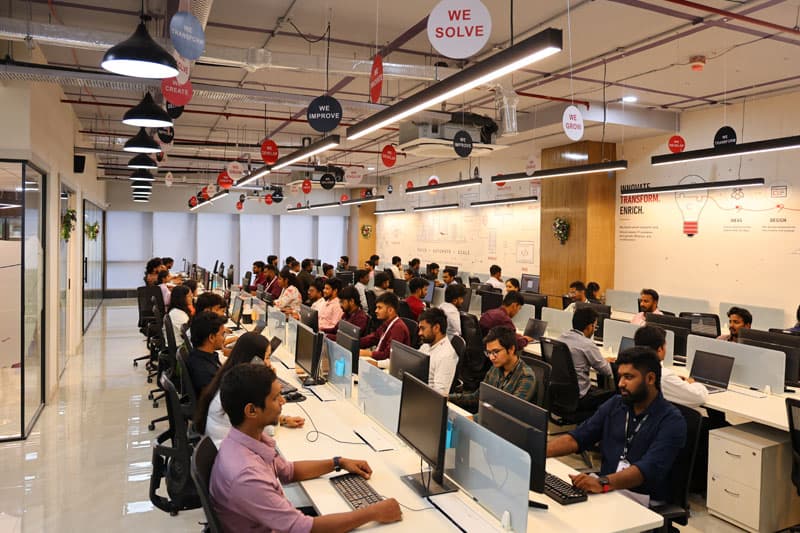
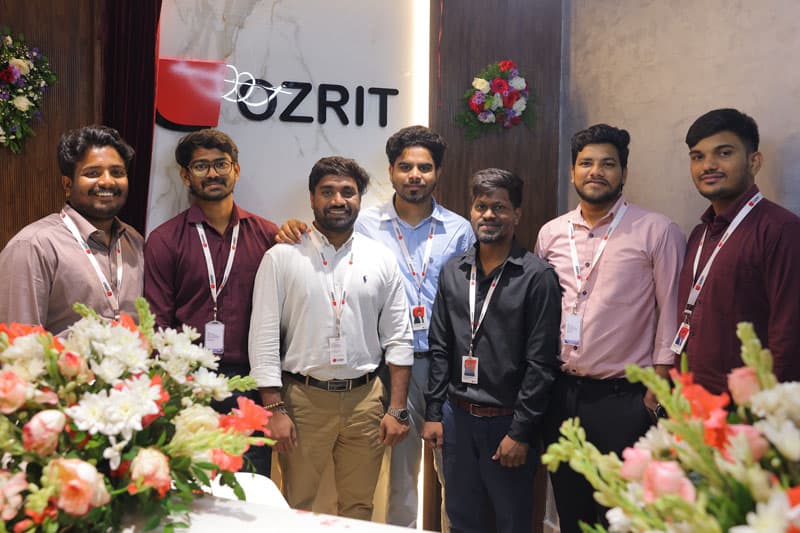
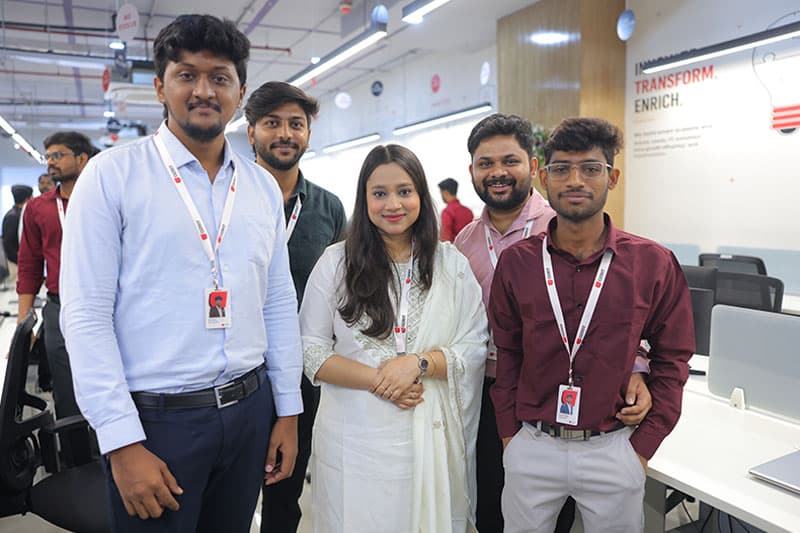
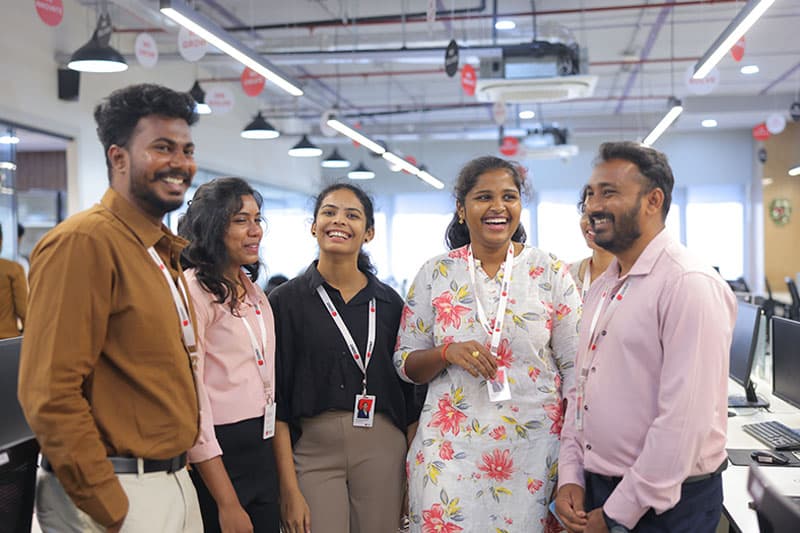
500+ engineers who design, develop, and deliver
Our people, our Hyderabad office, and the culture behind every project we ship.
Building AI EcosystemsThat Align With Your Organization
Custom AI and ML models, conversational assistants, and generative systems built on your data and embedded directly into the platforms your teams already run on.
Compliance Built In,
Not Bolted On
Regulatory requirements show up in architecture reviews, threat models, and rollout gates from sprint zero. Every system we ship is reviewed against the standards your industry, region, and customers actually live under, so production never surprises your auditors.
Our Proven Development Process
Featured Insights
Practical insights from real-world enterprise system design and delivery.
Solving Complex Challenges Across Every Major Sector
%2Fhealth_care.webp&w=3840&q=75)
%2FFinance.jpeg&w=3840&q=75)
%2FEducation.jpeg&w=3840&q=75)
%2FRealestate.jpeg&w=3840&q=75)
%2FEcommerce.jpeg&w=3840&q=75)
%2FLogistics.jpg.jpeg&w=3840&q=75)
%2FFood%2520%2526%2520Hospitality.jpeg&w=3840&q=75)
Our Healthcare App Development services help businesses build secure, scalable, and user-friendly digital healthcare solutions tailored to their specific needs. We develop telemedicine platforms, appointment booking systems, health and fitness apps, patient management solutions, electronic health records, remote patient monitoring, and wearable device integrations, focused on data security, performance, and seamless user experiences.
Every build is engineered around HIPAA-grade data security, HL7/FHIR interoperability, and real-time clinical workflows, so hospitals, clinics, and health-tech startups get platforms that protect patient data while improving care delivery. We've shipped patient portals, provider scheduling systems, and IoT-connected monitoring tools that cut administrative overhead and support better outcomes at scale.
Our FinTech app development services help businesses build secure, scalable, and high-performance financial applications for digital payments, mobile banking, digital wallets, lending and loan management, and investment platforms, with end-to-end support from UI/UX design to API and payment gateway integration, security, testing, and deployment.
Every fintech build is engineered for RBI, PCI-DSS, and KYC/AML compliance from day one, not bolted on after launch. Our teams have delivered neobank platforms, UPI and card payment integrations, robo-advisory dashboards, and loan origination systems that pass enterprise security audits while keeping onboarding and transaction flows fast and frictionless for end users.
Our Education App Development services help schools, colleges, EdTech startups, and training organizations build engaging, scalable digital learning solutions, including eLearning platforms, LMS, virtual classrooms, online examination platforms, tutor booking, and parent-teacher communication apps, designed to improve learning experiences and engagement.
We build for real classroom and campus workflows, live video infrastructure that holds up at scale, proctored assessment engines, gradebooks that sync with existing school ERPs, and mobile-first experiences for students who learn primarily on their phones. The result is platforms institutions can roll out to thousands of users without a support-ticket avalanche.
Our Real Estate App Development services help property developers, brokers, and agencies build digital platforms for property discovery, buying, selling, and management, including property listing apps, marketplaces, rental management, and agent management solutions with map integration, virtual tours, and CRM integration.
We combine map-based discovery, virtual tours, and CRM integrations with the back-office tools brokers and developers actually run their business on, lead scoring, site-visit scheduling, and payment or loan-status tracking. Whether it's a single-project marketing site or a multi-city listings marketplace, we design for high-intent buyers who expect a fast, visual, trustworthy experience.
Our Retail App Development services help businesses create modern, scalable eCommerce apps, online shopping platforms, grocery and delivery apps, and multi-vendor marketplaces with product catalogs, secure payment gateways, order tracking, loyalty programs, and CRM integrations focused on seamless shopping experiences and business growth.
We've built storefronts on Shopify, headless commerce stacks, and fully custom platforms, each engineered for the specifics of the catalog, whether that's grocery with same-day delivery windows, fashion with size and variant complexity, or multi-vendor marketplaces with split payouts. Every build ships with performance and conversion in mind: fast checkout, reliable inventory sync, and analytics that show what's actually driving revenue.
Our Logistics App Development services help businesses streamline transportation, delivery, fleet, and supply chain operations with real-time GPS tracking, route optimization, driver and vehicle management, shipment tracking, and warehouse management, focused on operational efficiency and better visibility across the logistics process.
Our logistics platforms are built around live data, GPS-tracked fleets, route optimization that adapts to traffic and delivery windows, and warehouse systems that stay in sync with what's actually on the shelf. For 3PLs, delivery startups, and enterprise supply chains alike, we give dispatchers and customers the same real-time visibility, cutting delays and manual coordination.
Our Food App Development services help restaurants, cloud kitchens, and delivery companies build feature-rich platforms including food delivery apps, restaurant ordering apps, table booking, and multi-vendor food marketplaces with menu management, real-time order tracking, and secure payments focused on convenience and business growth.
From single-location restaurants to multi-brand cloud kitchens, we build ordering, delivery, and table-booking systems that hold up during peak-hour traffic spikes and integrate cleanly with POS and kitchen display systems. The focus is always the same: fewer dropped orders, faster table turns, and a smoother experience for both diners and the staff running the floor.
OZRIT in the press
Our work and our team have been featured across leading technology and business publications.













Questions?
We've got answers.
Everything you need to know about working with OZRIT.
Have a project in mind? Let's discuss how we can bring your vision to life with the right technology and team.
Start a Conversation3000+
Projects Delivered
98%
Client Retention
35+
Industries Served
OZRIT specializes in building scalable, production-grade enterprise software, from AI-powered platforms and custom SaaS products to cloud-native mobile applications. We handle end-to-end delivery: strategy, design, engineering, QA, and ongoing support.
We have deep domain expertise across healthcare, fintech, education, logistics, real estate, e-commerce, and food & hospitality. Our teams understand industry-specific regulations like HIPAA, PCI DSS, and GDPR, and build compliance into every layer.
We offer flexible models, dedicated teams, fixed-scope projects, and staff augmentation. Most enterprise clients start with a discovery phase where we audit your existing systems and define a roadmap, then move into agile sprints with bi-weekly deliverables.
Our core stack includes React, Next.js, React Native, Node.js, Python, and Go on the application side, with AWS, GCP, and Azure for cloud infrastructure. For AI/ML, we work with TensorFlow, PyTorch, and custom LLM integrations.
MVPs typically ship in 8–12 weeks. Full enterprise platforms range from 4–8 months depending on complexity. We break every project into milestones with clear deliverables so you see progress from week one.
Yes. We offer dedicated maintenance and support plans that include performance monitoring, security patches, feature iterations, and 24/7 incident response for mission-critical systems. Most of our clients stay with us long-term.
Every project includes automated testing (unit, integration, E2E), CI/CD pipelines, code reviews, and security audits. We follow OWASP standards, conduct regular penetration testing, and maintain SOC 2-compliant development practices.
Absolutely. We regularly embed engineers into client teams, align with existing workflows (Jira, Confluence, Slack, GitHub), and adapt to your development culture. Staff augmentation is one of our most popular engagement models.
Trusted by Industry Leaders
Global Presence, Local Expertise
%2Fhyd.webp&w=3840&q=75)
Hyderabad
1009, 10th Floor, Vasavi Sky City, Gachibowli, Hyderabad, Telangana 500032.
%2Fkarnataka.webp&w=3840&q=75)
Bangalore
Sabari Complex, 24, Field Marshal Cariappa Rd,, Shanthala Nagar, Ashok Nagar, Bengaluru, Karnataka 560025.
%2Fchennai2.webp&w=3840&q=75)
Chennai
Shakti Tower 1, 766, Anna Salai,, Thousand Lights, Chennai, Tamil Nadu 600002
%2Fpune.webp&w=3840&q=75)
Pune
Ground floor, Unit no.2, B Wing, Mantri Business Park, Pune - Ahilyanagar Hwy, Viman Nagar, Pune, Maharashtra 411014
%2Fgurugram.webp&w=3840&q=75)
Gurugram
Level 9, Spaze, Tower A, Spaze iTech Park, A1 Tower, Badshahpur Sohna Rd Hwy, Block S, Sector 49, Gurugram, Haryana 122018
%2Fkerala.webp&w=3840&q=75)
Kerala
National Highway 66, Service Rd, East, Ernakulam, Kerala 682028
LET'S TURN IDEAS INTO DIGITAL REALITY!
Let's craft something extraordinary. Connect with us today and bring your ideas to life.