

- Your cart is empty Browse Shop
Cloud-Native vs Traditional Apps: Choosing the Right Architecture for 2026
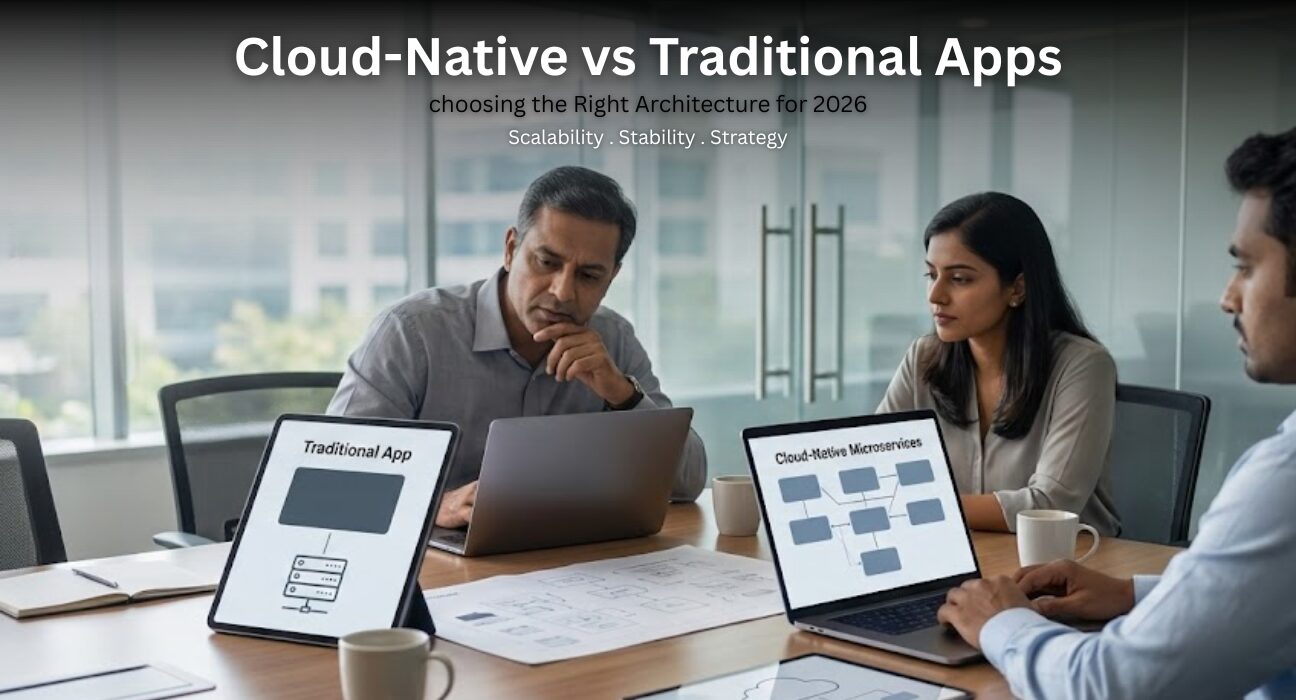
The Indian IT sector is at a crossroads. As businesses in Hyderabad’s HITEC City and Bangalore’s Electronic City race to digitalise, one question keeps CIOs awake at night: should we rebuild our applications from scratch using cloud-native architecture, or stick with the traditional systems that have served us well for years?
This isn’t just a technical decision; it’s a business strategy that will determine whether your company thrives or struggles in 2026’s competitive landscape. With India’s digital economy expected to reach $1 trillion by 2025-26, according to government estimates, the architecture you choose today will either accelerate your growth or hold you back.
Let’s cut through the confusion and help you make the right choice for your business.
What Exactly Are Cloud-Native Applications?
Cloud-native applications are software programs specifically designed to run in cloud environments. Unlike traditional applications that were simply “lifted and shifted” to the cloud, these apps are built from the ground up using modern technologies like containers, microservices, and orchestration platforms like Kubernetes.
Think of it this way: traditional apps are like the old Ambassador cars, sturdy, reliable, but built for a different era. Cloud-native apps are like modern electric vehicles, designed specifically for today’s infrastructure, more efficient, and packed with smart features.
In cities like Pune and Chennai, where IT parks are buzzing with startups and established enterprises alike, cloud-native development has become the default choice for new projects. These applications use containerisation technology, which packages software so it runs consistently across different computing environments. They’re also built as microservices, small, independent components that work together rather than one large, monolithic block of code.
The key advantage? Scalability. During Diwali sales or festival seasons, e-commerce platforms need to handle 10x their normal traffic. Cloud-native apps can automatically scale up to meet demand and scale down when things quieten, saving costs in the process.
Understanding Traditional Application Architecture
Traditional applications, also known as monolithic applications, have been the backbone of Indian businesses for decades. These are applications where all components, the user interface, business logic, and data access layers, are tightly integrated into a single unit.
Banks in Mumbai’s Bandra Kurla Complex still run many core banking systems on traditional architecture. These applications typically run on physical servers or virtual machines in on-premise data centres. They’re written in languages like Java, .NET, or COBOL, and they’ve proven their reliability over years of operation.
The traditional approach to application development follows a predictable pattern: gather requirements, design the entire system, build it, test it thoroughly, and then deploy it, usually during a scheduled maintenance window at midnight on weekends. Updates and new features follow the same lengthy cycle.
For businesses that don’t need frequent updates or massive scalability, traditional apps still make sense. A manufacturing unit in Ahmedabad tracking inventory, or a school management system in Jaipur, might work perfectly well with traditional architecture. The systems are stable, the technology is well-understood, and the maintenance costs are predictable.
Key Differences Between Cloud-Native and Traditional Apps
The architectural differences between these two approaches extend far beyond where the application runs. Let’s break down the critical distinctions:
Development and Deployment: Traditional apps follow a waterfall model with lengthy release cycles—sometimes taking months to add new features. Cloud-native apps embrace DevOps and continuous integration/continuous deployment (CI/CD), allowing companies to push updates multiple times a day. Tech companies in Gurgaon’s Cyber City routinely deploy code hundreds of times daily.
Scalability: When your traditional app needs more power, you scale vertically, buying bigger, more expensive servers. Cloud-native apps scale horizontally, adding more instances as needed. During the recent surge in digital payments across India, cloud-native fintech apps handled the load seamlessly while some traditional banking apps struggled.
Resilience: If one component fails in a monolithic app, the entire system might crash. In cloud-native architecture with microservices, if the payment service fails, users might still browse products and add items to their cart. This resilience is crucial for businesses that can’t afford downtime.
Cost Structure: Traditional apps require upfront capital expenditure on hardware and data centre infrastructure. Cloud-native apps operate on an operational expenditure model; you pay for what you use. For startups in Bangalore’s Koramangala area, this difference can be the line between survival and shutdown.
Technology Stack: Traditional apps often get locked into specific technology choices made years ago. Cloud-native apps can mix and match technologies, using Python for one service, Node.js for another, choosing the best tool for each job.
When Should You Choose Cloud-Native Architecture?
Cloud-native architecture isn’t just a trend; it’s the right choice for specific business scenarios. Here’s when you should seriously consider cloud-native applications:
Rapid Growth and Scaling: If you’re a startup expecting rapid user growth or an established business entering new markets, cloud-native is your friend. A food delivery app expanding from Delhi to tier-2 cities needs to scale quickly without massive infrastructure investments.
Frequent Feature Updates: Customer expectations change fast. If your business model requires constant innovation, think OTT platforms competing with Netflix and Amazon Prime, cloud-native architecture’s continuous deployment capabilities are essential. Companies can test new features with a small user segment, gather feedback, and iterate quickly.
Global or Multi-Region Operations: Businesses serving customers across India or internationally benefit from cloud-native apps deployed across multiple regions. A SaaS company in Hyderabad serving clients in Mumbai, Kolkata, and even Singapore can deploy their application close to users, reducing latency.
Variable Workloads: Educational technology platforms see massive spikes during exam seasons and admission periods. Cloud-native apps automatically scale during these peaks and scale down during quiet periods, optimising costs. This elasticity is particularly valuable for businesses with seasonal demand.
Modernisation Initiatives: If your five-year technology roadmap includes digital transformation, starting with cloud-native for new applications makes sense. Many enterprises in Noida’s IT corridor are taking a hybrid approach, keeping legacy systems running while building new capabilities in cloud-native architecture.
When Traditional Architecture Still Makes Sense
Despite the cloud-native buzz, traditional application architecture remains the practical choice for many Indian businesses. Here’s when sticking with traditional apps is the smarter decision:
Stable, Predictable Workloads: A government department processing pension applications or a utility company managing billing cycles doesn’t need the flexibility of cloud-native architecture. The workload is predictable, changes are infrequent, and the existing system works reliably.
Regulatory and Compliance Constraints: Some industries face strict data residency and compliance requirements. While cloud providers offer compliant solutions, certain sensitive applications, particularly in defence or critical infrastructure, may need to remain on-premises with traditional architecture. Organisations in sectors like nuclear energy or national security often choose this path.
Limited IT Resources: Cloud-native architecture requires expertise in containers, Kubernetes, microservices, and DevOps practices. If your IT team in a smaller city lacks this expertise and you’re not ready to invest in training or hiring, maintaining traditional applications might be more practical. A regional bank in Lucknow or Bhubaneswar might find it challenging to recruit and retain cloud-native specialists.
Budget Constraints: While cloud-native can be cost-effective at scale, the migration costs and learning curve can be substantial. Small and medium businesses with tight budgets might be better served by optimising their existing traditional applications rather than undertaking a complete architectural overhaul.
Legacy System Integration: If your new application needs tight integration with complex legacy systems, traditional architecture might offer easier integration paths. Manufacturing companies in industrial hubs like Coimbatore often have specialised systems that aren’t easily containerised or moved to microservices.
Making the Transition: Hybrid Approaches for Indian Businesses
Most Indian enterprises aren’t choosing between cloud-native and traditional architecture; they’re running both. This hybrid approach, often called the “strangler fig” pattern, allows businesses to modernise gradually without disrupting operations.
The strategy works like this: keep your core traditional applications running while building new capabilities as cloud-native microservices. Over time, you gradually replace components of the monolithic app with microservices. Insurance companies in Chennai are successfully using this approach, keeping their policy administration systems traditional while building customer-facing mobile apps and analytics platforms as cloud-native services.
Step-by-Step Migration: Start by identifying which parts of your application would benefit most from cloud-native features. Customer-facing components that need frequent updates are good candidates. An e-commerce company might start by making its recommendation engine cloud-native while keeping inventory management traditional.
API-First Design: Build robust APIs around your traditional applications. This allows new cloud-native services to interact with legacy systems without requiring complete rewrites. Retailers in Mumbai’s business districts are wrapping their traditional inventory systems with modern APIs, enabling omnichannel experiences.
Data Strategy: One of the trickiest aspects is data management. Cloud-native and traditional apps often need to share data. Many Bangalore-based enterprises are using data lakes and event streaming platforms like Apache Kafka to create a unified data layer that both architectures can access.
Team Structure: Running a hybrid architecture requires teams skilled in both traditional and modern technologies. Companies are creating “platform teams” that manage the cloud-native infrastructure and “feature teams” that build applications on top. This organisational shift is as important as the technical one.
Frequently Asked Questions
What is the main difference between cloud-native and traditional applications?
Cloud-native applications are built specifically for cloud environments using microservices, containers, and continuous deployment practices. They can scale automatically and update frequently. Traditional applications are monolithic programs typically running on physical or virtual servers, with all components tightly integrated. They scale by upgrading hardware and update less frequently with scheduled maintenance windows.
Is cloud-native architecture more expensive than traditional architecture?
The cost comparison depends on your specific situation. Cloud-native architecture operates on a pay-as-you-go model with lower upfront costs but ongoing operational expenses. Traditional architecture requires significant capital investment in infrastructure, but may have lower operational costs for stable workloads. For businesses with variable demand, cloud-native often proves more cost-effective. For predictable, steady workloads, traditional architecture might be cheaper.
Can we migrate existing traditional applications to a cloud-native architecture?
Yes, but it’s rarely a simple “lift and shift.” True cloud-native migration means re-architecting your application into microservices, which requires significant development effort. Many Indian businesses take a phased approach, gradually breaking off pieces of their monolithic applications and rebuilding them as cloud-native microservices. This allows for continuous operation while modernising incrementally.
Which architecture is better for startups in India?
For most startups, cloud-native architecture is the better choice. It allows rapid scaling without large infrastructure investments, enables quick feature releases to stay competitive, and provides flexibility to pivot your product based on market feedback. The pay-as-you-go pricing model aligns well with startup cash flow constraints. However, startups with very simple, stable applications might find traditional architecture perfectly adequate.
Do I need a large IT team to manage cloud-native applications?
Not necessarily. While cloud-native architecture requires different skills, containerisation, orchestration, and microservices, cloud platforms provide managed services that reduce the operational burden. Small teams can effectively manage cloud-native applications using platforms like Google Cloud Run, AWS ECS, or Azure Container Apps. Many startups in Hyderabad and Pune successfully run cloud-native applications with lean technical teams by leveraging these managed services.
Conclusion
Choosing between cloud-native and traditional application architecture in 2026 isn’t about following trends; it’s about aligning your technology choices with your business objectives. If you need rapid innovation, variable scaling, and frequent updates, cloud-native architecture offers clear advantages. If you’re running stable workloads with predictable demand and limited resources for modernisation, traditional architecture remains a viable, cost-effective option. Most Indian businesses will benefit from a hybrid approach, preserving investments in reliable traditional systems while building new capabilities with cloud-native architecture. If you’re looking for expert guidance on architecting your applications for success in 2026, Ozrit brings deep expertise in both traditional and cloud-native technologies, helping Indian businesses make informed decisions that balance innovation with practical constraints. The right architecture isn’t about what’s newest, it’s about what works best for your unique business context.