

- Your cart is empty Browse Shop
Cross-Platform vs Native Apps: Which Is Right for Your Business?
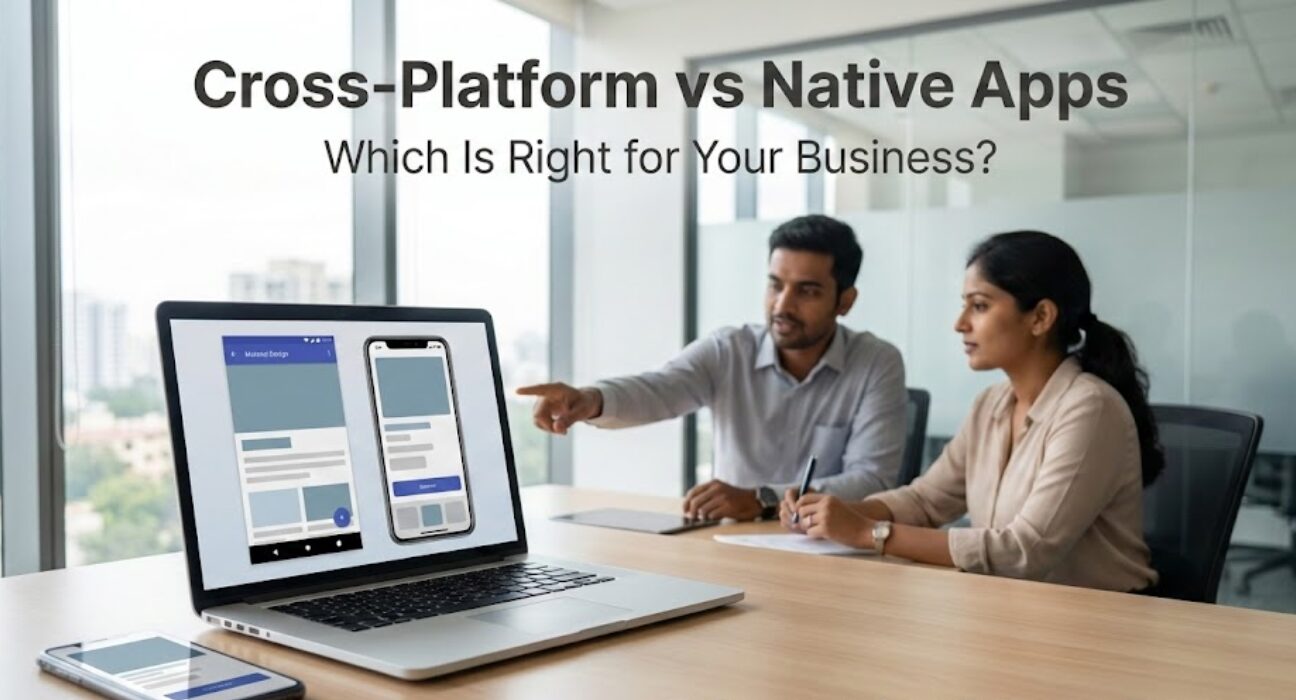
Every business owner in India’s thriving tech ecosystem faces a crucial question when planning their mobile app: should you build separate apps for Android and iOS, or create one app that works on both platforms? This decision keeps entrepreneurs awake in Bangalore’s startup offices and boardrooms across Mumbai’s business districts. With India’s mobile app market projected to reach $15 billion by 2025 and over 600 million smartphone users accessing apps daily, making the wrong choice could mean wasted resources, poor user experience, and losing market share to competitors.
The debate between cross-platform vs native apps isn’t just about technology; it’s about understanding your business goals, target audience, budget constraints, and long-term vision. A restaurant chain expanding across Delhi-NCR might have different needs than a fintech startup in Pune’s Hinjewadi tech park. Whether you’re launching your first digital product or scaling an existing business, this comprehensive guide will help you make an informed decision that aligns with your specific requirements and the unique characteristics of the Indian market.
Understanding Native and Cross-Platform Development
Native apps are built specifically for one operating system using platform-specific programming languages and tools. For Android, developers use Kotlin or Java with Android Studio, while iOS apps are created using Swift or Objective-C with Xcode. Popular native apps like Instagram, WhatsApp, and Paytm were initially built as native applications, offering seamless performance and full access to device features.
Cross-platform apps, on the other hand, use a single codebase that works across multiple operating systems. Frameworks like Flutter, React Native, and Xamarin allow developers to write code once and deploy it on both Android and iOS. Companies like Alibaba, Google Ads, and BMW have successfully implemented cross-platform solutions, demonstrating their viability for large-scale applications.
The fundamental difference lies in the development approach and resulting app characteristics. Native development means maintaining two separate codebases, requiring two development teams with different skill sets. Cross-platform development streamlines this process with one team and one codebase, but with some trade-offs in performance and native functionality access.
Understanding these basics is crucial when evaluating cross-platform vs native apps for your business. The choice impacts everything from development costs and timelines to user experience and maintenance requirements, making it one of the most important technical decisions you’ll make.
Performance and User Experience Comparison
Performance is where native apps traditionally shine. Because they’re built specifically for their platform, native apps can leverage device hardware more efficiently, resulting in smoother animations, faster load times, and better overall responsiveness. For graphics-intensive applications like gaming or video editing tools, native development often delivers superior performance that users in metro cities like Chennai and Hyderabad have come to expect.
However, the performance gap between cross-platform and native apps has narrowed significantly in recent years. Flutter, Google’s cross-platform framework, uses Dart and compiles to native code, delivering performance that rivals native apps in many scenarios. React Native also offers excellent performance for most business applications, from e-commerce platforms to productivity tools commonly used across India’s corporate sector.
User experience extends beyond just speed and smoothness. Native apps naturally follow platform-specific design guidelines, Material Design for Android and Human Interface Guidelines for iOS. This adherence to familiar patterns makes apps feel intuitive to users. When someone in Kolkata uses an Android app or someone in Gurgaon uses an iPhone app, they expect certain behaviors and visual elements that native development delivers effortlessly.
Cross-platform frameworks have improved significantly in matching platform-specific design patterns. Flutter’s widget library includes both Material Design and Cupertino (iOS-style) widgets, allowing developers to create platform-appropriate interfaces from a single codebase. For most business applications, whether it’s a food delivery service, booking platform, or educational app, modern cross-platform frameworks deliver user experiences that satisfy Indian consumers’ expectations.
The performance question ultimately depends on your app’s specific requirements. A meditation app or business management tool will perform excellently as a cross-platform application, while a high-end gaming app or AR-based shopping experience might benefit from native development’s performance advantages.
Development Cost and Time-to-Market Analysis
Budget considerations significantly influence the decision between cross-platform vs native apps, especially for Indian startups and SMEs operating with limited resources. Native development requires building two separate applications, essentially doubling your development effort, team size, and associated costs. For a medium-complexity app, native development in cities like Bangalore or Pune typically costs between ₹15-30 lakhs, as you’re paying for two complete development cycles.
Cross-platform development can reduce costs by 30-40% since you’re maintaining a single codebase. The same medium-complexity app might cost ₹10-20 lakhs using Flutter or React Native, with one development team handling both platforms. This cost advantage is particularly attractive for bootstrapped startups in India’s tier-2 cities like Chandigarh, Jaipur, or Indore, where budget optimization is crucial.
Time-to-market is equally critical in India’s competitive app landscape. Native development typically takes 6-9 months for a complete launch on both platforms, as features must be built twice. Cross-platform development can reduce this timeline to 4-6 months, allowing you to reach users faster and start gathering feedback while your competitors are still in development.
Consider a real-world scenario: a healthcare startup in Hyderabad’s HITEC City wanting to launch a telemedicine app. With native development, they might spend 8 months and ₹25 lakhs to launch on both platforms. Using cross-platform development, they could potentially launch in 5 months for ₹15 lakhs, saving both time and money that could be invested in marketing and user acquisition.
However, it’s important to note that extremely complex apps with heavy platform-specific requirements might not see the same cost benefits from cross-platform development. The complexity of implementing certain native features might offset some of the savings, making native development more cost-effective in specific scenarios.
Access to Device Features and Platform APIs
Native apps have unrestricted access to all device features and the latest platform APIs. When Apple or Google releases new features, like improved biometric authentication, advanced camera capabilities, or enhanced notification systems, native developers can implement them immediately. This advantage matters for apps that rely heavily on device hardware, such as fitness trackers, payment apps using NFC, or photography applications.
Cross-platform frameworks have made tremendous strides in providing access to native features through plugins and packages. Flutter’s pub.dev and React Native’s npm registry offer thousands of packages that bridge the gap between cross-platform code and native functionality. Common features like camera access, location services, push notifications, and local storage work seamlessly in cross-platform apps, covering the needs of most business applications.
The challenge arises with cutting-edge or highly specialized features. When a new iOS or Android feature launches, there’s typically a delay before cross-platform frameworks support it. For instance, when Apple introduced App Clips or Android launched Instant Apps, native developers could implement these immediately, while cross-platform developers had to wait for framework updates or build custom native modules.
For businesses in India’s fintech sector, particularly those in Mumbai’s Bandra Kurla Complex or Bangalore’s financial district, native development might be preferable if you need immediate access to the latest security features or payment technologies. However, for most business apps serving the Indian market, from grocery delivery in Chennai to salon booking services in Delhi, cross-platform frameworks provide sufficient access to necessary device features.
Custom native modules can be written for cross-platform apps when specific functionality isn’t available through existing plugins. This hybrid approach allows you to enjoy cross-platform development benefits while still accessing specialized features, though it requires developers skilled in both cross-platform and native development.
Long-Term Maintenance and Updates
Maintaining your app over time is a crucial consideration that’s often overlooked in the initial cross-platform vs native apps decision. Native apps require maintaining two completely separate codebases, meaning every bug fix, feature addition, or security update must be implemented twice. This doubles not just the development effort but also the testing requirements and potential for platform-specific bugs.
A logistics company operating across India from their headquarters in Pune’s Kharadi area discovered this challenge firsthand. Their native apps required separate teams for iOS and Android, and coordinating feature releases across both platforms became increasingly complex. Bug fixes for one platform sometimes took weeks longer than the other, creating inconsistent user experiences.
Cross-platform development simplifies maintenance significantly. Bug fixes and feature updates are implemented once and deployed to both platforms simultaneously. This unified approach is particularly valuable for businesses with limited technical teams or those operating in cost-conscious environments typical of many Indian SMEs. An update that might take two weeks per platform with native development could be completed in one week for both platforms using cross-platform frameworks.
However, cross-platform apps aren’t entirely maintenance-free. Framework updates must be carefully managed, as new versions of Flutter or React Native might require code modifications. Additionally, when iOS or Android releases major OS updates, cross-platform frameworks need to adapt, occasionally causing temporary compatibility issues that native apps handle more gracefully.
Version fragmentation in India’s Android ecosystem presents unique challenges. With users across the country running everything from Android 6 to the latest version, ensuring compatibility requires careful testing. Cross-platform frameworks generally handle this well, but native development provides more granular control over platform-specific optimizations.
The expertise required for long-term maintenance also differs. Native development requires maintaining teams with specialized iOS and Android knowledge, which can be expensive in tech hubs like Bangalore, Hyderabad, and Gurgaon, where skilled developers command premium salaries. Cross-platform development allows a single team to handle maintenance, reducing long-term costs and coordination complexity.
Making the Right Choice for Your Business Type
The decision between cross-platform vs native apps should align closely with your specific business needs, industry requirements, and target audience. Different business scenarios call for different approaches, and understanding which category your business falls into can clarify your decision.
Startups and MVPs benefit tremendously from cross-platform development. If you’re testing a new idea in India’s competitive market, whether it’s a new social networking concept, a hyperlocal delivery service, or an innovative edtech solution, getting to market quickly with limited resources is paramount. Cross-platform development allows you to validate your concept on both platforms without burning through your seed funding.
E-commerce and content-based apps generally perform excellently as cross-platform applications. Companies like Flipkart and Amazon initially used native apps, but many successful Indian e-commerce startups have launched with cross-platform frameworks. If your app primarily displays content, processes transactions, and handles standard user interactions, cross-platform development delivers excellent results at lower costs.
Gaming and graphics-intensive applications typically require native development. If you’re building the next mobile gaming sensation or a graphics-heavy application with complex animations, native development’s performance advantages become crucial. The difference in frame rates and rendering quality can significantly impact user experience, particularly for users in India who increasingly expect console-quality mobile gaming.
Enterprise applications serving businesses across India’s commercial centers, from Mumbai’s Nariman Point to Bangalore’s Whitefield, can leverage cross-platform development effectively. Internal business tools, CRM systems, inventory management apps, and employee productivity solutions don’t require cutting-edge device features and benefit from cross-platform development’s faster deployment and easier maintenance.
Fintech and security-critical applications require careful consideration. While many successful payment apps use cross-platform frameworks, some financial institutions prefer native development for maximum control over security implementations and immediate access to platform security updates. Banks and financial services companies in India’s financial capitals often choose native development for their customer-facing apps while using cross-platform for internal tools.
Healthcare and compliance-heavy industries might lean toward native development when dealing with sensitive patient data or requiring specific regulatory compliance features. However, many telemedicine platforms and health tracking apps successfully use cross-platform frameworks, demonstrating their viability even in regulated industries.
Evaluating Developer Availability and Expertise
The availability of skilled developers in your region significantly impacts the cross-platform vs native apps decision. India has a vast pool of mobile developers, but their distribution and specializations vary across cities and regions. Bangalore, often called India’s Silicon Valley, has abundant expertise in both native and cross-platform development, giving businesses flexibility in their choice.
Native iOS developers using Swift are relatively scarce and expensive in India compared to Android developers using Kotlin or Java. This scarcity stems from iOS’s smaller market share in India, where Android dominates with over 95% penetration. Hiring and retaining skilled iOS developers in cities like Hyderabad, Pune, or Chennai can be challenging and costly, potentially stretching your budget.
Cross-platform developers, particularly those specializing in Flutter and React Native, have become increasingly common across India’s tech hubs. The ability to work on both platforms makes these developers versatile and often more cost-effective than maintaining separate iOS and Android teams. Many developers in tier-2 cities like Ahmedabad, Kochi, and Coimbatore have embraced cross-platform frameworks, expanding your hiring options beyond major metros.
Training and upskilling considerations also matter. If you have an existing development team, cross-platform frameworks are often easier to adopt. Web developers familiar with JavaScript can transition to React Native relatively smoothly, while Flutter’s Dart language, though newer, is designed to be easy to learn. Converting an Android development team to iOS development (or vice versa) requires more substantial retraining.
The long-term talent retention aspect shouldn’t be overlooked. Developers who work with modern cross-platform frameworks often find the work more engaging than maintaining separate native codebases. The variety and challenge of building once for multiple platforms can improve job satisfaction, particularly important in competitive markets like Bangalore and Gurgaon, where developer attrition rates are high.
Frequently Asked Questions
Can cross-platform apps match the performance of native apps?
Modern cross-platform frameworks like Flutter and React Native can deliver performance that’s virtually indistinguishable from native apps for most business applications. Flutter compiles to native code and achieves smooth 60fps animations, while React Native uses native components for rendering. For standard business apps, e-commerce platforms, social media applications, and productivity tools, cross-platform performance is excellent. However, for graphics-intensive games, AR/VR applications, or apps requiring heavy computational processing, native development still offers performance advantages. The gap has narrowed significantly, with many popular apps used daily by millions of Indians, including those developed by major companies, successfully using cross-platform frameworks without performance complaints.
How much can I save by choosing cross-platform development over native?
Cross-platform development typically reduces costs by 30-40% compared to building separate native apps for iOS and Android. In the Indian market, a medium-complexity native app might cost ₹15-30 lakhs for both platforms, while the same app built using Flutter or React Native could cost ₹10-20 lakhs. The savings come from maintaining a single codebase, requiring one development team instead of two, and reducing testing and quality assurance efforts. Time-to-market also improves by 30-50%, allowing you to launch faster and start generating revenue sooner. However, very complex apps with extensive platform-specific requirements might see reduced savings, as implementing certain native features in cross-platform frameworks can require additional custom development work.
Will users notice if my app is cross-platform instead of native?
Most users cannot distinguish between well-built cross-platform and native apps. Modern cross-platform frameworks allow developers to implement platform-specific design patterns, ensuring Android users see Material Design while iOS users see iOS-style interfaces. The key is following best practices during development and paying attention to platform-specific user experience guidelines. Apps built with Flutter or React Native by experienced developers feel native because they use actual native components and follow platform conventions. Performance differences are negligible for typical business applications. However, poorly implemented cross-platform apps might feel inconsistent or sluggish, which is why choosing experienced developers familiar with platform-specific design patterns is crucial, regardless of your technology choice.
Which approach is better for startups with limited budgets?
Cross-platform development is generally the better choice for startups with limited budgets operating in India’s competitive market. The 30-40% cost savings and faster time-to-market allow you to launch your MVP, gather user feedback, and iterate more quickly, crucial advantages when you’re competing for attention in crowded app stores. You can reach both Android and iOS users simultaneously without splitting your limited resources between two development teams. This approach is particularly valuable for testing business ideas and validating market fit before committing larger investments. Once your startup scales and generates revenue, you can always rebuild as native apps if performance becomes a concern, though many successful companies continue using cross-platform frameworks even after achieving significant scale and success in the Indian market.
What happens if I want to switch from cross-platform to native or vice versa later?
Switching between cross-platform and native development is definitely possible, though it essentially means rebuilding your app from scratch. The business logic, user experience design, and overall app architecture can be reused conceptually, but the code must be rewritten. Many successful Indian companies started with cross-platform apps to launch quickly and validate their market, then rebuilt as native apps once they achieved scale and required specific performance optimizations or platform features. Conversely, some companies have moved from maintaining separate native apps to unified cross-platform codebases to reduce maintenance costs. The transition requires careful planning and typically happens in phases to avoid disrupting your user base. Most businesses find that their initial choice remains suitable long-term, but having the flexibility to switch provides strategic options as your business evolves and requirements change.
Conclusion:
Choosing between cross-platform vs native apps ultimately depends on your specific business requirements, budget constraints, timeline pressures, and long-term vision. For most businesses in India, particularly startups, SMEs, and companies launching new digital products, cross-platform development offers compelling advantages in cost savings, faster time-to-market, and easier maintenance while delivering excellent user experiences. Native development remains the preferred choice for graphics-intensive applications, games requiring maximum performance, or situations where immediate access to cutting-edge platform features is crucial. Evaluate your priorities carefully, consider your target audience’s expectations, and assess your available resources before making this critical decision. Ozrit specializes in helping Indian businesses navigate this choice, offering expertise in both cross-platform and native app development tailored to your unique needs. Our experienced team based in India’s tech hubs can guide you through the decision-making process and deliver high-quality mobile solutions that drive your business forward, whether you choose cross-platform frameworks or native development.