
- Home
- About Us
- Services
Design & Digital
- Industries
- Hire
Hire App Developers
Hire Frontend Developers
Hire eCommerce Developers
Hire Dedicated Developers
- Contact Us

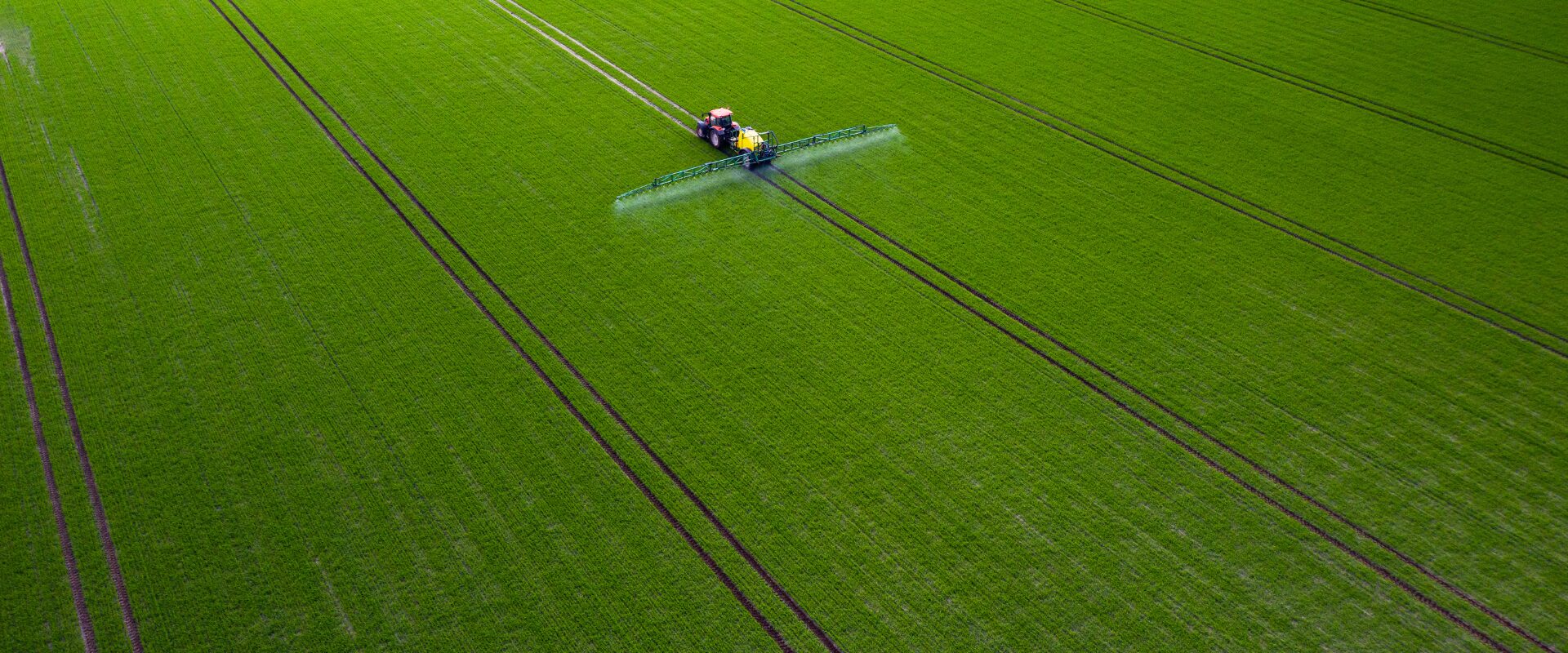
A structured evaluation of SAP Agriculture against custom-built ERP for enterprise farming organizations.
Enterprise agricultural organizations evaluating ERP investments face a consequential decision: implement SAP's agriculture capabilities within a standardized platform, or commission a custom agriculture ERP built around their operational structure. Both paths carry distinct trade-offs in total cost of ownership, implementation complexity, operational fit, and long-term governance flexibility. Ozrit provides the consulting depth and technical delivery capability to help enterprise agricultural organizations make this decision with clarity — and to execute whichever path best serves their strategic requirements.
Schedule ConsultationThe choice between SAP Agriculture and a custom-built agriculture ERP is not a technology decision — it is a strategic one. It involves trade-offs between standardization and operational fit, vendor ecosystem depth and ownership flexibility, and the short-term certainty of a proven platform against the long-term advantage of a system designed around your specific enterprise structure.
SAP Agriculture, implemented through SAP S/4HANA or SAP for Agribusiness, provides agricultural enterprises with a broad functional footprint backed by a global support ecosystem, continuous product development, and established integration with other SAP modules — finance, procurement, supply chain, and HR. For agricultural enterprises already operating on SAP infrastructure, extending into SAP's agriculture capabilities offers a lower integration burden and a familiar governance framework for IT and finance teams. The platform supports multi-entity financial consolidation, compliance reporting, and commodity management within a standardized architecture that scales predictably across large organizational structures.
The limitations of SAP Agriculture emerge most clearly when enterprise agricultural organizations require operational depth that the platform's agricultural modules do not deliver natively. Block-level crop management with sufficient agronomic detail, vineyard or horticultural management at the precision required for premium production quality, livestock management at the mob and individual animal level, and precision agriculture data integration at the field sensor resolution that modern farm operations generate — these functional areas frequently require significant customization within SAP or external point solutions that introduce the integration complexity SAP was chosen to avoid. Understanding where SAP Agriculture's standard functionality ends and custom development begins is essential to a realistic enterprise transformation assessment.
Scalable architecture considerations differ significantly between the two paths. SAP S/4HANA delivers proven scalability at enterprise scale — but that scalability is built on a standardized data model that agricultural enterprises must adapt their operational processes to fit. Custom agriculture ERP systems are built on data models designed from the ground up to reflect the organization's actual operational structure — from the hierarchy of farm entities and production zones through to the financial reporting dimensions that the enterprise's management accounts require. This architectural alignment reduces operational friction and reporting complexity, but it places the responsibility for architectural quality entirely on the technical partner rather than the platform vendor.
System integration requirements often favor the custom agriculture ERP path for organizations where the primary operational systems are not SAP-based. An agricultural enterprise running third-party farm management tools, precision agriculture platforms, winery management systems, or livestock software gains more integration flexibility from a custom-built ERP with open API architecture than from SAP's integration framework, which is optimized for connections between SAP modules and SAP-certified third-party systems. Custom agriculture ERP systems can be designed to integrate with any operational data source regardless of vendor certification status.
Business process optimization outcomes also differ between the two approaches. SAP Agriculture implementations typically involve adapting the organization's operational processes to align with SAP's standard process templates — a discipline that eliminates idiosyncratic workflows but can also remove the operational flexibility that agricultural enterprises rely on to respond to seasonal variability, market conditions, and production quality requirements. Custom agriculture ERP implementations encode the organization's actual operational processes in the system design — which delivers superior operational fit but requires more rigorous process design work during the implementation phase to avoid digitizing inefficient workflows that should be rationalized before they are automated.
The total cost of ownership comparison between custom agriculture ERP and SAP Agriculture over a five-to-ten year horizon frequently favors the custom path at mid-market enterprise scale. SAP's licensing, annual maintenance, and upgrade cycle costs — combined with the ongoing cost of SAP-certified implementation partners for customization work — create a recurring expenditure structure that custom-built systems, owned outright and maintained under structured application management agreements, typically do not replicate. The crossover point varies by organization size and SAP ecosystem depth, and should be modeled explicitly as part of the investment case evaluation rather than assumed.
Whether an organization concludes that SAP Agriculture or a custom agriculture ERP is the right path, Ozrit's structured six-phase delivery methodology ensures the implementation is executed with the governance discipline and operational precision that enterprise agricultural systems require.
Structured workshops with operations, finance, and IT leadership to document current-state processes, define the evaluation criteria for the custom vs SAP decision, map integration requirements, and establish measurable outcomes for the ERP investment.
Solution architects design the data model, module structure, integration architecture, and hosting strategy — producing a technical blueprint that accommodates the organization's current operational scale and is structured to support projected growth without re-architecture.
Existing operational workflows are analyzed, rationalized, and mapped to the new system's capabilities. Process gaps between current-state operations and the target ERP architecture are resolved through design decisions before development or configuration commences.
Agile development with iterative stakeholder reviews and functional specification sign-off at each module milestone. For custom agriculture ERP engagements, all development is validated against the operational requirements documented during discovery rather than against generic ERP templates.
Historical agricultural data migration with full validation protocols. API integrations with all connected operational systems — farm management platforms, precision agriculture tools, financial systems, IoT sensor networks — are built, tested under load, and verified before go-live authorization.
Phased rollout with hypercare support, user adoption tracking, and post-go-live optimization cycles aligned to live operational conditions. Performance against the benchmarks established during discovery is tracked and reported to enterprise stakeholders throughout the stabilization period.
Where organizations conclude that a custom agriculture ERP delivers a superior operational fit to SAP Agriculture for their specific requirements, Ozrit's development services cover the complete functional scope that enterprise agricultural operations demand.
Custom crop planning, agronomy management, livestock and pastoral operations, and field activity recording modules built at the operational granularity that SAP Agriculture's standard functionality often does not deliver — block-level, paddock-level, and individual animal-level data capture integrated with financial cost attribution without the configuration overhead that SAP customization requires. Enterprise farm management software built this way eliminates the functional gaps that drive parallel spreadsheet systems in SAP implementations.
Financial reporting systems designed for the complex multi-entity, multi-currency structures of agricultural holding groups — cost-centre accounting at the operational unit level, crop and livestock segment reporting, intercompany elimination, and consolidated financial reporting across all entities. For organizations where SAP's agricultural financial modules require significant customization to reflect agricultural financial structures, custom-built financial modules deliver equivalent depth with lower implementation and maintenance overhead.
End-to-end procurement lifecycle management — vendor qualification, purchase order workflows, goods receipt validation, three-way invoice matching, and agricultural supply chain visibility — built to reflect the specific procurement structures of agricultural enterprises rather than the generic procurement process templates that SAP's standard modules enforce. Agricultural enterprise software built for procurement reflects the seasonal, commodity-driven, and quality-contingent purchase structures that farming operations require.
Native compliance workflows for food safety certification, environmental reporting, chemical application records, and export market documentation — embedded in operational workflows rather than implemented as SAP reporting add-ons. For regulated agricultural enterprises operating across multiple jurisdictions with different compliance frameworks, custom-built compliance architecture delivers the configuration depth that SAP's standard compliance modules require significant partner customization to achieve.
Offline-capable mobile applications for field teams in low-connectivity agricultural environments — GPS-tagged activity recording, livestock handling data capture, chemical application documentation, and real-time sync to the central ERP platform. SAP's Fiori mobile interface provides standard functionality for SAP-configured workflows, but custom-built field applications can be designed to match field team operational requirements precisely, with UX optimized for agricultural field conditions rather than office SAP usage patterns.
Operational and financial analytics platforms delivering the agricultural-specific KPI frameworks — cost per hectare, yield per block, gross margin by production unit, compliance certification status — that enterprise farm management requires at the executive dashboard and operational management levels. Custom-built analytics deliver the agricultural metric definitions and reporting dimensions that SAP BW or SAP Analytics Cloud require significant configuration and agricultural data modelling expertise to replicate within the SAP architecture.
Integration architecture is one of the most significant practical differentiators between SAP Agriculture and custom agriculture ERP deployments. Both paths require connectivity to the operational technology stack that enterprise agricultural organizations depend on — but their integration frameworks, costs, and flexibility profiles differ substantially. Ozrit designs integration architecture for both paths based on the organization's existing technology landscape and future integration requirements.
Both SAP Agriculture and custom agriculture ERP systems must support the multi-site, multi-entity governance requirements of large agricultural enterprises. How each approach addresses these requirements differs in architecture, flexibility, and implementation complexity.
Both SAP Agriculture and custom agriculture ERP systems can deliver consolidated enterprise dashboards for multi-entity agricultural groups — but the configuration required to align SAP's standard financial and operational reporting dimensions to the specific entity and cost-centre structure of an agricultural enterprise is frequently underestimated during SAP implementation planning. Custom-built systems define reporting hierarchies that reflect the enterprise structure from the initial data model design.
SAP's multi-site organizational structure requires enterprise and plant configuration that maps agricultural operational units to SAP's organizational model — an alignment that works well for processing and distribution operations but can introduce awkward mappings for farm site hierarchies with block, paddock, or field-level operational structures. Custom architecture defines these hierarchies without the constraints of SAP's standard organizational model.
SAP's authorization and role management framework provides comprehensive access control capabilities, but requires significant SAP security configuration work to implement complex agricultural organizational hierarchies correctly — configuration that must be maintained through SAP upgrade cycles. Custom-built access control frameworks are designed to match the organizational permission model precisely without the overhead of SAP's generalized authorization architecture.
SAP's reporting capabilities — through SAP Fiori apps, SAP Analytics Cloud, or embedded analytics in S/4HANA — provide powerful enterprise reporting infrastructure, but agricultural-specific KPI frameworks require custom report and analytic development that extends beyond SAP's standard agricultural report library. Custom agriculture ERP systems define reporting structures natively aligned to agricultural operational metrics — cost per hectare, yield by block, compliance status by certification scheme — without requiring separate analytics configuration on top of the transactional ERP layer. Real-time data visibility in both approaches depends on integration quality and data model design rather than the platform choice alone, making architecture decisions during implementation more consequential than platform selection for reporting outcomes.
SAP S/4HANA on cloud infrastructure provides enterprise-grade scalability with predictable performance at scale — a proven advantage for very large organizations with complex multi-entity structures. Custom agriculture ERP systems deployed on cloud-native architectures provide comparable scalability at mid-market enterprise scale, without the licensing costs that SAP's enterprise tier imposes on organizations below the scale where SAP's infrastructure advantages become decisive.
Whether the evaluation concludes in favor of SAP Agriculture or a custom agriculture ERP, the modernization program required to transition from current-state agricultural IT infrastructure involves the same foundational workstreams — each with distinct execution approaches depending on the platform chosen.
Both SAP Agriculture and custom ERP implementations require structured decommissioning of legacy farm management platforms, standalone operational databases, and spreadsheet-based reporting environments. The transition approach differs: SAP implementations typically run legacy systems in parallel during a phased data migration, while custom ERP implementations can be sequenced to replace legacy modules incrementally — allowing site-by-site or function-by-function transition that reduces the operational disruption associated with large-scale agricultural system cutover programs.
SAP S/4HANA Cloud provides a managed cloud infrastructure path with defined upgrade cycles and SAP-managed infrastructure operations — offering predictability and reduced internal IT management overhead for organizations without dedicated SAP infrastructure capability. Custom agriculture ERP systems deployed on enterprise cloud platforms provide comparable managed infrastructure options with the additional flexibility to select infrastructure providers, deployment regions, and architecture patterns that precisely match the organization's data sovereignty requirements and operational connectivity constraints.
Agricultural data migration involves the same core challenges regardless of the target platform — historical crop records, livestock histories, financial transaction archives, compliance documentation, and operational activity logs must all be cleansed, transformed, and validated before the predecessor systems are decommissioned. SAP migration programs use SAP Data Services and standard SAP migration tools; custom ERP migrations use purpose-built ETL pipelines aligned to the custom data model. In both cases, agricultural data migration complexity is primarily determined by the quality of source data and the depth of historical records required — not the target platform architecture.
SAP's workflow automation capabilities through SAP Business Technology Platform and S/4HANA embedded workflows provide a broad automation framework — but agricultural process automation within SAP requires workflow configuration that aligns to SAP's standard process model, which may not reflect agricultural operational realities without customization. Custom agriculture ERP systems automate workflows that precisely match organizational approval structures, seasonal operational schedules, and agricultural regulatory requirements without the adaptation overhead that SAP workflow configuration imposes on processes that diverge from SAP's standard templates.
The custom agriculture ERP vs SAP Agriculture decision requires both agricultural domain expertise and enterprise software architecture depth. Ozrit provides both — enabling organizations to make an informed evaluation decision and execute the chosen path with a technical partner that can deliver either outcome at enterprise quality.
Ozrit approaches the custom agriculture ERP vs SAP Agriculture evaluation without a predetermined outcome. Our assessment framework evaluates both paths against the organization's specific operational structure, financial reporting requirements, integration landscape, and long-term growth trajectory — producing a recommendation grounded in the client's strategic context rather than a preferred platform or implementation methodology. Where SAP Agriculture is the right path, Ozrit provides implementation consulting support; where custom agriculture ERP is the stronger strategic choice, Ozrit delivers the development engagement.
Ozrit's consulting and development teams include professionals with direct experience in large-scale agricultural operations management, agribusiness financial reporting, and agricultural regulatory compliance. This domain depth enables our teams to assess both SAP Agriculture's standard functionality and custom architecture options against the actual operational requirements of agricultural enterprises — rather than evaluating platforms against generic ERP feature matrices that do not reflect agricultural operational realities at the depth that enterprise implementations require.
Where the evaluation concludes in favor of custom agriculture ERP, Ozrit delivers enterprise-grade system development with open integration architecture, scalable cloud infrastructure, and agricultural data models designed for the specific operational and financial reporting requirements of the client organization. The intellectual property developed is owned entirely by the client organization — providing complete independence from vendor licensing, upgrade cycles, and product roadmap decisions that constrain organizations on the SAP path.
Agricultural ERP programs — whether SAP or custom — are among the most complex enterprise transformation programs that farming organizations undertake. Ozrit's formal project governance framework — dedicated program management, structured change control, executive steering committee cadences, and defined risk management protocols — provides the delivery discipline that agricultural ERP programs require to stay on scope and deliver operational capability aligned to agricultural season timing constraints rather than general enterprise IT deployment windows.
For custom agriculture ERP implementations, Ozrit's named application management teams provide structured ongoing support — covering monitoring, incident resolution, security maintenance, regulatory update management, and planned capability development. As the agricultural enterprise evolves and ERP requirements change, the platform evolves through managed development cycles that continuously improve operational functionality — providing the continuous improvement framework that SAP's standard support model delivers through its upgrade release cycle, implemented as purpose-built capability development aligned to the client's operational priorities rather than SAP's product roadmap.
Ozrit works with agricultural enterprises at the earliest stages of ERP evaluation — helping decision-makers structure the investment case, define the evaluation criteria that distinguish the two paths for their specific operational and financial context, and engage the right implementation partner for whichever path the assessment supports.
Start a Conversation