
Large Language Model (LLM) Development Services in India
LLM applications that are accurate, secure and affordable to run, built on your data.
OZRIT designs and builds LLM-powered applications for businesses. We choose the right model, connect it to your knowledge with retrieval, fine-tune where it helps, and add evaluation and guardrails so your application behaves well in production.
Hire Us17+
Years in business
Founded in Hyderabad in 2009
500+
Engineers
Full-time, not freelancers
35+
Industries served
Across India and overseas
98%
Client retention
Long-term partnerships
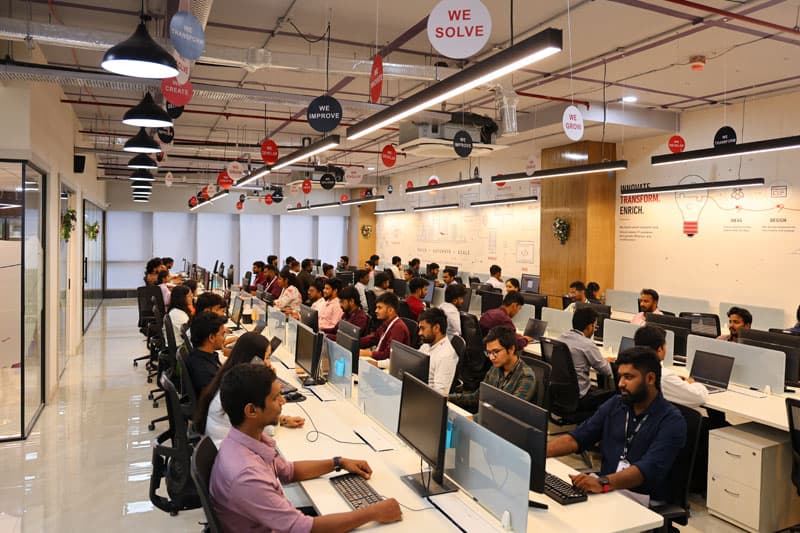
LLM Applications That Stay Accurate, Private and Within Budget
Large language models can read, write and reason over text at a scale people cannot match. Getting reliable results from them in a business setting takes more than an API key. You need the right model, the right context, a way to measure quality and a plan for cost.
Our LLM engineers help you decide between hosted models such as GPT, Claude and Gemini, and open-weight models such as Llama and Mistral that you can run privately. We build retrieval pipelines so the model answers from your content, and we fine-tune only when prompts and retrieval are not enough.
We also build the less glamorous parts: test sets, automatic evaluation, safety filters, caching and usage dashboards. They are what keep an LLM application dependable after launch and keep your bill predictable.
LLM services we offer
From the first prototype to a monitored production system.
LLM application development
Assistants, copilots, summarisers and extraction tools built on large language models.
Retrieval-augmented generation (RAG)
Pipelines that ground answers in your documents and databases, with citations.
Fine-tuning and adaptation
Tune open or hosted models on your data for tone, format or domain terms.
Private and open-source LLM deployment
Run Llama, Mistral and similar models in your cloud or on-premise.
Agents and tool use
Assistants that call your APIs to look up data and take approved actions.
Evaluation and testing
Test sets and automatic scoring for accuracy, safety and consistency.
Guardrails and governance
Content filters, access control, logging and review workflows.
Cost and latency optimisation
Caching, smaller models and routing to keep responses fast and bills low.
Our LLM Development Process
A disciplined path from prototype to dependable production.
Use-Case and Data Review
We define the task, the users and the sources of truth.
Model Selection
We compare candidate models on quality, privacy and cost.
Retrieval and Prompt Design
We build the retrieval pipeline and the prompts and tools.
Evaluation Setup
We create test sets and scoring to measure quality objectively.
Build and Integrate
We develop the application and connect it to your systems.
Deploy and Monitor
We launch with guardrails and track quality, latency and cost.
What businesses build with LLMs
Typical applications that deliver value quickly.
Knowledge assistants
Ask questions across policies, manuals and past work.
Document analysis
Summarise and extract from contracts, reports and filings.
Customer support
Draft answers or resolve queries from your help content.
Code and IT assistance
Explain, review and generate code with your standards.
Content workflows
Drafts, translations and variants for review.
Research and analysis
Pull insights from large volumes of text.
What decides the cost of LLM development
Cost depends on the approach and the scale of use.
Model choice
Hosted APIs and self-hosted models have different cost profiles.
Data and retrieval complexity
More sources and formats need more engineering.
Fine-tuning needs
Tuning adds data preparation, training and evaluation.
Quality targets
Stricter accuracy and safety needs more testing.
Scale and latency
High traffic and fast responses need careful design.
Deployment environment
Private cloud and on-premise setups cost more than public APIs.
How we quote
A discovery sprint starts from $1,000 and ends with a fixed-scope or time-and-materials proposal. Team rates and engagement models are on our How We Work page.
Compliance Built In,
Not Bolted On
Regulatory requirements show up in architecture reviews, threat models, and rollout gates from sprint zero. Every system we ship is reviewed against the standards your industry, region, and customers actually live under, so production never surprises your auditors.
Industries we serve
We build with teams that already know your sector's rules, users and integrations, so you spend less time explaining your business and more time shipping.
Browse all industries- HealthcareDigital health and clinical systems
- FinancialFintech, banking and investment
- Food & HospitalityRestaurants, hotels and travel
- EducationEdTech, LMS and learning tools
- Information TechnologySaaS, cloud and enterprise software
- Retail & EcommerceStorefronts, POS and inventory
- Real EstatePropTech, listings and CRM
- LogisticsSupply chain and fleet tracking
OZRIT in the press
Our work and our team have been featured across leading technology and business publications.













Related services
AI development company
End-to-end AI product development
AI and ML development services
Enterprise AI and analytics
Machine learning development
Predictive and vision models
ChatGPT solutions
OpenAI integration and custom GPTs
AI chatbot development
Support, sales and WhatsApp bots
Custom software development
Software your LLM connects to
How we work
Engagement models, timelines and rates
FAQ
A large language model, or LLM, is an AI model trained on vast amounts of text. It can understand and generate language, answer questions, summarise, translate and write code.
RAG stands for retrieval-augmented generation. The system first finds relevant passages in your documents, then gives them to the model to answer. It keeps answers current, specific and traceable, without retraining the model.
Fine-tune when you need a consistent style, format or specialised vocabulary that prompts and retrieval cannot deliver. For most knowledge tasks, RAG gives better value and is easier to update.
Hosted models are quicker to start and often more capable. Running open-weight models yourself gives more control over data and cost at scale. We help you compare on accuracy, privacy and total cost.
The cost depends on the use case, data quality, integrations and how much accuracy you need. A discovery sprint from $1,000 tests the idea on your data and ends with a fixed-scope or time-and-materials quote. Team rates are on our How We Work page.
A working prototype usually takes 3 to 5 weeks. A production system with evaluation, security and integrations takes 8 to 16 weeks.
We ground answers in your sources, test against curated questions, measure scores on every change and add fallbacks for uncertain answers.
We can use private endpoints, run models in your own cloud account or on-premise, mask sensitive fields and keep full audit logs.
Yes. We evaluate models for Hindi, Telugu, Tamil and other languages, and choose or tune the one that performs best for your content.
Yes. You can add LLM and AI engineers to your team monthly, with a typical ramp-up of 10 to 15 business days.
