

- Your cart is empty Browse Shop
How Progressive Web Apps (PWAs) Are Dominating Mobile Commerce in 2026
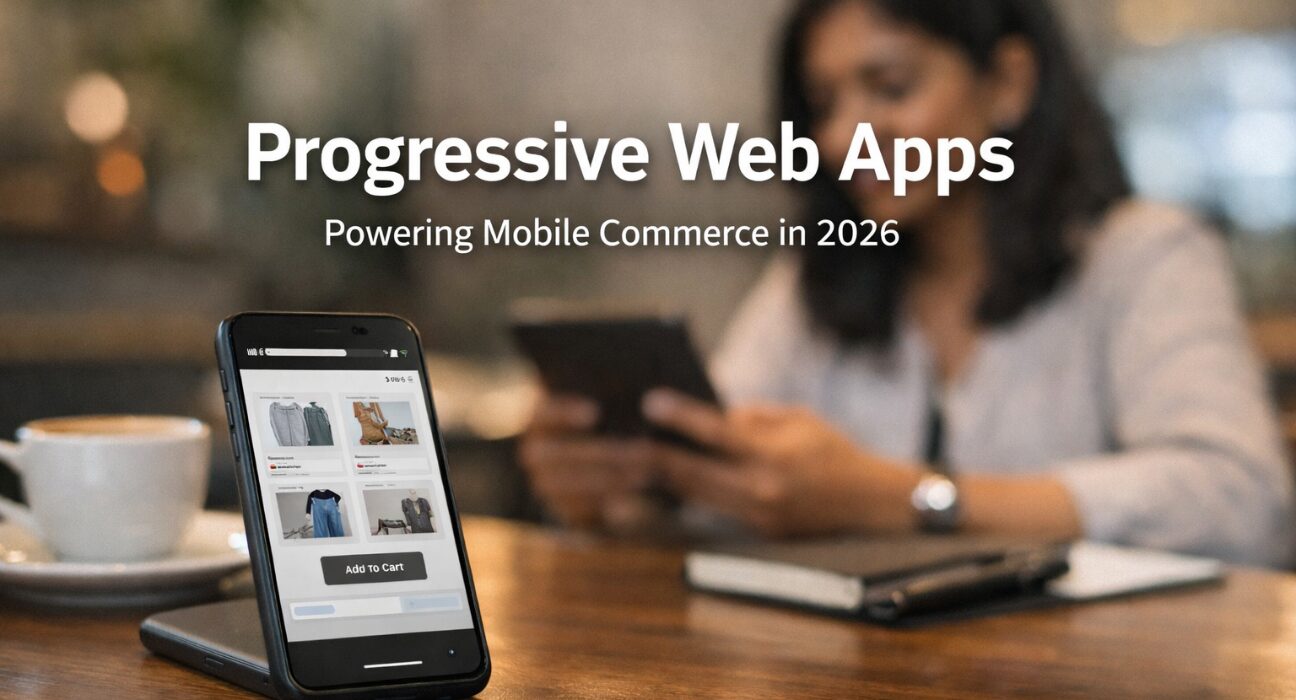
Picture this: You’re at Connaught Place in Delhi, browsing through your favourite online store during your lunch break, when suddenly your internet connection drops. Frustrating, isn’t it? Now imagine if that shopping app continued working seamlessly, even offline, letting you browse products and add items to your cart. This isn’t science fiction; it’s the reality of Progressive Web Apps (PWAs) that are revolutionising mobile commerce in India and across the globe in 2026.
As mobile commerce continues to grow exponentially in India, businesses are discovering that traditional mobile apps and websites simply aren’t cutting it anymore. Progressive Web Apps have emerged as the perfect solution, combining the best features of websites and native apps whilst eliminating their limitations. From the bustling markets of Mumbai’s Bandra-Kurla Complex to the tech hubs of Bengaluru’s Electronic City, Indian businesses are embracing PWAs to deliver superior shopping experiences to their customers.
In this article, we’ll explore why Progressive Web Apps are becoming the dominant force in mobile commerce and how they’re transforming the way Indians shop online in 2026.
What Makes Progressive Web Apps Perfect for Indian Mobile Commerce
Progressive Web Apps are web applications that function like native mobile apps but don’t require downloading from app stores. They’re built using standard web technologies but offer app-like experiences, including push notifications, offline functionality, and home screen installation.
For the Indian market specifically, PWAs address critical challenges. With varying internet speeds across different regions, from high-speed fibre connections in Gurgaon’s Cyber City to intermittent 4G in tier-2 cities, PWAs’ offline capabilities ensure uninterrupted shopping experiences. They’re incredibly lightweight, typically consuming less than 1MB of storage compared to 20-50MB for traditional apps, which is crucial when many Indian users still grapple with limited phone storage.
According to recent industry data, PWAs load 2-3 times faster than traditional mobile websites and show 70% higher conversion rates. For businesses operating in competitive markets like Hyderabad’s HITEC City or Pune’s Hinjewadi IT Park, these statistics translate directly into increased revenue and customer satisfaction.
Lightning-Fast Performance Driving Sales and Customer Loyalty
Speed matters tremendously in mobile commerce. Research shows that 53% of mobile users abandon sites that take longer than three seconds to load. Progressive Web Apps excel here because they cache essential resources, enabling near-instantaneous loading even on slower connections.
Consider a customer in Chennai browsing fashion accessories during their commute on the suburban train. With a PWA, product pages load almost instantly, images appear smoothly, and the checkout process remains swift regardless of network fluctuations. This seamless experience keeps customers engaged and significantly reduces cart abandonment rates.
Major Indian e-commerce platforms have reported remarkable improvements after switching to PWAs. Page load times have decreased by up to 60%, whilst user engagement metrics have soared. Businesses in areas like Kolkata’s Salt Lake or Ahmedabad’s SG Highway are witnessing firsthand how PWA performance translates into tangible business growth.
The speed advantage becomes even more pronounced during high-traffic periods like festival sales, when traditional apps and websites often crash or slow down considerably. PWAs maintain consistent performance, ensuring businesses don’t lose sales during their most crucial selling periods.
Offline Functionality: A Game-Changer for India’s Diverse Connectivity Landscape
India’s internet connectivity varies dramatically across regions and situations. A shopper might have excellent 5G coverage at Mumbai’s Lower Parel but face connectivity issues when travelling through suburban areas. Progressive Web Apps solve this problem through sophisticated offline capabilities.
When users visit a PWA-powered shopping site, essential data gets cached on their device. They can browse previously viewed products, read descriptions, check reviews, and even add items to their cart without an active internet connection. Once connectivity returns, the PWA automatically synchronises all actions.
This feature is particularly valuable for customers in tier-2 and tier-3 cities where internet infrastructure is still developing. A merchant selling handicrafts in Jaipur’s Johari Bazaar can reach customers across Rajasthan without worrying whether they have consistent internet access. The offline-first approach of PWAs ensures shopping never stops.
Service workers, the technology behind PWA offline functionality, intelligently manage which resources to cache and update. This means customers always see relevant, fresh content when online whilst retaining access to essential features when offline. For businesses, this translates to higher engagement and fewer frustrated customers abandoning their shopping journey.
Installation Without App Store Hassles
One of the biggest barriers to mobile app adoption is the cumbersome installation process. Users must navigate to app stores, wait for large downloads, grant numerous permissions, and consume significant storage space. Many Indians, particularly those with budget smartphones, simply skip this process.
Progressive Web Apps eliminate these friction points entirely. Users can “install” a PWA to their home screen with just two taps, without visiting any app store. The installation is nearly instantaneous and consumes minimal storage. Once installed, the PWA icon sits alongside native apps on the home screen, providing the same convenient access.
For businesses in competitive markets like Delhi’s Nehru Place or Bengaluru’s Commercial Street, reducing installation friction directly increases user acquisition. Studies indicate that PWAs see 5-10 times higher installation rates compared to traditional apps because the process is so effortless.
Additionally, PWAs update automatically in the background without requiring user intervention or app store approvals. This means businesses can push new features, fix bugs, and update content instantly, ensuring all customers always have the latest version. No more dealing with users on outdated app versions or waiting weeks for app store review processes.
Push Notifications That Re-Engage Customers Effectively
Customer retention remains one of the biggest challenges in mobile commerce. Progressive Web Apps address this through powerful push notification capabilities that work identically to native app notifications.
Imagine a jewellery store operating near Hyderabad’s Charminar that wants to alert customers about a limited-time offer on gold ornaments. Through PWA push notifications, they can send personalised messages directly to customers’ devices, even when the browser isn’t open. These notifications appear on lock screens and notification centres, just like native app alerts.
What makes PWA notifications particularly effective is their targeting capability. Businesses can segment customers based on browsing behaviour, purchase history, location, and preferences. A bookstore in Kolkata’s College Street could send notifications about new Bengali literature arrivals specifically to customers who’ve previously browsed that category.
The opt-in process for PWA notifications is also more user-friendly than traditional apps. Users can grant notification permission with a single tap, without going through complex permission screens. This simplicity has led to 2-3 times higher opt-in rates for PWA notifications compared to native apps.
Moreover, these notifications drive measurable results. Businesses report that well-crafted push notifications generate 4-8 times higher click-through rates than email marketing, bringing customers back to complete purchases or discover new products.
Cost-Effectiveness That Levels the Playing Field
Developing separate native apps for Android and iOS requires significant investment—often ranging from ₹5-15 lakhs or more for quality applications. Small and medium businesses operating in markets like Surat’s textile district or Ludhiana’s garment market often find these costs prohibitive.
Progressive Web Apps offer a remarkably cost-effective alternative. A single PWA works seamlessly across all devices and platforms, smartphones, tablets, and desktops, regardless of operating system. Development costs typically range from 30-50% less than building separate native apps, whilst maintenance costs drop even further.
This cost advantage democratises mobile commerce, enabling smaller businesses to compete with larger players. A boutique operating near Mumbai’s Linking Road can offer customers the same smooth, app-like shopping experience as major national retailers, without massive technology investments.
The savings extend beyond development. PWAs don’t require separate teams to maintain iOS and Android versions, don’t involve app store fees (Apple charges 15-30% commission on transactions), and update without the delays and costs associated with app store submissions. For businesses focused on profitability, these advantages are compelling.
Additionally, the single codebase means features and improvements roll out simultaneously to all users. There’s no version fragmentation or platform-specific bugs to manage, reducing technical complexity and support costs significantly.
Enhanced Security Building Customer Trust
Security concerns remain paramount in mobile commerce, especially with increasing awareness about data breaches and online fraud. Progressive Web Apps are served exclusively over HTTPS, providing robust encryption for all data transmitted between users and servers.
This security-first approach protects sensitive information like payment details, addresses, and personal data from interception. For customers shopping from cafés in Bengaluru’s Indiranagar or co-working spaces in Pune’s Koregaon Park on public Wi-Fi networks, this encryption provides crucial protection.
PWAs also benefit from browser security features and regular updates. Unlike native apps that might contain vulnerabilities until users manually update, PWAs receive security patches automatically. This ensures customers always interact with the most secure version.
From a business perspective, HTTPS requirements and browser-based security reduce liability and build customer confidence. Displaying security indicators like the padlock icon in the address bar reassures customers that their transactions are protected, directly impacting conversion rates and trust.
Future-Proof Technology Aligned with Web Standards
The web platform continues evolving rapidly, with new capabilities being added regularly. Progressive Web Apps are built on open web standards, ensuring they benefit from these innovations automatically.
In 2026, PWAs can access device features that were previously exclusive to native apps, such as cameras, GPS, sensors, payment systems, and biometric authentication. This means a PWA-based shopping app can offer features like AR-based product visualisation, location-based offers, or fingerprint authentication for purchases.
For businesses planning long-term digital strategies in growing markets like Noida’s commercial sectors or Coimbatore’s manufacturing belt, PWAs offer future-proof solutions. As web capabilities expand, PWAs naturally inherit new features without requiring complete rebuilds.
Major technology companies, including Google, Microsoft, and Apple, are investing heavily in PWA capabilities. Browser support continues improving, with Safari, Chrome, Edge, and Firefox all enhancing PWA features. This broad industry support ensures Progressive Web Apps remain viable and increasingly powerful for years to come.
Frequently Asked Questions
How do Progressive Web Apps differ from regular mobile websites?
Progressive Web Apps combine website accessibility with app-like functionality. Unlike regular mobile websites, PWAs work offline, send push notifications, install to home screens, and load significantly faster through caching. They provide immersive, full-screen experiences similar to native apps whilst remaining discoverable through search engines like regular websites.
Can PWAs really replace native mobile apps for e-commerce businesses?
For most e-commerce businesses, yes. PWAs now offer nearly all features that native apps provide, push notifications, offline access, home screen presence, payment processing, and more. Unless your business requires highly specialised device features (like advanced camera processing or intensive graphics), PWAs deliver equivalent functionality at lower cost with broader reach.
How much does it cost to develop a PWA for an Indian small business?
Development costs vary based on complexity, but typically range from ₹1-4 lakhs for small to medium businesses, compared to ₹5-15 lakhs for separate native apps. Many businesses in cities like Jaipur, Chandigarh, and Indore are finding PWAs significantly more affordable whilst delivering professional mobile commerce experiences.
Will PWAs work on older smartphones that many Indians use?
Yes, one of PWA’s advantages is broad compatibility. They work on older Android devices running Chrome 40+ (from 2015) and iPhones with iOS 11.3+ (from 2018). Even on older devices, PWAs provide enhanced experiences compared to traditional mobile websites, though some advanced features might require newer operating systems.
How do I convince customers to “install” my PWA?
Display installation prompts at strategic moments, after users browse several products, add items to cart, or complete a purchase. Highlight benefits like “faster loading,” “shop offline,” or “get exclusive notifications.” Many businesses see 15-25% installation rates when using contextual, value-focused prompts rather than immediate pop-ups.
Conclusion
Progressive Web Apps are genuinely transforming mobile commerce in India throughout 2026, offering businesses of all sizes the tools to deliver exceptional shopping experiences without the complexity and cost of native apps. From improved performance and offline functionality to cost-effectiveness and future-proof technology, PWAs address the unique challenges of India’s diverse digital landscape. Whether you’re operating from Mumbai’s commercial hubs or expanding into tier-2 cities, PWAs provide the competitive edge needed in today’s mobile-first marketplace. If you’re looking to harness the power of Progressive Web Apps for your business, Ozrit specialises in developing high-performance PWA solutions tailored to Indian markets, helping businesses across the country embrace this revolutionary technology and stay ahead in the rapidly evolving mobile commerce landscape.