Connect beverage production, inventory, quality, bottling and distribution in one integrated ERP solution.
OZRIT helps beverage manufacturers plan and develop software around their own production workflows and operational requirements. That can mean custom beverage ERP software built from scratch, or an ERP for beverage manufacturers that integrates with the systems you already run.
CO2 and closures are below reorder level. Purchase request suggested.
Batch BV-2610-039 on hold. Fill level outside specification.
Sample data for illustration only. Not a deployed product.
What Is Beverage Manufacturing ERP Software?
Beverage manufacturing ERP software connects a plant's recipes, production planning, ingredient and packaging inventory, quality checks, bottling, batch traceability, costing and distribution in one system. It is also called beverage ERP software or beverage production management software.
Last updated
OZRIT is a software development company in India. For beverage plant management software, we build custom ERP around your plants, lines and existing systems, usually in phases, instead of selling a packaged product. It is not a compliance certificate, and cost and timeline depend on modules, plants and integrations.
A beverage plant moves large volumes through short, fast stages, with many SKUs sharing lines and a shelf life that is always running. When records for production, stock, quality and dispatch live in different places, small gaps add up. Not every plant has all of these problems, and most will recognise several.
Production and inventory records sit apart.
Stock is adjusted at month end instead of as each batch consumes it, so the book figure and the shelf rarely agree.
Recipes and formulations are managed by hand.
Versions live in spreadsheets and notebooks, and a change on one line may not reach another.
Ingredient consumption is recorded loosely.
Syrup, concentrate, CO2, additives and packaging are issued in bulk and reconciled later, if at all.
Batch traceability is limited.
Linking a finished lot back to its ingredient lots and forward to the customers it reached takes manual searching.
Expiry and shelf life are watched informally.
Near-expiry stock is found during a stock count, not flagged in time to sell or rework it.
Quality records are scattered.
Inspection sheets, lab results and release decisions are held in separate files and systems.
Bottling and packaging lose time and material.
Changeovers, rejects and packaging usage are recorded inconsistently between shifts and lines.
Visibility across warehouses is poor.
Plant stores, finished-goods warehouses and depots keep their own numbers.
Production cost is hard to calculate.
Material, packaging, labour and overhead are brought together after the fact, which delays margin decisions.
Management reporting arrives late.
Reports are compiled by hand from several sources, so decisions rely on yesterday's, or last week's, data.
One Production Line of Data, From Raw Material to Distributor
In an integrated beverage ERP, each stage writes to the same record, so what happens in the syrup room is visible at filling, in the warehouse and at dispatch. The sequence below is typical. Your own flow is configured to match how your plants run, including stages that are skipped, repeated or run in parallel.
Raw material and water receiving
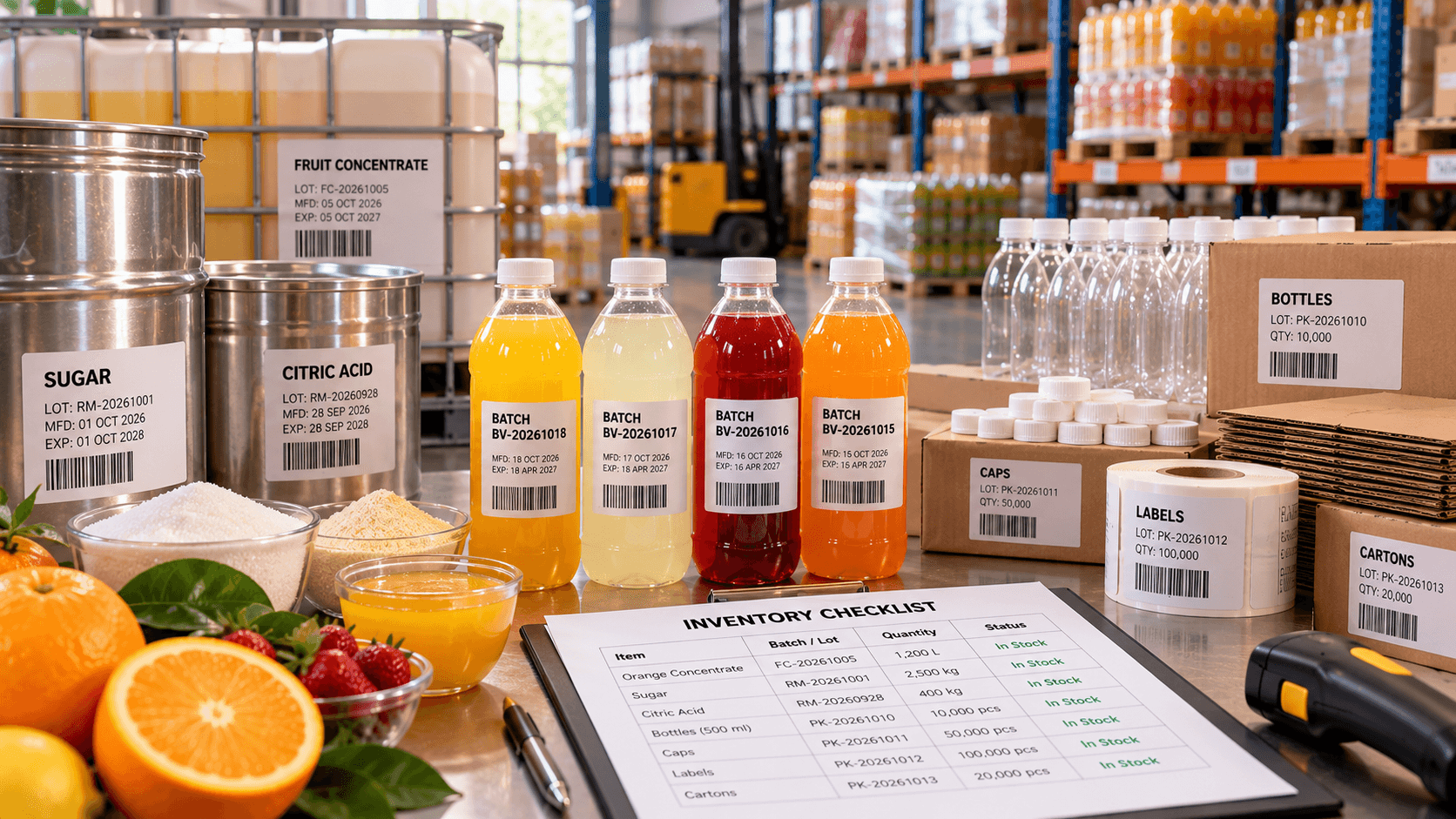
Supplier lots, specifications, incoming inspection, water source and treatment records
Syrup and formulation
Recipe version, quantities issued, planned against actual consumption
Blending and treatment
Batch number, process steps, holds and release where the process captures them
Filling
Line, product, run times, changeovers and rejects
Capping, labelling and coding
Label and batch-code reconciliation, packaging material usage
Packaging and palletising
Cases, shrink packs and pallet builds linked to the finished lot
Warehouse
Finished-goods lots, expiry dates, locations and transfers between sites
Distribution
Orders, allocation by expiry, dispatch, returns and delivery documents
Because every stage shares one batch record, costs and quality results flow into finance and reporting without re-keying, and that is what makes batch-level costing and lot tracing possible.
Beverage ERP Modules and Capabilities for Production, Inventory, Quality and Distribution
These are the beverage manufacturing software capabilities we can scope and build for your plants. They are not a packaged product with a fixed feature list. Most projects begin with two or three of these groups and add the rest in later phases.
Recipe and formulation management
One controlled source for every formulation, from concentrate and syrup to the finished drink.
In practice: Production teams work from the approved version, and a change in a recipe applies to the next batch on every line, which supports consistent taste and cost.
Formulation and bill of materials by product and pack size
Version control with approvals
Scaling to tank and batch size
Ingredient specifications and allowed substitutions
Planned versus actual consumption by batch
Production planning and scheduling
Beverage production planning software that plans production orders against demand, ingredient and packaging availability and line capacity.
In practice: Planners can see whether the packaging and ingredients for a run are available before it is scheduled, which supports fewer stoppages and a more realistic plan across flavours and pack sizes.
Production orders and line scheduling
Changeover-aware sequencing of flavours and pack sizes
Material and packaging requirement planning
Shift and line assignment
Planned against actual output
Batch and lot traceability
Beverage batch tracking software that keeps lot-level links from supplier receipt through production to dispatch.
In practice: When a quality question arises, the team can trace a finished lot back to its ingredients, or an ingredient lot forward to the batches and customers it reached, as far as the recorded data allows.
Supplier lot to production batch links
Finished-goods lot and batch coding
Forward and backward trace queries
Affected-lot investigation
Recall and withdrawal records
Raw material and inventory management
Beverage inventory management software for ingredients, concentrates, packaging and finished goods, tracked by lot, location and expiry.
In practice: Stores teams see usable stock and what is nearing expiry, which supports first-expired-first-out issue and more reliable reorder decisions.
Receipt, issue and transfer by lot
Expiry and shelf-life tracking
FEFO issue and picking where applicable
Packaging materials such as preforms, closures, labels and cartons
Multi-location stock and reconciliation
Quality management
Beverage quality management software that captures inspections, specifications and release decisions at each stage.
In practice: Quality teams record results against a specification where the work happens, hold or release lots from the same system, and keep the documentation together for review.
Incoming material and water checks
In-process and finished-product inspection
Specifications and acceptance limits
Hold, release and rejection decisions
Non-conformance and corrective action records
Bottling and packaging management
Beverage bottling software that records filling and packing runs against the production order, line by line.
In practice: Supervisors can see run time, rejects, changeovers and packaging used per run, which supports finding where time and material are being lost.
Filling line runs linked to production orders
Rejects and downtime reasons
Label, closure and pack material reconciliation
Batch coding and date marking records
Returnable containers and crates where used
Beverage costing and finance
Batch costs built from actual material, packaging, labour and overhead.
In practice: Finance and plant heads can compare planned and actual cost per batch and per unit, which supports pricing and margin discussions with current numbers.
Material and packaging costing by batch
Labour and overhead allocation
Production variance
Inventory valuation
GST-related accounting workflows and links to existing finance software
Sales, distribution and order management
Beverage distribution management software that connects orders, allocation and dispatch to real, in-date stock.
In practice: Sales and dispatch teams allocate from available lots, generate delivery documents from the same data and see what is pending for each distributor.
Sales and distributor orders
Scheme and customer-specific pricing
Allocation by expiry
Dispatch planning and delivery documents
Returns and rejected stock
Reporting and management dashboards
Management views built from the same operational records, without re-keying data.
In practice: Leaders get production, inventory, quality and dispatch views from one source, which supports faster and better-informed decisions.
Production output and line performance
Yield and wastage
Inventory ageing and expiry exposure
Quality trends
Plant, warehouse and distributor views
Not sure which groups to start with? We can help you decide in a requirements assessment.
Beverage Industry ERP Solutions: How Workflows Differ by Beverage Type
A water bottler, a juice maker and a brewery all fill containers, but their formulations, process steps, shelf life and distribution are very different. A beverage ERP for each is configured differently, so the priorities below are a starting point for discovery, not a fixed template.
Bottled water and packaged drinking water
Formulation and ingredients
Few ingredients, so the focus is source, treatment and testing records rather than a long recipe.
Filling and packaging
High-volume lines, with bottle, closure and label consumption driving most of the material cost.
Shelf life and expiry
Date marking and lot coding by run, with shelf life set by the product and pack.
Distribution
Large volumes to distributors, and returnable jars or crates where used.
Soft drinks and carbonated beverages
Formulation and ingredients
Syrup-to-water ratios and carbonation levels need tight, recorded control.
Filling and packaging
Fast filling with frequent flavour and pack-size changeovers, often on shared lines.
Shelf life and expiry
Date marking by batch, with first-expired-first-out through the supply chain.
Distribution
Dealer and distributor networks, with returnable glass and crates where used.
Fruit juices and juice concentrates
Formulation and ingredients
Seasonal fruit or pulp inputs vary by lot, so yield and quality of incoming material matter.
Filling and packaging
Depends on the process, for example hot fill or aseptic, and each has different records.
Shelf life and expiry
Set by the process and pack, so expiry control is central.
Distribution
Ambient or chilled distribution depending on the product.
Dairy-based beverages
Formulation and ingredients
Milk and ingredient receipts are tested and tied to supplier lots.
Filling and packaging
Hygienic filling with cleaning and sanitation records closely linked to each run.
Shelf life and expiry
Short and temperature-dependent, so strict expiry handling is needed.
Distribution
Cold-chain dispatch, with temperature-related records where the process requires them.
Energy and sports drinks
Formulation and ingredients
Functional ingredients and additives are added in small, precise quantities, so accuracy of issue and consumption records matters.
Filling and packaging
Still or carbonated lines, often in cans or PET with several SKUs.
Shelf life and expiry
Date marking by batch, with lot-level traceability for ingredients and additives.
Distribution
Retail, modern trade and distributor channels, often with scheme-based pricing.
Tea, coffee and ready-to-drink beverages
Formulation and ingredients
Extraction or brewing steps and blends of raw materials that vary by lot and origin.
Filling and packaging
Hot fill, retort or aseptic, each with its own process records.
Shelf life and expiry
Varies with process and pack, so the system carries it per product.
Distribution
Retail and distributor channels across several pack sizes.
Breweries and other specialised beverage manufacturers
Formulation and ingredients
Brewing and fermentation run over days, so tank and batch status tracking is central.
Filling and packaging
Kegs, bottles and cans, with maturation and conditioning between production and filling.
Shelf life and expiry
Depends on the product and package, with lot control by tank and batch.
Distribution
Alcohol is regulated differently across states, so excise and licence-related records are scoped separately with your advisers.
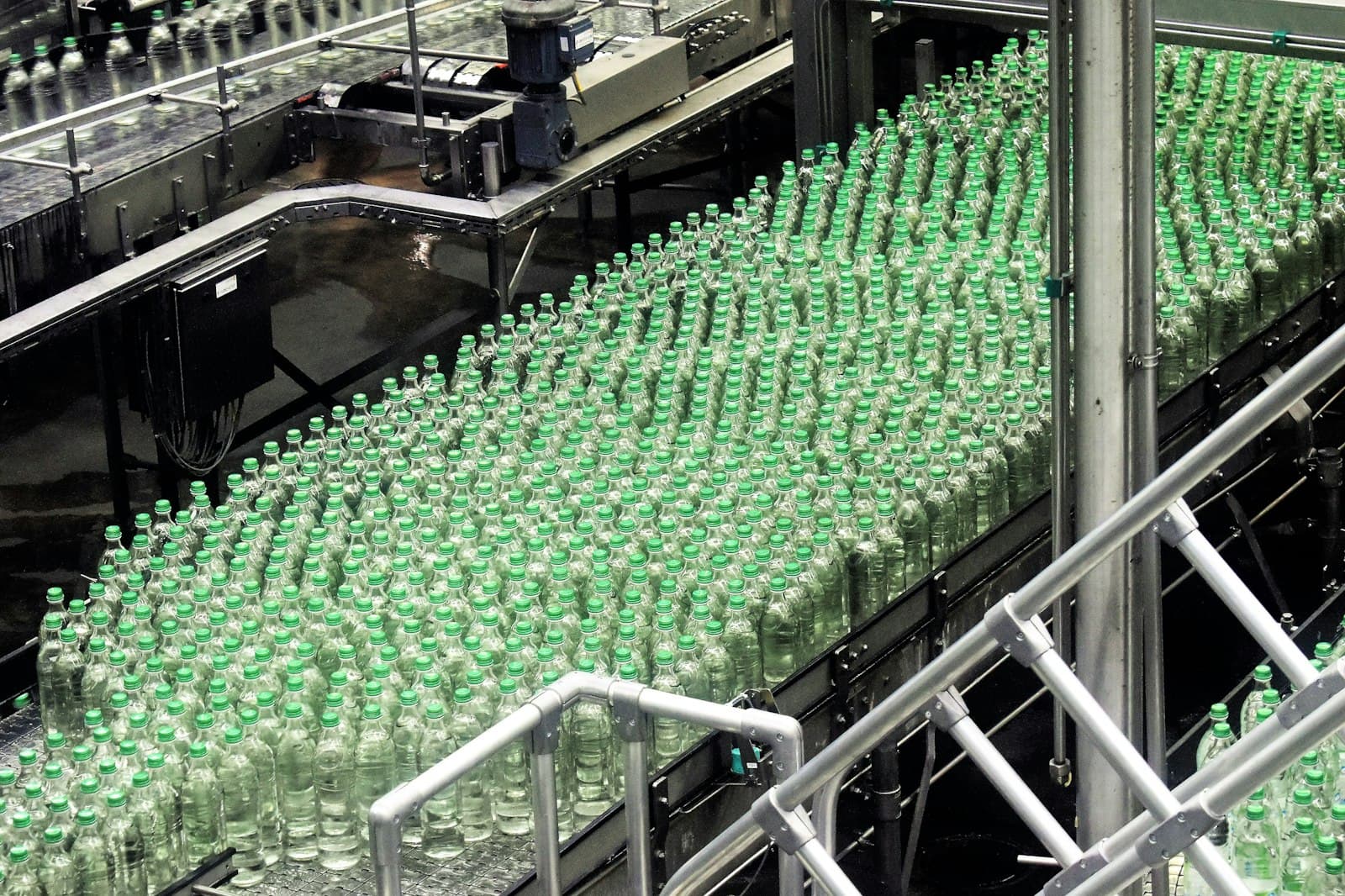
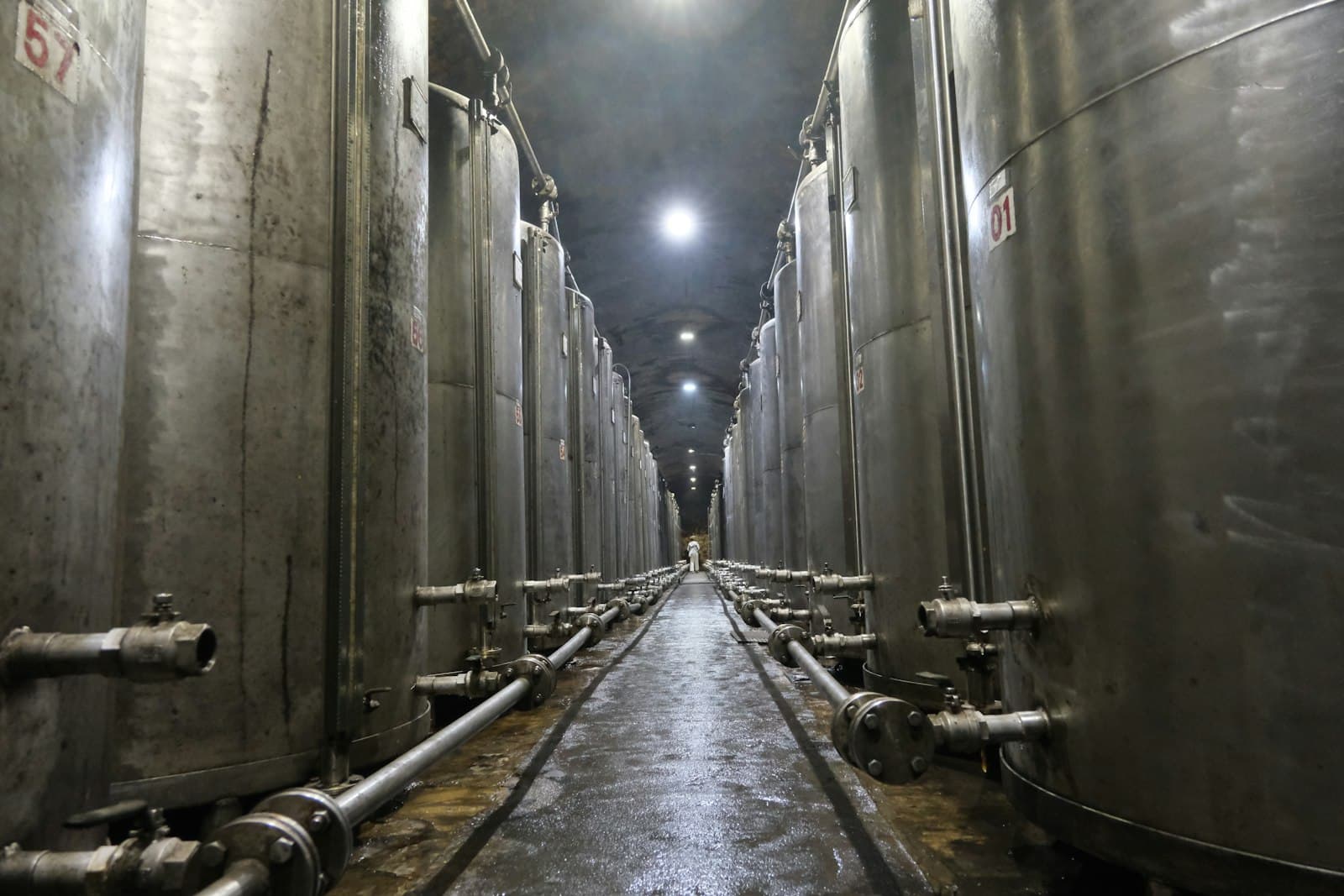
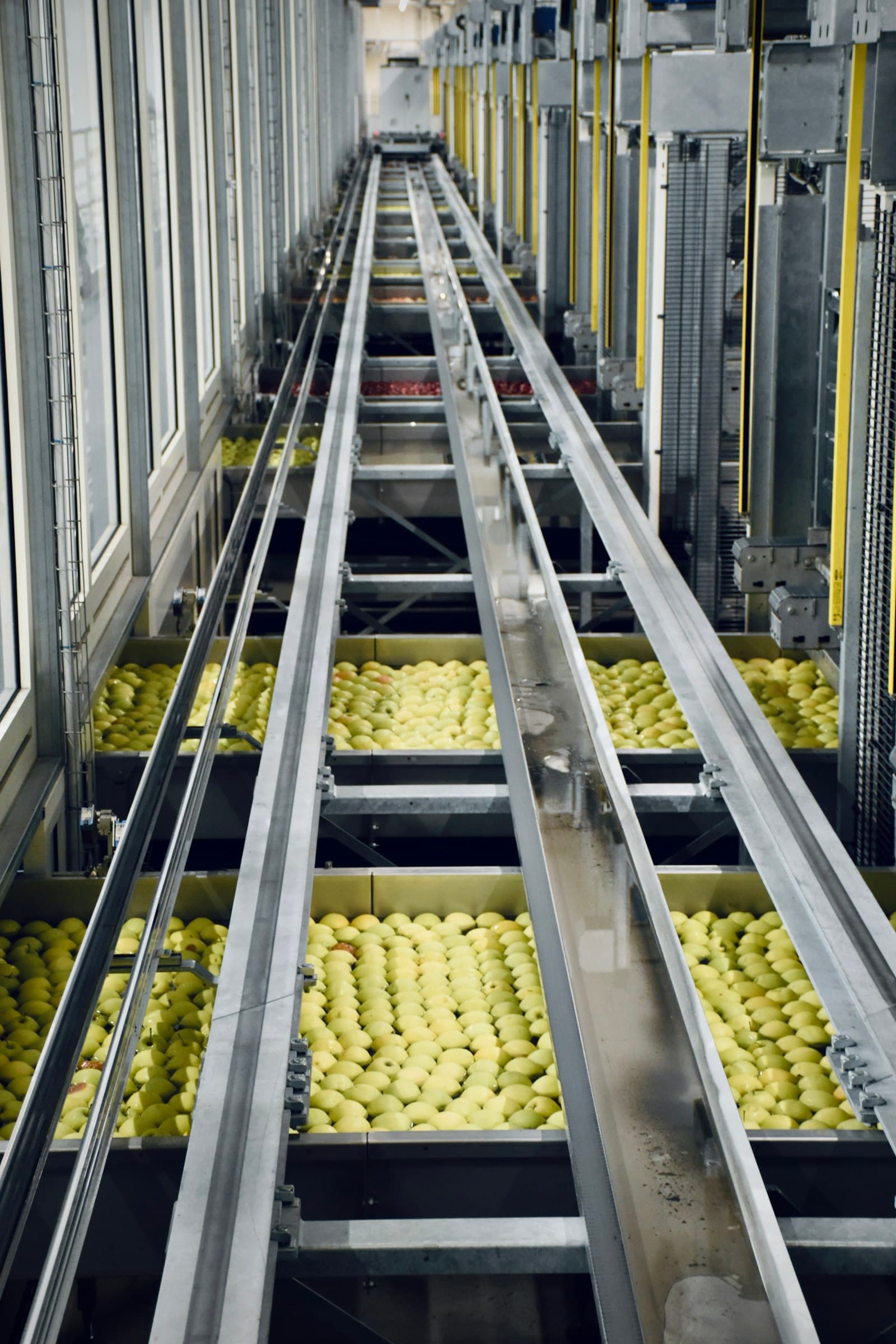
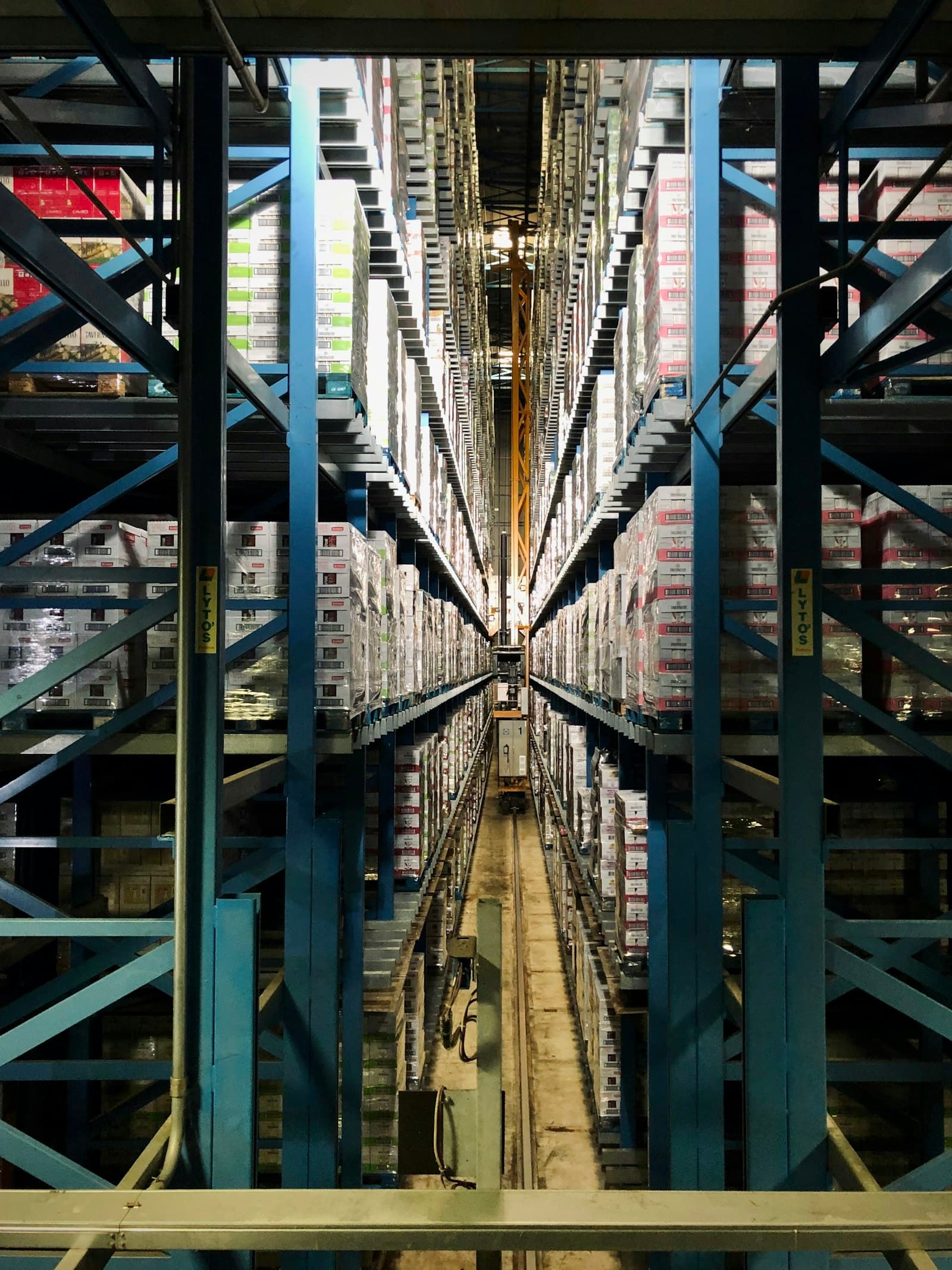
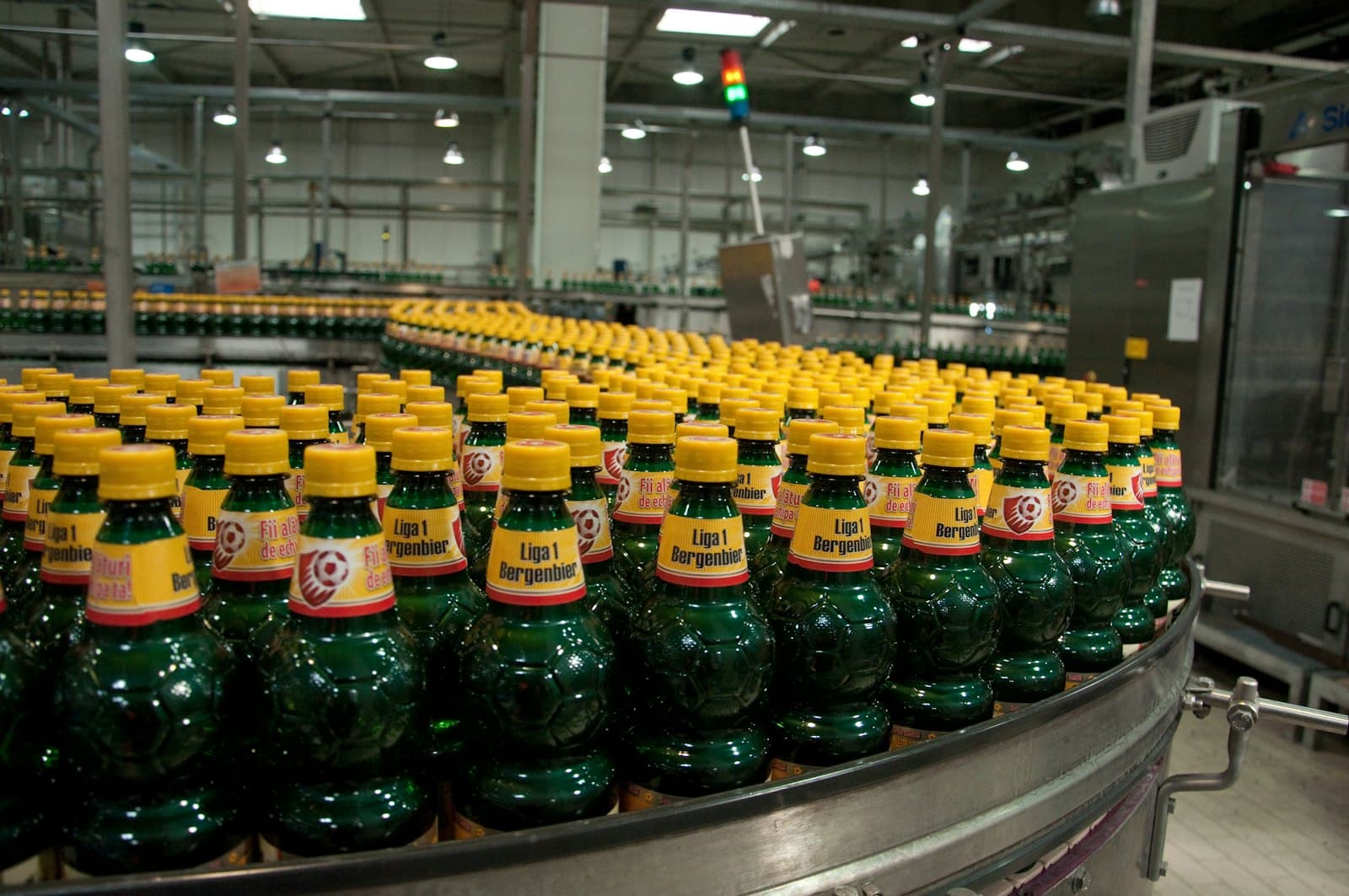
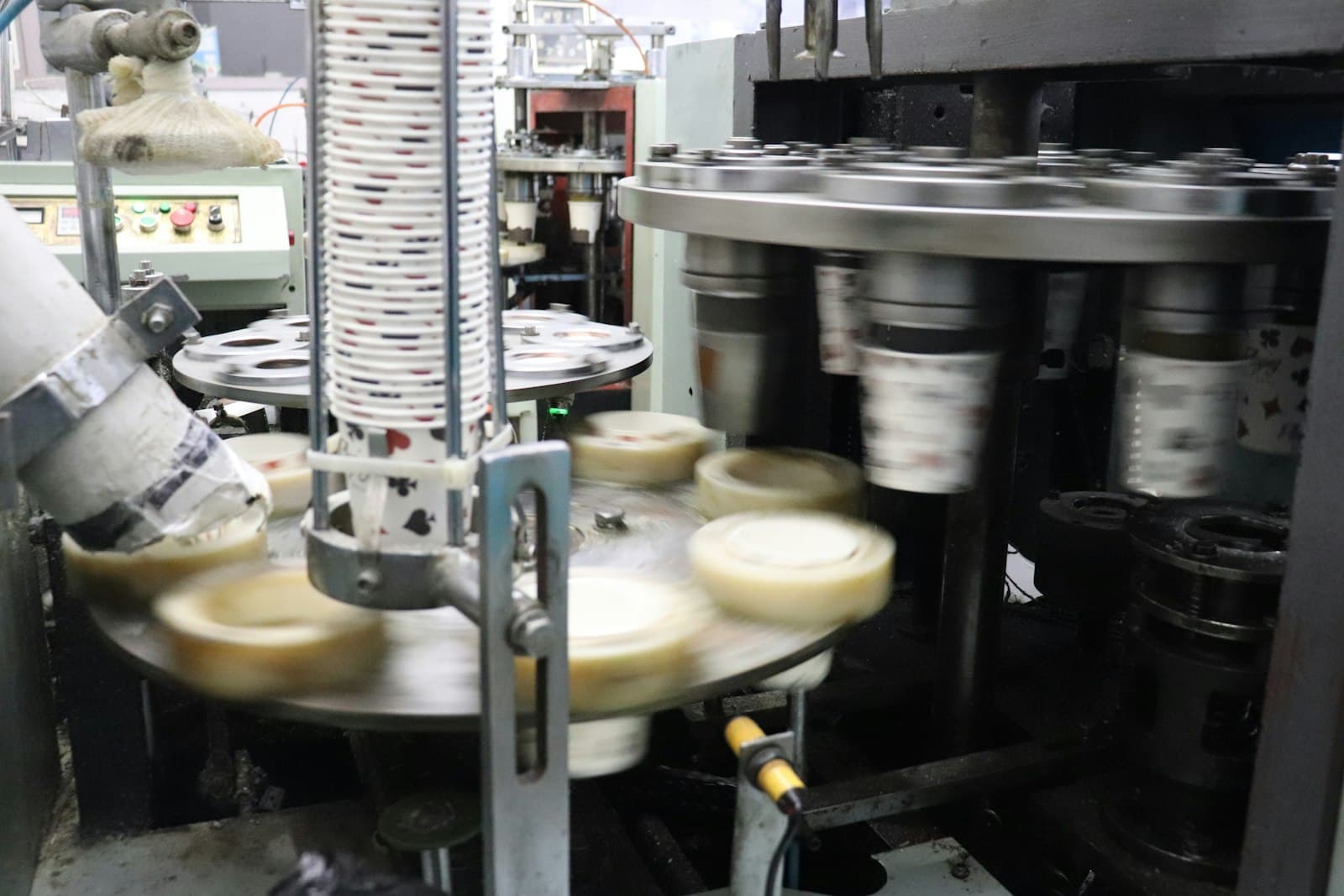
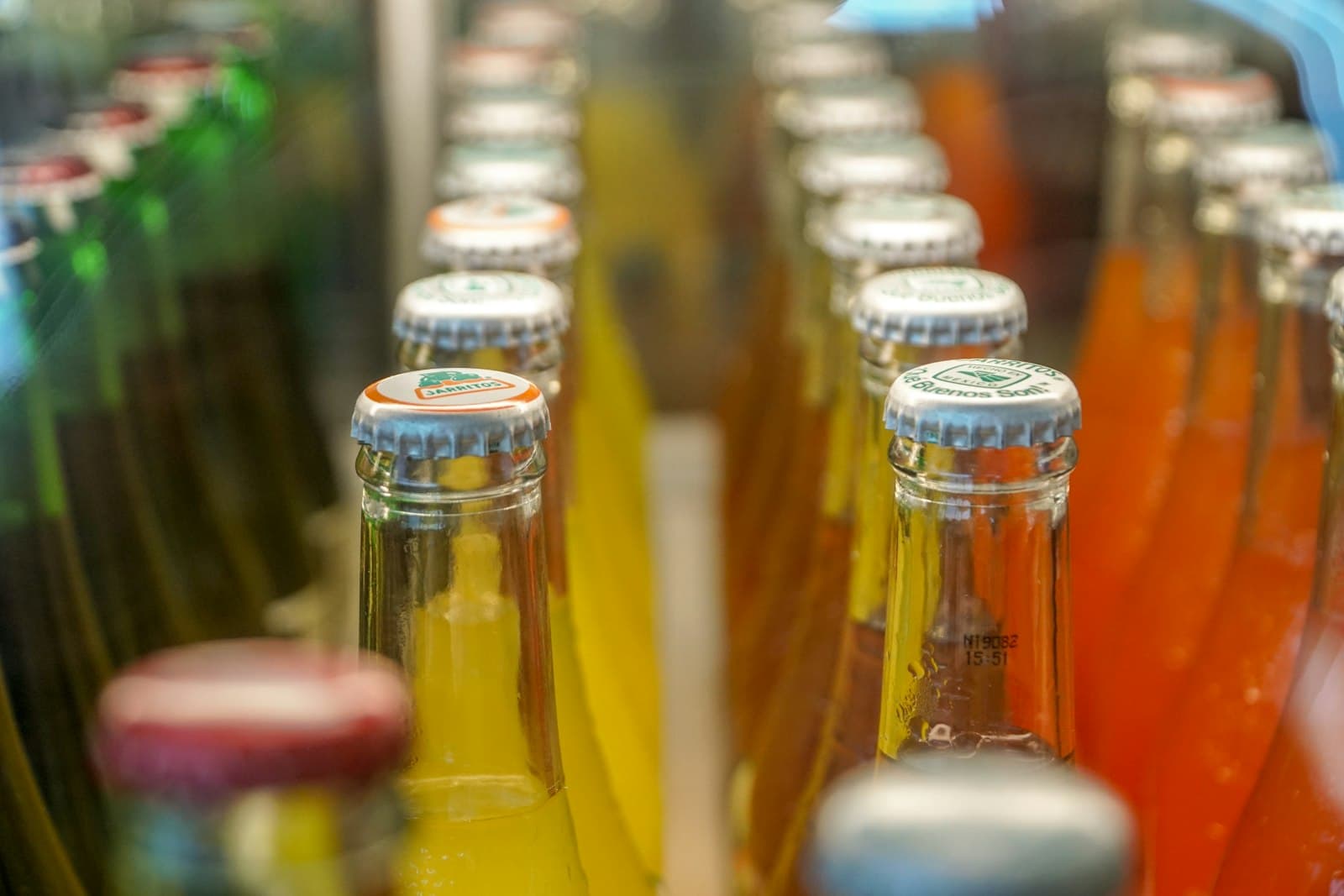
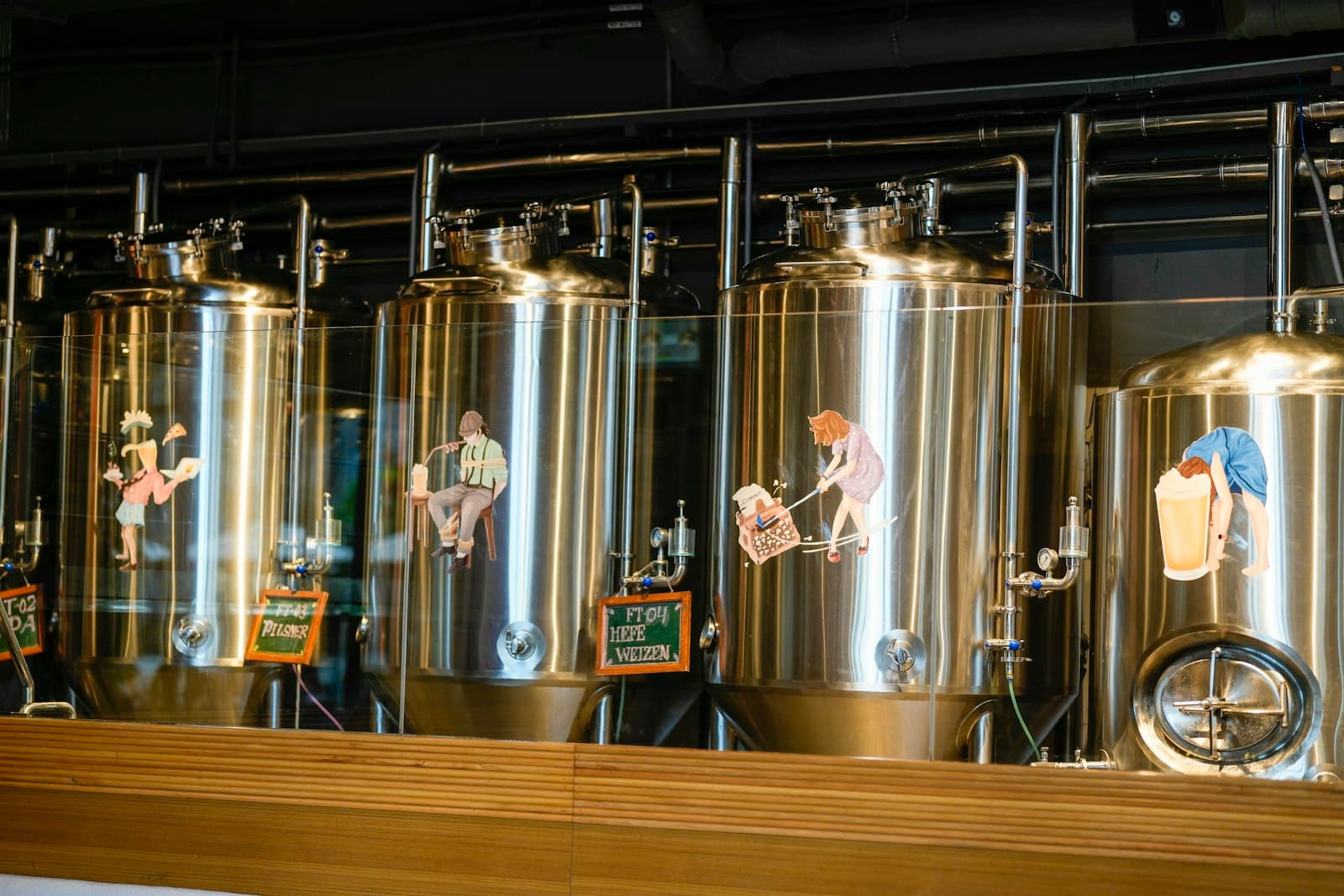
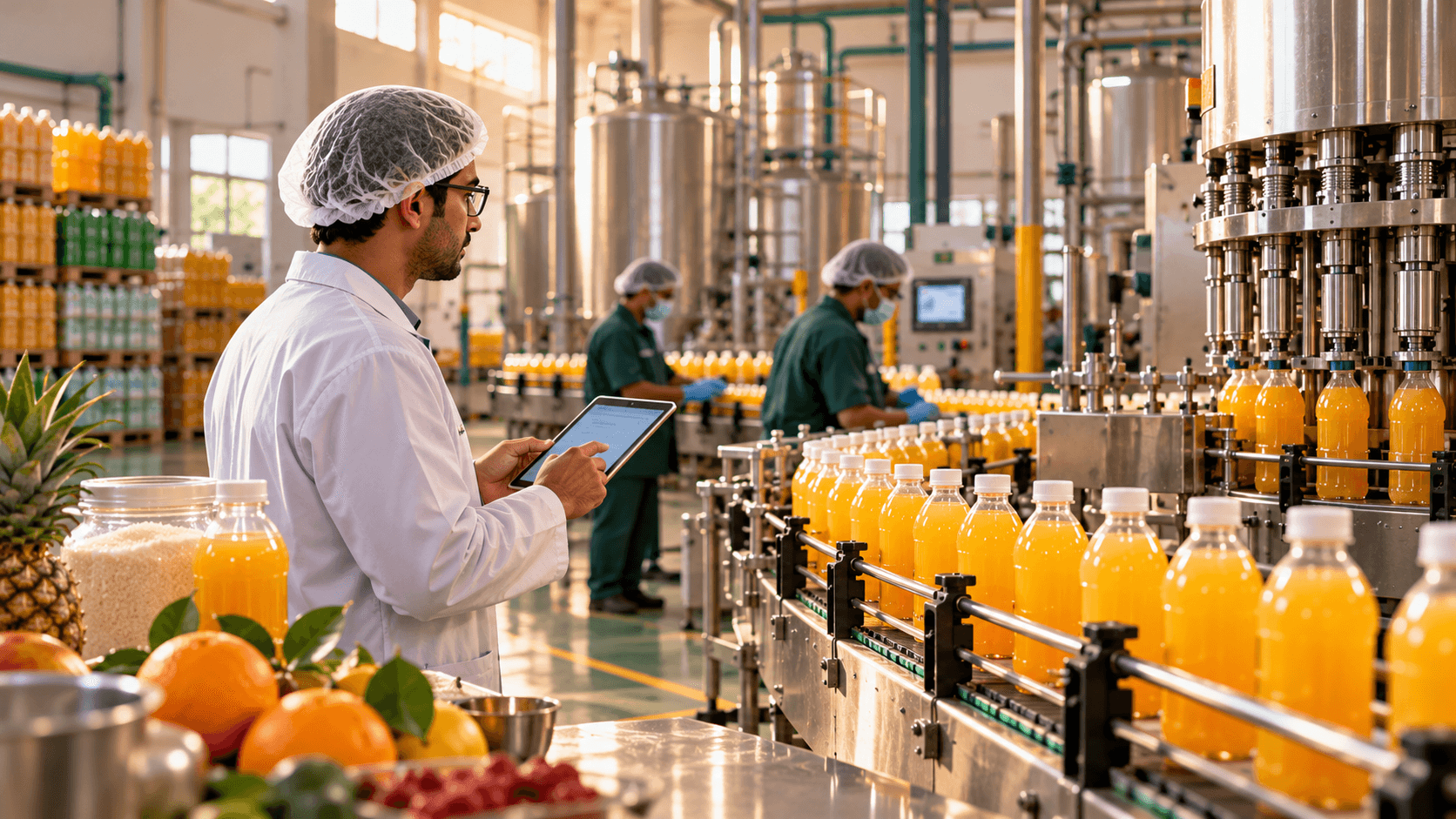
These describe the workflows we would design for, not completed projects in each category. Photographs are illustrative.
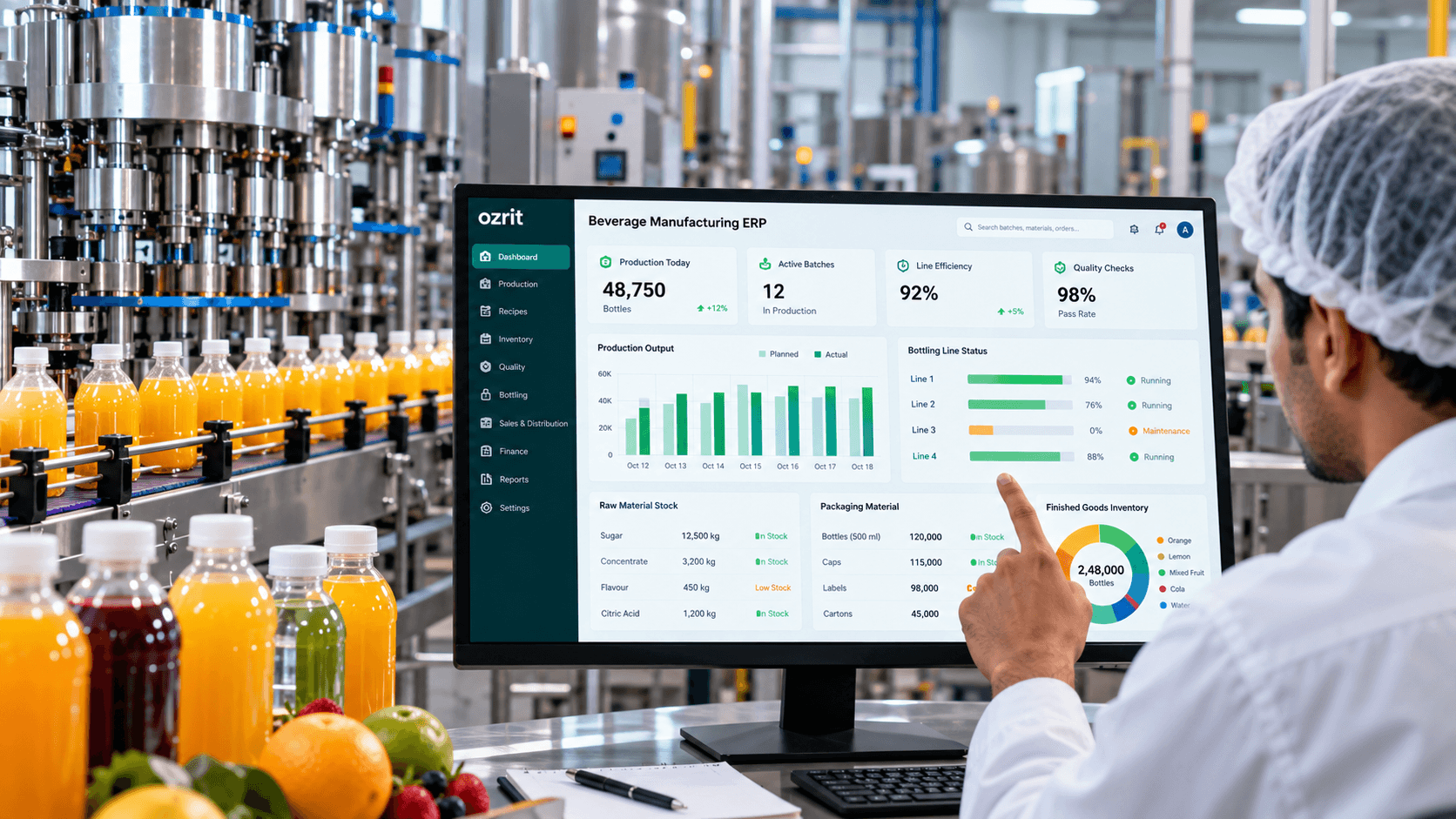
Illustrative Beverage ERP Dashboard
A concept of the screen a plant manager might open each morning: production against plan, line status, active batches, ingredient and packaging availability, quality, expiry, finished goods and dispatch. It shows sample data to illustrate the kind of view we would design with you. It is not a deployed OZRIT product and does not represent real customer performance.
Plant manager · Bottling Unit 1 · 21 Oct 2026
Illustrative concept
Cases produced today
3,860
plan 4,200
Active batches
5
across 3 lines
Lines running
2 of 3
1 in changeover
Inspections pending
3
1 on hold
Dispatches today
11
7 completed
Production output: planned vs actual, this week (cases)
PlannedActual
Bottling line performance
Line 1 · PET 500 mlRunning
Lemon soda
94%
Line 2 · PET 1 LRunning
Packaged water
88%
Line 3 · Glass 200 mlChangeover
Next: apple juice
0%
Active batches
Lemon soda 500 mlFilling
BV-2610-041
72%
Packaged water 1 LPacking
BV-2610-042
88%
Apple juice 200 mlBlending
BV-2610-043
35%
Orange drink 250 mlSyrup room
BV-2610-044
18%
Raw material and packaging availability
Sugar6,400 kg
Apple concentrate1,850 kg
CO22,100 kg
PET preforms 500 ml64,000 pcs
Closures38,000 pcs
Labels52,000 pcs
Quality inspection status
BV-2610-041 · Brix and pHPassed
BV-2610-042 · Microbial testPending
BV-2610-043 · Colour and tastePending
BV-2610-039 · Fill levelOn hold
Expiry alerts
Orange pulp RM-0991 expires in 6 days. Use first.
Lemon soda FG-3388 expires in 21 days. Prioritise dispatch.
Finished-goods inventory
Finished goods in stock with the earliest expiry per product
Product
Cases
Earliest expiry
Lemon soda 500 ml
8,420
14 Mar 2027
Packaged water 1 L
12,960
02 Jun 2027
Apple juice 200 ml
3,150
09 Feb 2027
Dispatch status
DN-5521 · Distributor NorthDelivered
DN-5524 · Distributor WestIn transit
DN-5527 · Modern trade DCLoading
Total produced this week: 28,060 cases (sample data).
Business Benefits of Beverage Manufacturing Software
Results depend on your processes, the scope built and how consistently the system is used on the floor. These are the areas where integrated beverage ERP software can help. We do not quote percentages, because they would not be honest without measuring your plant.
Better production visibility
Planned and actual output, line status and active batches in one view can help supervisors and managers see where a day stands.
More consistent inventory records
Stock updated as materials are issued and goods are received supports figures that are closer to what is on the shelf.
Improved batch traceability
Linked lot records support faster investigation of a quality question, subject to the data captured.
Better coordination between procurement and manufacturing
Purchasing that sees the production plan and current stock can order what the next runs need.
Clearer production costing
Costs recorded against batches help finance and plant teams compare planned and actual cost.
More structured quality documentation
Inspections, holds and releases kept together support review and audit preparation.
Improved management reporting
Reports built from operational records reduce manual compilation and support more timely decisions.
Better coordination between production, warehouse and dispatch
Shared, current data can help the three teams work from the same stock and order picture.
Custom Beverage ERP Software vs Ready-Made ERP
Established platforms such as SAP and other ERPs bring mature functionality, wide ecosystems and proven scale, and many beverage manufacturers run them well. Custom development lets the software follow your process. Neither is automatically cheaper or better. The right choice depends on your requirements and on what existing products already cover.
Custom beverage ERP software compared with a ready-made ERP across seven aspects
Custom ERP development
Ready-made ERP product
Workflow flexibility
Built around your formulations, line set-up and approval rules, including unusual ones.
Configured within the product's model. Works well when your process resembles the standard one.
Implementation scope
Starts with discovery and design, then delivers in phases so one module can go live first.
Core features already exist, so a standard configuration can start sooner.
Initial and recurring costs
Higher upfront engineering investment, then support and enhancement costs. Not automatically cheaper over time.
Licence or subscription fees plus configuration and customisation. Costs can rise with users and modules.
Integration requirements
Designed against your accounting, warehouse and plant systems from the start.
Connectors exist for common systems. Anything outside them is additional work.
Maintenance
Agreed support terms, with you deciding what changes next.
The vendor handles updates and upgrades on its roadmap.
Scalability
Architecture sized for your volumes, plants and users, and extended as needs grow.
Mature products are proven at scale, within the editions and limits they offer.
Vendor dependency
Source code ownership and handover can be agreed in the contract.
You depend on the vendor for roadmap, pricing and support.
When a ready-made product is the better choice
If your processes fit a mature product closely and you need to be live quickly, a ready-made ERP may serve you better and cost less. We would rather tell you that during assessment than build something you do not need. Custom development is worth the additional investment when your workflows, integrations, reporting or ownership requirements cannot be met by a product without heavy customisation.
Beverage ERP for Indian Manufacturers: GST, Batch Records and Multi-Location Operations
A beverage ERP project in India has to fit Indian taxes, units, distribution practices and existing software. A project can be designed to support the areas below. What each looks like depends on your licences, products and plants.
GST and accounting workflows
GST-aware sales and purchase documents, and e-invoicing where it applies, with links to the accounting software you already use.
Supplier and distributor management
Approved supplier lists with their receipts and quality history, and distributor accounts with orders, schemes and outstanding dispatches.
Batch and expiry records
Batch coding, date marking and expiry handling set up per product, with alerts ahead of expiry.
Quality documentation
Inspection results, holds, releases and corrective actions kept in one place so they are easy to retrieve for review.
Multiple warehouses and manufacturing locations
One data model across plants, stores and depots, with location-level roles, stock and transfers.
Indian units and operating practices
Litres, cases, crates and pack sizes, MRP and scheme-based pricing, and the way distributors actually order and return.
Integration with existing software
Tally, SAP or other accounting and business systems can stay in place and be connected, where that is the better route.
Integrations for Beverage Plant Management Software
A beverage ERP rarely works alone. It can be connected to the finance, sales, warehouse and plant systems you already use. What can be connected, and how deeply, depends on your equipment, the interfaces and APIs it offers, the protocols it speaks and a technical assessment. We confirm feasibility before promising anything.
Systems that can be integrated with a beverage ERP, what they connect and what feasibility depends on
System
What can be connected
What it depends on
Accounting and finance software
Sales, purchase and stock postings, GST data and ledgers.
The software in use and whether it offers an API or an import format.
CRM and sales systems
Customer, order and scheme data shared with production and dispatch.
The CRM's API and how orders are captured today.
Barcode scanners and label printers
Lot labels, pallet labels and scan-based receipt, issue and dispatch.
The printer language and scanner models, and how labels are formatted.
Weighing equipment
Weights captured for receipts, issues and checks.
Whether the scale exposes serial, network or file output.
Laboratory information systems
Test results tied to lots and batches.
The lab system's interfaces, or a structured export.
Warehouse management systems
Locations, putaway and picking data shared with stock records.
The warehouse system's API and the location model.
Filling and packaging equipment
Counts, rejects and run status linked to production orders.
The machine's controller, available data points and interfaces.
PLC or SCADA and other industrial systems
Process readings and line signals, where technically feasible.
Protocols supported, network access, safety constraints and a technical assessment.
Logistics and distributor platforms
Dispatch, delivery status and returns.
The partner's API and data format.
Beverage Manufacturing Software Development Process: From Discovery to Support
We do not promise a fixed delivery timeline before we understand your scope. The number of modules, plants, integrations and data sources decides both time and cost. Work is split into milestones, and scope and acceptance criteria for each are agreed in writing before development begins. Our general delivery model is described on How We Work.
1
Business and workflow discovery
Process maps of how ingredients, batches, packaging and information move through your plants today.
2
Requirements and scope definition
A prioritised requirements document, module list and proposed phase plan with acceptance criteria.
3
ERP architecture and module planning
System architecture, data model and a plan for how modules and integrations fit together.
4
UI/UX design and development
Role-based screens reviewed in a prototype, then working software released in increments.
5
Integrations and data migration
Masters such as items, suppliers, recipes and opening stock loaded and checked, and integrations built and verified.
6
Testing and validation
Test results and user acceptance against the criteria agreed up front.
7
User training and deployment
Training for each role and a plant-by-plant or module-by-module go-live.
8
Ongoing maintenance and enhancements
Support, fixes and new features under agreed terms.
Why Choose Ozrit for Custom Beverage ERP Software?
OZRIT is a technology development partner. We assess your manufacturing requirements and develop software around the workflows we agree with you. We have not published a beverage-industry case study, so we show our thinking through the illustrative dashboard above and agree scope in writing before any build begins.
Business-specific software development
We build around your workflows rather than asking you to adopt a generic model.
Practical workflow analysis
We start with how your plants run, including the exceptions, before proposing screens.
Modular implementation
Start with the modules that matter most and add others in later phases.
Integration planning
Existing accounting, warehouse and plant systems are assessed early.
Scalable architecture
Sized for your current volumes, with room to add lines, plants and users.
Clear scope and milestones
Scope, milestones and acceptance criteria are agreed in writing for each phase.
Testing and documentation
Tested against agreed criteria and documented for your team.
Ongoing technical support
Support and enhancement arrangements are agreed before go-live.
Beverage manufacturing ERP software is enterprise software that connects a beverage plant's recipes, production planning, ingredient and packaging inventory, quality checks, bottling, batch traceability, costing and distribution in one system. The aim is that a batch, lot or order is recorded once and visible to every team that needs it.
Which modules should a beverage ERP include?
Typically recipe and formulation management, production planning, batch and lot traceability, raw material and packaging inventory, quality management, bottling and packaging, costing and finance, sales and distribution, and reporting. Which to start with depends on your biggest problems. Most projects begin with two or three and add the rest in phases.
Can ERP manage beverage recipes and formulations?
Yes. Formulations can be held with versions and approvals, scaled to tank or batch size, linked to ingredient specifications, and compared against actual consumption for each batch. Substitution rules can be added where your process allows them.
Can beverage ERP track batches and expiry dates?
Yes. Each received ingredient lot and each finished batch gets an identifier, the links between them are stored, and expiry or shelf-life dates are held at lot level. Near-expiry stock can be flagged ahead of time and issued or dispatched earliest-expiry-first. How complete a trace is depends on how consistently lots and consumption are recorded on the floor.
Can ERP software manage bottling and packaging operations?
It can record filling and packing runs against production orders, including run time, changeovers, rejects, and the use of packaging materials such as preforms, closures, labels and cartons. Automatic capture from filling equipment depends on the machines' interfaces and is assessed during the technical review.
Can a beverage ERP integrate with accounting software?
Yes, in most cases. Tally, SAP and other accounting systems can be connected, depending on the APIs or import formats they offer. Sometimes it is better to keep your finance system and connect production and inventory to it. Sometimes it makes sense to bring finance into the new platform. We recommend whichever carries less risk.
Is custom ERP suitable for small beverage manufacturers?
It can be, but it is not always the right choice. If your processes are close to standard and you need to start quickly, an established product may serve you better and cost less. Custom ERP is worth considering when your workflows, integrations or ownership requirements are not met by a product without heavy customisation, and a phased start keeps the initial investment manageable.
How much does beverage manufacturing ERP software cost?
There is no honest single figure, because cost depends on scope. The main factors are the number of modules, plants and warehouses, the integrations required, how much data must be migrated, and the user roles and mobile interfaces needed. After discovery we give a phased estimate so you can start with the modules that matter most.
How long does beverage ERP implementation take?
It depends on the same factors as cost. A focused first phase, such as inventory with lot tracking, can go live much sooner than a multi-plant rollout. We do not quote a fixed timeline before understanding the scope, and milestones and acceptance criteria are agreed for each phase.
Does beverage ERP software guarantee FSSAI compliance?
No. ERP software can help store and organise licence details, supplier and quality records, batch records and audit documents so they are easy to retrieve. Compliance depends on your processes, licences and regulatory obligations. Refer to the Food Safety and Standards Authority of India and your own advisers for what applies to you.
Planning an ERP Solution for Your Beverage Manufacturing Business?
OZRIT can help assess your manufacturing workflows and define a suitable ERP development scope. You do not need a finished specification.
What happens next
1A solutions consultant reads your note and may reply with a few questions.
2We schedule a requirements call to understand your workflows and priorities.
3If it is a fit, we propose a phased scope with milestones and acceptance criteria.
Prefer to write to us directly? Use our contact page.