
Beverage Production Management Software: Features and Benefits
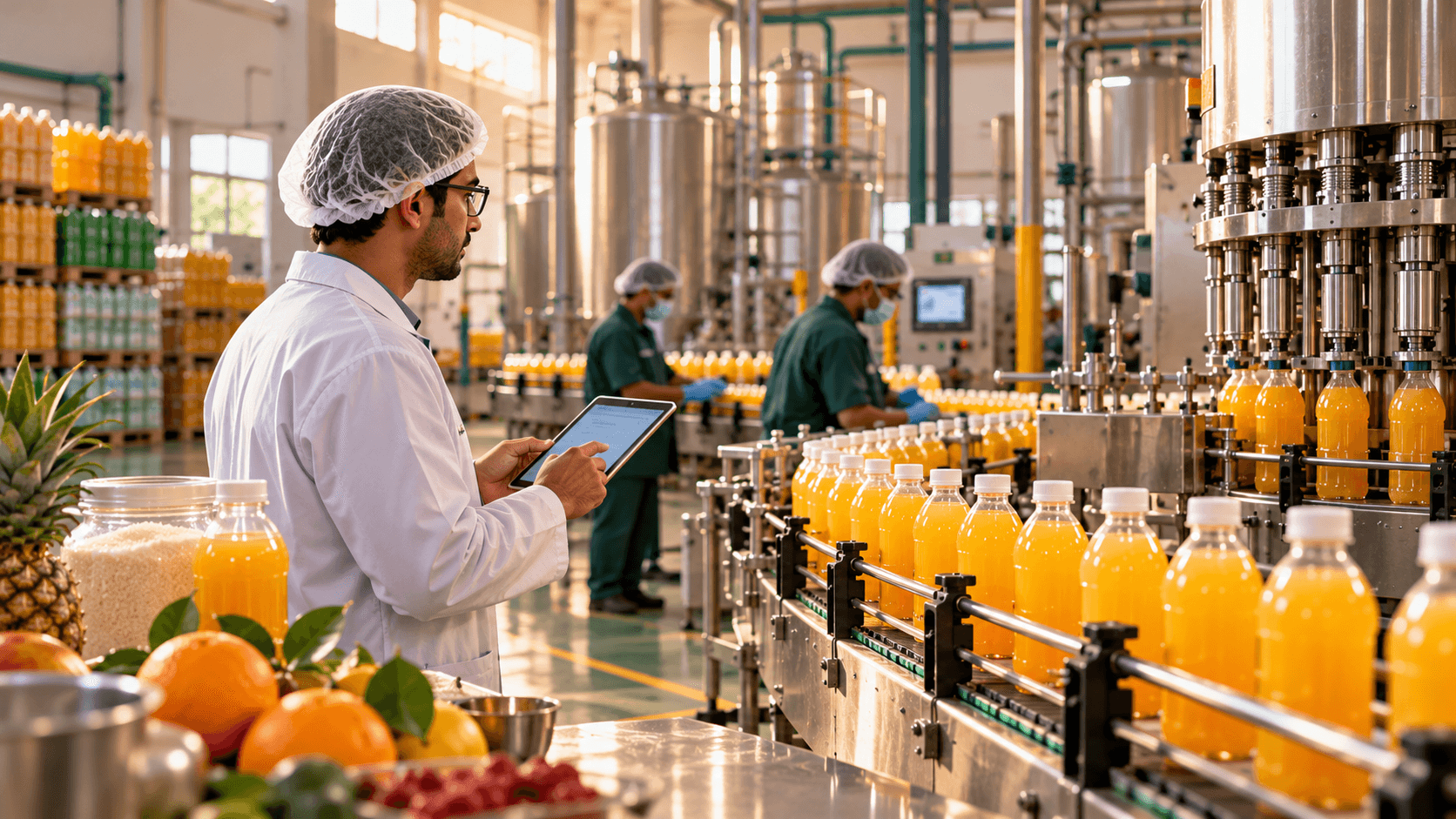
Beverage manufacturers must coordinate recipes, raw materials, production schedules, filling lines, packaging, quality checks and finished goods. When these activities are managed through separate spreadsheets or disconnected systems, it becomes harder to track production progress, control costs and respond to changing orders.
Beverage production management software helps manufacturers organise these activities in one system. It provides better visibility into production planning, material consumption, batch records, quality checks and output across the manufacturing process.
For businesses looking to connect production with inventory, procurement, sales and finance, a dedicated beverage manufacturing ERP solution can provide a more integrated approach.
What Is Beverage Production Management Software?
Beverage production management software is a digital system used to plan, monitor and manage beverage manufacturing operations.
Depending on the system, it can help manufacturers manage:
- Production orders and schedules
- Beverage recipes and formulations
- Raw materials and packaging requirements
- Batch production records
- Filling, bottling and packaging operations
- Quality inspections and approvals
- Production wastage and material consumption
- Finished goods and warehouse transfers
- Production costs and operational reports
Standalone production software may focus primarily on manufacturing activities. An ERP system can connect production with purchasing, inventory, sales, accounting and other business functions.
The right choice depends on the size of the operation, production complexity and the level of integration required.
Why Beverage Manufacturers Need Production Management Software
Beverage production involves more than mixing ingredients and filling bottles. Each production run may depend on ingredient availability, recipe accuracy, packaging stock, equipment capacity, quality requirements and delivery schedules.
Without a connected system, common challenges include:
1. Production planning difficulties
Manufacturers may receive orders for different flavours, bottle sizes, can formats or pack quantities. Planning these orders manually can lead to scheduling conflicts, material shortages or avoidable production delays.
Production management software helps teams organise production orders based on demand, available materials and production capacity.
2. Recipe and formulation errors
A beverage formulation may specify ingredients, quantities, processing instructions and quality parameters. Manual calculations or outdated recipe documents can create inconsistencies.
A suitable system can maintain approved recipe versions, calculate ingredient requirements and record which formulation was used for a particular batch.
3. Raw material and packaging shortages
A production run requires more than ingredients. Bottles, cans, caps, labels, cartons and other packaging materials must also be available.
Production planning connected to inventory helps identify shortages before work begins and supports more informed purchasing decisions.
4. Limited visibility into production performance
When production data is recorded manually, managers may struggle to determine how much was produced, how much material was consumed and where delays occurred.
Digital production records make it easier to compare planned and actual output, review wastage and identify recurring operational issues.
5. Batch traceability challenges
Manufacturers need to know which ingredients and packaging materials were used in a production batch and where the finished products were distributed.
When traceability records are fragmented, investigating quality complaints or identifying affected stock can take longer.
Integrated batch records help connect material lots, production activities, quality results and finished goods.
Essential Features of Beverage Production Management Software
Not every beverage business needs the same feature set. The following capabilities are useful starting points when evaluating a solution.
1. Production planning and scheduling
Production planning helps convert customer demand and stock requirements into actionable production orders.
Useful capabilities include:
- Creating and prioritising production orders
- Scheduling production by product and batch
- Reviewing available production capacity
- Checking ingredient and packaging availability
- Tracking planned versus actual production
- Monitoring order status and pending work
For example, a juice manufacturer planning several flavours in different pack sizes can use a central schedule to coordinate material availability and production requirements.
2. Recipe and formulation management
Recipe management helps maintain controlled formulations for different beverage products.
The system may support:
- Ingredient lists and standard quantities
- Recipe version control
- Batch-size calculations
- Approved substitutions, where permitted
- Processing instructions
- Expected yield and material requirements
- Links between recipes and production orders
Changes to formulations should follow the manufacturer’s approval process. The system should preserve the relevant version and production records for traceability.
3. Batch and lot management
Batch management connects production activities to the materials used and products manufactured.
Depending on operational requirements, the software can record:
- Production batch numbers
- Ingredient lot numbers
- Packaging material lots
- Manufacturing dates and shifts
- Batch quantities and yields
- Quality inspection results
- Rework or wastage records
- Finished goods lot references
This information supports investigations when a quality issue, customer complaint or material discrepancy occurs.
4. Raw material and packaging planning
Beverage production depends on the availability of ingredients and packaging components.
Inventory-linked production software can calculate material requirements using approved formulations and planned production quantities. It can also help teams identify low stock, reserved materials, expiry dates and upcoming purchasing requirements.
For businesses with multiple warehouses, stock transfers and location-wise inventory visibility can further improve planning.
5. Filling, bottling and packaging tracking
Filling and packaging are important stages in many beverage manufacturing operations.
Depending on the factory setup, software can record quantities processed through filling lines, packaging formats, rejected units, downtime and completed output.
Integration with production equipment or manufacturing execution systems may be required for automated machine-level data collection. A standard ERP screen alone should not be assumed to capture every machine reading automatically.
6. Quality control and inspections
Quality management helps teams document checks at relevant stages of production.
Possible checkpoints include:
- Incoming raw material inspection
- Ingredient measurement and mixing checks
- Product-specific laboratory tests
- Packaging and seal inspection
- Finished goods inspection
- Batch approval and release
- Non-conformance records and corrective actions
The checks and acceptance criteria should be configured according to the product, manufacturing process and applicable requirements.
7. Production wastage and yield tracking
Actual production output may differ from expected output because of process losses, rejected products, spills, equipment issues or other factors.
Production software can compare expected and actual material consumption, finished quantity and recorded losses. These reports help managers investigate deviations and improve process control.
8. Production dashboards and reports
A production dashboard gives supervisors and managers a consolidated view of operational activity.
Useful indicators may include:
- Planned versus completed production
- Batch status
- Material shortages
- Production yield
- Rejected quantities
- Downtime and delays
- Pending quality approvals
- Finished goods awaiting dispatch
The value of a dashboard depends on the accuracy and timeliness of the underlying data.
How Production Management Software Works in a Beverage Factory
A typical workflow may follow these steps:
- Demand planning: Review customer orders, sales forecasts and replenishment requirements.
- Production planning: Create production orders and assign schedules.
- Material planning: Calculate ingredient and packaging requirements and confirm availability.
- Batch preparation: Allocate materials and record the batch details.
- Manufacturing: Record mixing, processing and other relevant production stages.
- Quality checks: Capture inspection results and required approvals.
- Filling and packaging: Record completed quantities, rejections and packaging output.
- Finished goods: Update inventory with the approved production output.
- Dispatch and reporting: Connect available stock to sales orders and review production performance.
The exact workflow varies by beverage category, factory configuration and business process.
Beverage Businesses That Can Benefit
Beverage production management software can be configured for different manufacturing operations.
Juice and fruit beverage manufacturers
Manage fruit concentrates, ingredients, formulations, production batches, packaging materials and finished product inventory.
Soft drink and carbonated beverage manufacturers
Coordinate syrup preparation, ingredients, production schedules, filling operations and multiple packaging formats.
Bottled water manufacturers
Manage production planning, bottle and cap inventory, packaging output, quality records and dispatch workflows.
Dairy beverage manufacturers
Track ingredients, production batches, processing records, quality checks and storage requirements according to the manufacturing process.
Energy and sports drink manufacturers
Coordinate specialised formulations, ingredient requirements, packaging variants and batch-level production records.
Breweries and other specialised beverage producers
Manage production stages, raw materials, batch records, packaging and inventory according to the operation’s specific process and regulatory needs.
Beverage Production Software vs Beverage Manufacturing ERP
These terms are related, but they do not always mean the same thing.
| Capability | Production management software | Manufacturing ERP |
|---|---|---|
| Production orders and schedules | Core capability | Typically included |
| Recipe and batch management | Often included | Can be included |
| Material consumption and yield | Often included | Can be included |
| Quality checks | Depends on the product | Depends on ERP modules |
| Purchasing and supplier management | May be limited | Usually integrated |
| Sales and distribution | May require another system | Can be integrated |
| Finance and costing | May require another system | Can be integrated |
| Company-wide reporting | Production-focused | Cross-functional |
A standalone production system may be suitable when the main requirement is managing manufacturing activities.
A beverage manufacturing ERP may be more appropriate when the business wants to connect production with procurement, inventory, sales, finance and distribution. Review the actual feature scope of each product rather than relying on the category name alone.
How to Choose the Right Beverage Production Management Software
Before selecting a system, evaluate it against your actual factory workflow.
1. Map your production process. Document how orders, recipes, material allocation, manufacturing, quality checks and finished goods currently move through your business.
2. Check recipe flexibility. Confirm that the system supports your formulations, batch sizes, product variants and approval requirements.
3. Verify traceability. Ask whether you can trace a finished batch back to its ingredient lots and identify the finished stock associated with a particular material lot.
4. Review inventory integration. Production planning should account for ingredients, packaging, reserved stock, expiry dates and warehouse locations where relevant.
5. Evaluate reporting. Check whether supervisors can view production progress, material consumption, wastage and quality status without manually combining reports.
6. Assess integrations. Identify requirements for accounting, weighing systems, laboratory equipment, barcode scanners, filling lines or other factory systems.
7. Plan for implementation. Consider data migration, user training, testing, production downtime and the availability of ongoing support.
8. Compare the total cost. Review licensing, implementation, customisation, integrations, hosting, training and maintenance—not just the initial software price.
A practical evaluation should include a demonstration using representative products, production orders and batch scenarios from your own operation.
Should You Choose Custom Beverage Production Software?
Off-the-shelf software can be a good option when its workflows closely match your requirements and it provides the integrations you need.
Custom development may be worth considering when your business has specialised production processes, unique approval workflows, multiple business units, legacy systems or requirements that standard products cannot accommodate.
A custom solution should still use a clear scope, documented requirements, realistic milestones and a planned testing process. Customisation is most useful when it addresses a genuine operational need rather than adding complexity without a measurable benefit.
How Ozrit Can Help
Ozrit develops custom software solutions for businesses that need systems aligned with their operational workflows.
For beverage manufacturers, a tailored production management or ERP solution can be designed around requirements such as:
- Production planning and scheduling
- Recipe and formulation management
- Raw material and packaging inventory
- Batch tracking and traceability
- Quality checks and approvals
- Production output and wastage reports
- Warehouse, sales and finance integration
- Role-based dashboards and operational reporting
The final scope depends on the manufacturer’s processes, existing software, integration needs and budget.
Explore Ozrit’s beverage manufacturing ERP software development services to discuss a solution suited to your business.
Frequently Asked Questions
What is beverage production management software?
It is software that helps beverage manufacturers plan production, manage recipes, allocate materials, track batches, record quality checks and monitor manufacturing output.
Can beverage production software manage recipes and formulations?
Yes, many systems support ingredient lists, formulation versions, batch-size calculations and production instructions. The available controls vary by product.
Can it track production wastage?
Suitable systems can record material consumption, expected yield, actual output, rejected products and losses. Accurate reporting depends on how production data is captured.
Does beverage production software include inventory management?
Some products include inventory management, while others integrate with a separate inventory or ERP system. Confirm that both ingredients and packaging materials are covered.
What is the difference between production software and ERP?
Production software focuses mainly on manufacturing activities. ERP connects manufacturing with other business functions such as procurement, inventory, sales and finance, depending on the modules implemented.
Is custom beverage production software better than ready-made software?
Not necessarily. Ready-made software may be more suitable when its features match your needs. Custom software is worth evaluating when your workflows or integration requirements are not adequately supported by standard products.
How long does implementation take?
The timeline depends on scope, data migration, integrations, customisation and testing. A focused production management system may require less work than a full ERP implementation. A realistic schedule should be established after requirements are reviewed.
Conclusion
Beverage production management software can help manufacturers coordinate production orders, recipes, materials, quality checks, batch records and packaging operations. The right system improves operational visibility and gives teams more reliable information for day-to-day decisions.
When production needs to connect with purchasing, inventory, sales and finance, an integrated beverage manufacturing ERP may offer a more complete solution.
Start by documenting your production workflow, identifying the biggest operational gaps and evaluating software against real manufacturing scenarios. This approach helps you choose a system that supports your current requirements while leaving room for future growth.