Skip to content
Ozrit Logo

AI Development Services

Custom AI software, generative AI, agents and machine learning, built around one business problem and connected to the systems you already run.

OZRIT is an AI development company in Hyderabad, India, working with startups and enterprises worldwide. We take AI from use-case workshop to a monitored production system.

Tell us what you want AI to do

A consultant replies within one business day. No sales deck.

We use your details only to reply to this request. See our privacy policy.

We build with OpenAI GPT, Anthropic Claude, Google Gemini, Meta Llama, Mistral, Hugging Face, LangChain, LlamaIndex, PyTorch, TensorFlow, AWS Bedrock, Azure OpenAI, Google Vertex AI, Pinecone, pgvector, MLflow.

What our AI development services deliver

OZRIT is an AI development company and AI solutions provider. Our AI software development services, also called artificial intelligence development services, cover the whole job for enterprises and startups across India and overseas, from the first workshop to a monitored system in production.

  • Advise

    Use-case workshops and data reviews that rank your AI ideas by value and risk, and turn them into a roadmap you can fund in stages.

  • Build

    Custom AI applications, generative AI and LLM assistants, AI agents, chatbots and machine learning models, engineered end to end by one team.

  • Integrate

    AI added to your ERP, CRM, app or website through APIs and small services, without rebuilding what already works.

  • Prove first

    A pilot on your own data in 4 to 8 weeks, with success measures agreed up front, before you commit to the full build.

  • Secure

    Private deployment in your own cloud, role-based access and masked data, from an ISO/IEC 27001:2022 certified team.

  • Run

    Monitoring, evaluation, retraining and cost control after launch, so the AI keeps performing as your data changes.

  • Hand over

    You own the code, prompts and your data, with documentation your own team can carry on from.

  • Extend your team

    Add AI, data and software engineers to your own team on a monthly basis, ramped up in 10 to 15 business days.

OZRIT engineers and designers building an AI platform together, with data, apps, models and workflows connected around a central AI core

Our AI development services

Fifteen areas of AI work. Scroll to move through them, or pick one.

AI consulting and use-case discovery

Workshops and data reviews that rank your AI ideas by value and risk, then turn them into a roadmap you can fund in stages.

AI consulting services
  • Use-case workshops with your team
  • Data readiness and privacy review
  • Build, buy or integrate comparison
  • Value and risk score for each idea
  • Phased roadmap and pilot scope

AI development for your industry

The same AI techniques behave differently in each sector, because the data, the rules and the cost of a mistake differ. Here is where we usually start.

  • Fintech and banking

    Fraud signals, credit scoring, document checks and support assistants.

  • Healthcare and wellness

    Record summaries, triage support, scheduling and personalised plans.

  • Retail and eCommerce

    Product search, recommendations, demand forecasting and support bots.

  • Logistics and supply chain

    Route planning, ETA prediction, document processing and exception alerts.

  • Education

    Tutoring assistants, content generation, assessment help and engagement analytics.

  • Real estate

    Lead qualification, property search, valuation support and document handling.

  • IT and software companies

    Code and ticket assistants, test generation and AI features inside products.

  • Food and beverage manufacturing

    Demand planning, batch quality checks and traceability queries.

  • Construction

    Cost forecasting, material planning and site report summaries.

  • Sales and field teams

    Lead scoring, call insights and route optimisation for on-ground staff.

From business problem to working AI system

Pick the job you want AI to do. You will see the system we would build for it, how we keep it safe, what it plugs into and how we would judge whether it works.

Answer questions from our own knowledge

First working assistant in 4 to 8 weeks

  1. Data in

    Policies, manuals, wikis, tickets and product data, split and indexed with their permissions intact.

  2. Intelligence

    Retrieval finds the right passages; a language model writes the answer from them only.

  3. Safeguards

    Answers cite their source, refuse out-of-scope questions and hide what the asker may not see.

  4. Connects to

    Your website, helpdesk, Slack or Teams, WhatsApp and internal portals.

  5. Measured by

    Share of questions answered correctly, tickets deflected and time to answer.

What you get

  • Private knowledge assistant with source citations
  • Admin view to add, remove and re-index content
  • Evaluation set built from your real questions

How we build AI that holds up in a real business

Four working principles run through every AI project we deliver, from a small assistant to a platform that serves a whole company.

  1. Applied AI engineering, tied to a business measure

    Data scientists, ML engineers and software developers work in one team, so every model is built for a result you can count, not for a demo.

    • Predictive models, language models and retrieval (RAG) systems chosen for the job, not the trend
    • A target measure agreed before build: hours saved, tickets deflected, errors caught
    • A test on your own data before the second phase is funded
    An AI engineer at a workstation reviewing a language model, chat, vision and analytics tools
  2. Infrastructure that grows with your data

    Your documents, databases and apps feed the model through pipelines built to keep working as volume, users and sources increase.

    • Connects to the systems you already run, in batch or as a live stream
    • Monitoring for drift, slow responses and failed calls, with alerts to a named owner
    • Cost controls on model calls, so a busy month does not become a surprise bill
    Documents, databases and cloud services flowing into a glowing AI model across a bridge
  3. Models you can check and explain

    Output quality starts with the data. We clean it, test the model on cases from your own domain, and keep a record of why it answered as it did.

    • Evaluation sets built from real examples, re-run on every model or prompt change
    • Bias and failure testing before release, not after a complaint
    • Answers that cite their source, so a person can verify them in a click
    A team reviewing model accuracy, forecasting and analytics dashboards together
  4. Governance your compliance team can review

    Risk, privacy and oversight are planned at the start. We use published frameworks as the reference, and we document what the system does and who can change it.

    • Risk planning aligned to the NIST AI Risk Management Framework and ISO/IEC 23894
    • Access control, data handling and human sign-off steps written into the design
    • A written record of data sources, model versions and decisions for your auditors
    See the certifications and frameworks
    A leadership team reviewing an AI strategy around a holographic city model

Certifications and frameworks behind our AI work

OZRIT is certified to ISO/IEC 27001:2022 and ISO 9001:2015. The AI frameworks below are published standards and technical specifications, not certificates. We use them as the reference when we plan risk, governance and security for an AI project, so your compliance team finds familiar language in what we deliver.

Certifications OZRIT holds

  • ISO/IEC 27001:2022

    Information security management

    How OZRIT protects client data and systems, audited by an accredited body. It governs every AI project we run.

  • ISO 9001:2015

    Quality management

    A documented, audited process for how we plan, deliver and improve engineering work.

Frameworks and standards we work to

Published by NIST, ISO and IEC. They describe how to manage AI well; there is no certificate to hold for them.

  • NIST AI Risk Management Framework mark

    NIST AI RMF

    AI Risk Management Framework

    A voluntary framework for governing, mapping, measuring and managing the risks of AI systems.

  • NIST logo, publisher of the Generative AI Profile

    NIST AI 600-1

    Generative AI Profile

    A companion to the AI RMF that lists risks specific to generative AI and ways to manage them.

  • ISO/IEC 42001 AI management systems mark

    ISO/IEC 42001

    AI management systems

    Requirements for setting up, running and improving an organisation-wide management system for AI.

  • ISO/IEC 23894 AI risk management mark

    ISO/IEC 23894

    AI risk management

    Guidance on identifying, assessing and treating risks across the life of an AI system.

  • ISO and IEC logos for ISO/IEC 23053

    ISO/IEC 23053

    Framework for AI using machine learning

    A common description of the parts of a machine learning system and how they fit together.

  • ISO and IEC logos for ISO/IEC 22989

    ISO/IEC 22989

    AI concepts and terminology

    Shared definitions for AI, so teams, clients and auditors mean the same thing by the same word.

  • Need AI that passes your security review?

    Tell us your compliance requirements and we will say how a project would meet them.

    Talk to our team

ISO, IEC and NIST names and marks belong to their owners and appear here only to identify the standards and frameworks. They do not indicate endorsement of OZRIT.

AI-enabled products we have built

Two products from our portfolio where AI sits inside a working system. Each links to its full case study with the client's own words.

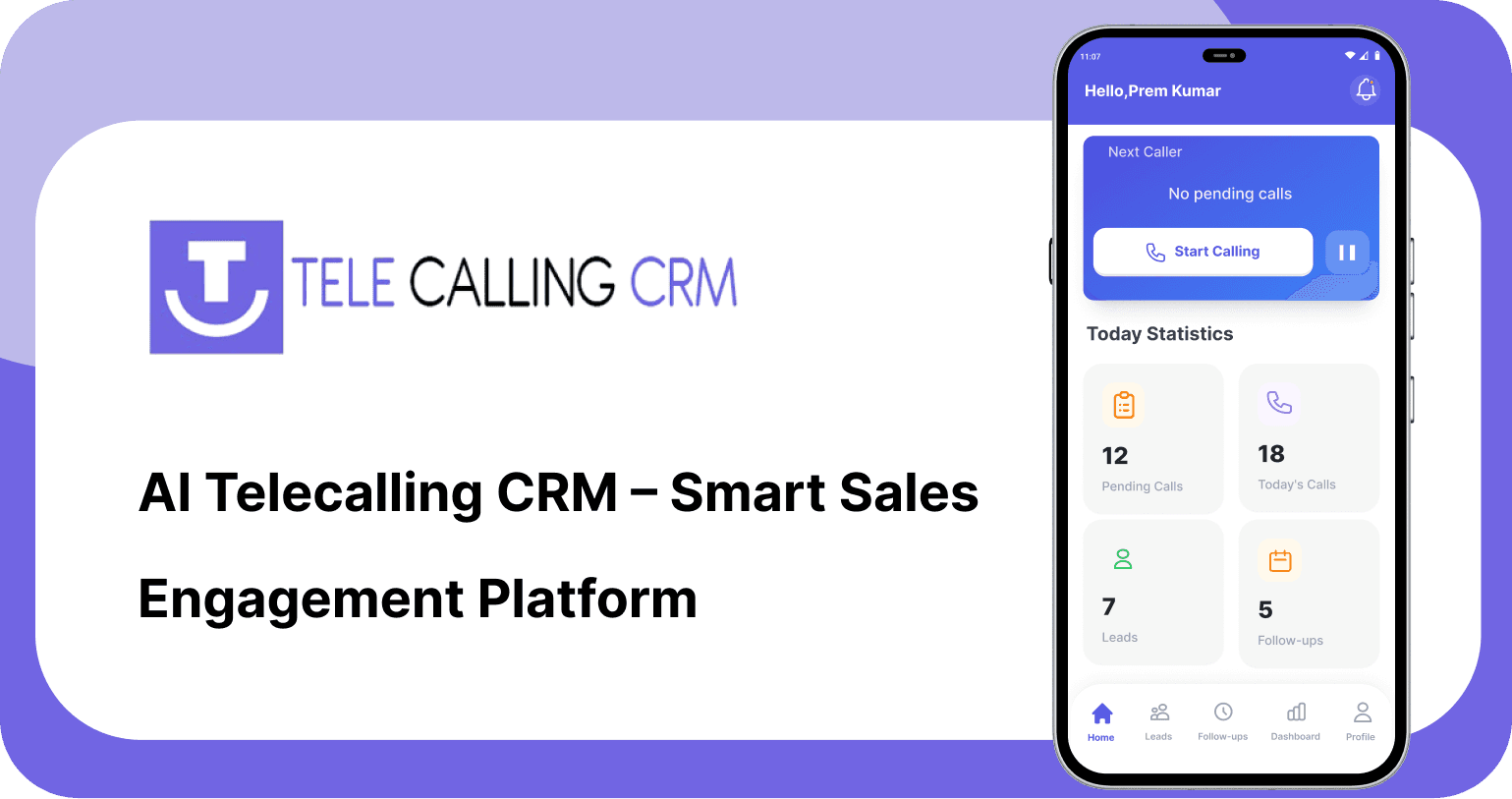
TeleCalling CRM mobile app showing next caller, pending calls and follow-ups, built by OZRIT with AI lead insights

TeleCalling CRM

An AI-powered CRM for sales teams that run cold calling and lead follow-up, built for a founder in India.

OZRIT built the CRM with AI-driven lead insights, auto-dialing, call tracking and follow-up automation, so agents work the leads most likely to convert instead of dialling from spreadsheets.

team productivity
+40%
lead management
+36%
conversion rate
+29%

6 months: 5 engineers, 1 designer, 1 QA engineer, 1 project lead

Read the case study
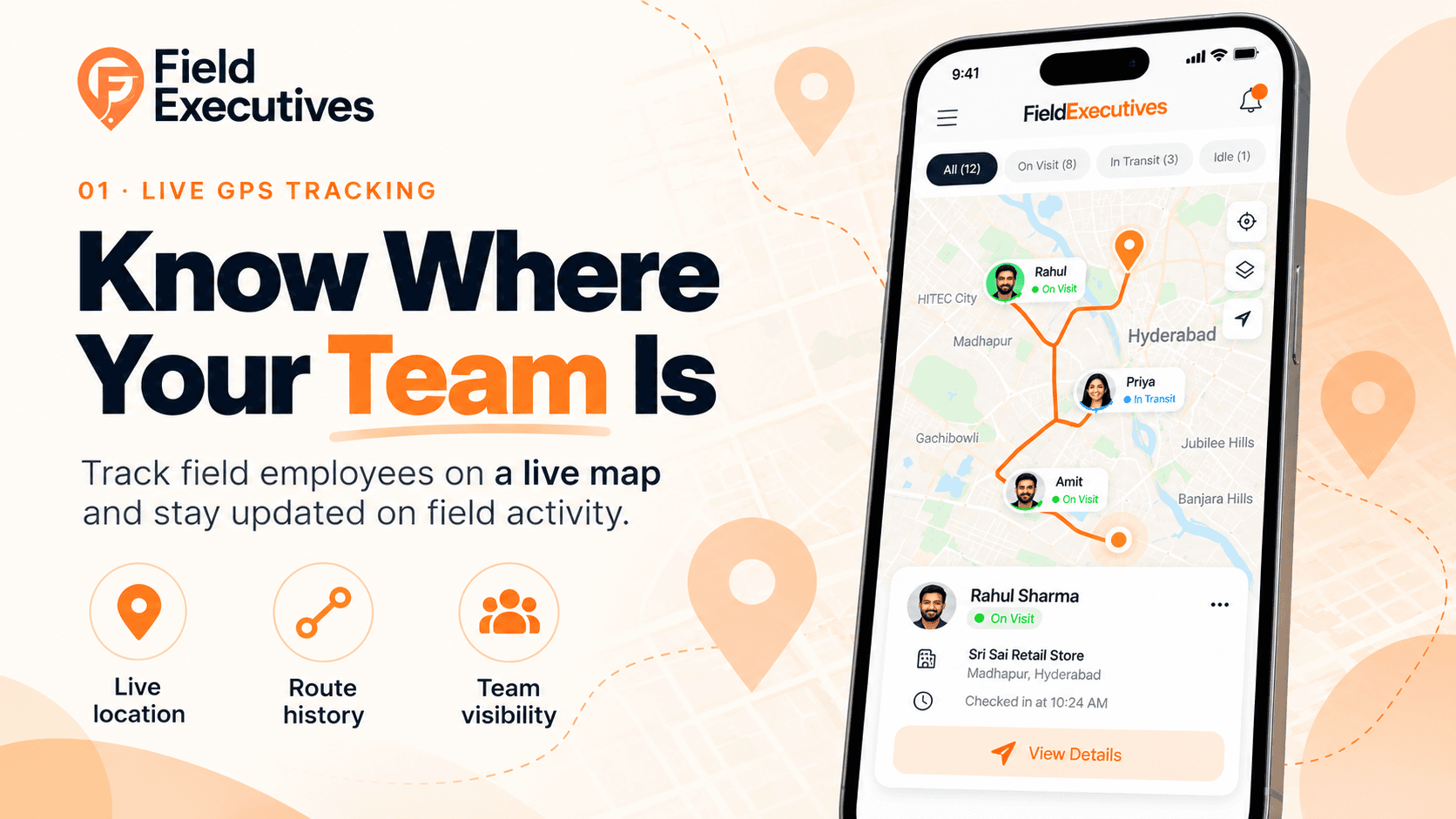
FieldExecutives live team map on a phone showing field staff on visits in Hyderabad, with AI route optimisation built by OZRIT

FieldExecutives

A field force management product for companies whose sales reps, technicians and delivery staff work on the road.

OZRIT built the Flutter field app, manager console and admin portal in under six weeks, including AI route optimisation, geofenced attendance, spoof detection and proof of visit.

idea to launch
<6 wks
travel time saved
20-30%
full rollout
3-5 days

Under 6 weeks: 4 engineers, 1 designer, 1 QA engineer, 1 project lead

Read the case study

More work is on our case studies page.

Models, frameworks and platforms we work with

We pick on accuracy, cost, speed and privacy for your use case. Nothing here is a reseller arrangement, so the recommendation is whichever fits, including open-weight models you can host yourself.

Language and multimodal models

Chosen per task, cost and privacy need

  • OpenAI GPT
  • Anthropic Claude
  • Google Gemini
  • Meta Llama
  • Mistral
  • Hugging Face models

Frameworks and libraries

For building, testing and serving

  • LangChain
  • LlamaIndex
  • PyTorch
  • TensorFlow
  • scikit-learn
  • FastAPI

Data and vector search

Your data, searchable and permissioned

  • PostgreSQL + pgvector
  • Pinecone
  • Weaviate
  • Elasticsearch
  • Apache Airflow
  • Redis

Cloud and MLOps

From notebook to production

  • AWS Bedrock and SageMaker
  • Azure OpenAI and ML
  • Google Vertex AI
  • MLflow
  • Docker
  • Kubernetes

AI techniques we build with

Matched to the problem, not the trend

  • Machine learning
  • Generative AI
  • Agentic AI
  • Retrieval-augmented generation (RAG)
  • Natural language processing (NLP)
  • Computer vision
  • Speech recognition
  • Predictive analytics
  • Explainable AI
  • Edge AI

Custom AI or ready-made AI tools?

Both are valid. The right choice depends on your requirements, your budget, the systems you already use and who will maintain the software. Custom AI development is not automatically better for every company.

Ready-made tools may be enough when

  • Your process is standard and a mature product already covers it
  • Speed matters more than fit, and a conventional set-up is fine
  • Your approvals and data rules are simple
  • You prefer a vendor-maintained product and its upgrade schedule

Custom AI development is worth evaluating when

  • The AI must work on your own documents, data or workflows
  • It has to connect to internal systems that off-the-shelf tools do not support
  • Privacy, residency or audit rules limit where data can go
  • AI is a feature inside your own product, not a separate tool
  • Usage will be high enough that per-seat pricing becomes the larger cost

We compare both in discovery and tell you plainly which fits. Sometimes the best answer is an existing tool with a small integration, and we would rather say so than build something you do not need.

Secure, private and responsible AI

The questions a security or compliance team will ask about enterprise AI, answered before they have to. These are the safeguards we build into every AI project.

OZRIT is ISO/IEC 27001:2022 certified for information security.

Where your data lives

Models can run in your own cloud account or on private endpoints, with provider settings that stop your data being used for training. You choose the region.

Access control

Assistants respect the permissions of the person asking. Someone who cannot open a document cannot get its content through a chat window either.

Sensitive data

Personal and financial fields can be masked before they reach a model, and logs can be redacted or kept inside your environment.

Wrong or invented answers

We ground answers in retrieved sources, show the citation, and set a confidence threshold below which the system says it does not know or hands over to a person.

Prompt injection and misuse

Inputs are filtered, tool permissions are kept narrow, and risky actions need explicit approval, so a crafted message cannot make the system do what it should not.

Testing before launch

We build an evaluation set from your real cases and measure accuracy, safety and cost before and after every change, not just once at launch.

People stay in the loop

Review queues, approval steps and easy overrides are built in where an error would be costly. You decide how much runs on its own.

Certification and ownership

OZRIT is ISO/IEC 27001:2022 certified for information security. You own the code, prompts, models you commission and your data.

AI development cost and engagement models

AI projects vary too much for an honest flat price. Choose how you want to start, and we will give a fixed-scope or time-and-materials quote once discovery shows what the work involves.

  • Discovery sprint

    From $1,000

    Best when: You have an idea and want proof before committing

    You get: Use-case ranking, data review, a tested prototype and a scoped quote

  • Fixed-scope project

    Fixed price per phase

    Best when: A defined use case with clear acceptance criteria

    You get: A pilot, then a production build with integrations, testing and handover

  • Dedicated AI team

    Monthly rate

    Best when: A roadmap of AI work that will run for months

    You get: AI, data and software engineers added to your team, ramped in 10 to 15 business days

  • Support and MLOps

    Monthly retainer

    Best when: AI already live that needs care

    You get: Monitoring, evaluation, retraining, cost control and new features

What moves the quote

Six things decide the cost of AI development. We go through each one with you in discovery. Team rates are on How We Work, and you can hire AI developers directly.

  • Use case and accuracy needed

    Higher accuracy and stricter safety rules mean more testing and tuning.

  • Data readiness

    Clean, reachable data is quick to use. Data scattered across systems takes work first.

  • Build approach

    Using a hosted model through an API costs less than training or fine-tuning your own.

  • Integrations

    Each connection to your CRM, ERP or app adds design and testing.

  • Security and hosting

    Private cloud or on-premise deployment costs more than public APIs.

  • Running costs

    Model usage, hosting and monitoring continue after launch. We estimate them up front.

Our AI development process

Our AI implementation services follow seven steps in two phases. The first phase proves the idea on your own data before you commit to the second.

Phase 1: prove the idea on your data

Usually 4 to 8 weeks

  1. 1

    Use-case discovery

    We agree the decision or task to improve, who uses it, and the number that will show it worked.

  2. 2

    Data assessment

    We review quality, access and privacy, and tell you plainly what is possible with the data you have.

  3. 3

    Prototype and evaluation

    We build a small working version and test it on real examples, with a simple baseline to compare against.

  4. 4

    Pilot

    A limited group uses it in real work. We measure results and decide together whether to scale.

Phase 2: build, launch and run it

Usually 2 to 4 more months

  1. 5

    Build and integrate

    We build the full solution and connect it to your systems, with security and cost limits in place.

  2. 6

    Test and secure

    We test accuracy, safety, performance and security against your acceptance criteria before launch.

  3. 7

    Deploy and monitor

    We launch, watch quality and cost, and keep improving as real usage shows what to change.

Why companies choose OZRIT as their AI development company

We are a software company first, so AI arrives as part of a product that works, not as a standalone experiment.

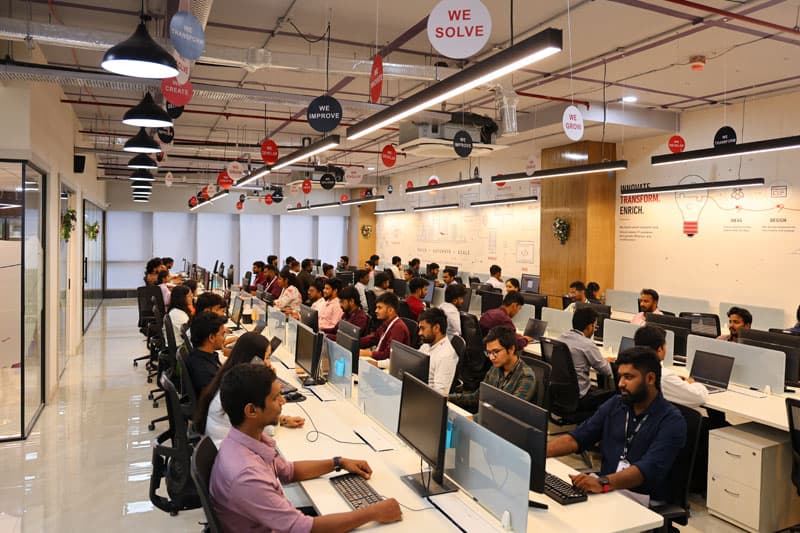
OZRIT engineers working together at the Hyderabad office on AI and software development projects

500+

in-house engineers under one roof in Hyderabad

Our engineering floor in Hyderabad, where the AI, data and software teams sit together.
  • Engineers who ship software, not just models

    AI engineers, data engineers, developers and designers work as one team, so the assistant lands inside a product people use.

  • No model loyalty

    We work with OpenAI, Anthropic, Google, Meta and open-weight models and pick on accuracy, cost and privacy, not on a partnership.

  • We will tell you when AI is not the answer

    If a rule, a report or a better form would do the job, we say so in discovery, before you spend on a model.

  • You own what we build

    Code, prompts, pipelines and data belong to you, with documentation so your team or another vendor can carry on.

AI development services: frequently asked questions

Straight answers on cost, timelines, data, security and ownership.

What is the difference between AI and machine learning?

AI is the broad goal of making software act intelligently. Machine learning is a method within AI where models learn patterns from data. Most business AI today combines machine learning models, rules and large language models, which is why our AI development services cover all three.

What are AI development services?

AI development services cover everything needed to turn AI into working software: finding the right use case, preparing data, building and testing models or assistants, connecting them to your systems, and monitoring them after launch. They include AI consulting, custom AI software development, generative AI, AI agents, chatbots and machine learning.

What does an AI development company do?

An AI development company helps you decide where AI will pay off, then designs, builds, secures and runs the solution. At OZRIT that means AI engineers, data engineers, software developers and designers working as one team, so the AI is built into your product or workflow rather than left as a demo.

How much do AI development services cost?

The cost depends on the use case, data quality, integrations, accuracy needed and hosting. A discovery sprint from $1,000 tests the idea on your own data and ends with a fixed-scope or time-and-materials quote. Team rates are on our How We Work page.

How long does it take to build an AI solution?

A discovery and pilot usually take 4 to 8 weeks. Moving a proven pilot into production, with integrations, security and monitoring, typically takes another 2 to 4 months. Simple features built on hosted models can be faster.

Which AI services does OZRIT provide?

AI consulting and discovery, custom AI software development, generative AI and LLM development, RAG assistants, AI agents and workflow automation, chatbots and conversational AI, ChatGPT and OpenAI integration, machine learning and predictive analytics, computer vision and document AI, AI integration into existing systems, and MLOps support.

Can you add AI to our existing software?

Yes. Most projects extend an existing product. We connect AI through APIs or small services, so your ERP, CRM, app or website gains AI features without a rebuild.

Do we need a lot of data to start?

Not always. Many modern AI features use pre-trained models plus your own documents, which needs far less data than training from scratch. We check your data in discovery and tell you plainly what is possible.

How do you keep our data private and secure?

We can run models in your own cloud account, use private endpoints and no-training API settings, mask sensitive fields, apply role-based access and keep logs inside your environment. OZRIT is ISO/IEC 27001:2022 certified.

How do you reduce wrong or invented answers from generative AI?

We ground answers in your own documents through retrieval, show the source, set a confidence threshold so the system says when it does not know, and test against an evaluation set built from your real questions. Where an error would be costly, a person reviews first.

Should we build custom AI or use ready-made tools?

Ready-made tools are often right when your process is standard and speed matters most. Custom AI makes sense when you need your own data, workflows, integrations, privacy rules or a feature inside your own product. We compare both honestly in discovery.

Do you work with startups as well as enterprises?

Yes. Startups usually want a fast first version to test with users. Enterprises need security reviews, integrations and governance, and we plan for those from the start.

Can I hire AI engineers from OZRIT?

Yes. You can add AI and data engineers to your team on a monthly basis, with a typical ramp-up of 10 to 15 business days. See our hire AI developers page for roles and engagement details.

How do you measure whether the AI works?

We agree the success measures up front, such as accuracy, time saved, tickets resolved or conversion, and test against real examples before and after launch. Results are tracked on a dashboard so you can see them without asking us.

How do I choose an AI development company?

Ask who will actually do the work, for working examples close to your problem, and how they test accuracy before launch. Check the security certification, who owns the code and data, and whether they will tell you when AI is not the right answer. At OZRIT the engineers who scope your project are the ones who build it, and we hold ISO/IEC 27001:2022 certification.

What are the benefits of retrieval-augmented generation (RAG) for enterprises?

RAG lets an assistant answer from your own documents and systems, with the source shown, instead of from the model's memory alone. It cuts wrong answers, keeps answers current without retraining the model, respects who is allowed to see what, and usually costs less than fine-tuning a model.

What support do you provide after an AI system goes live?

We offer a support and MLOps plan that covers monitoring for drift and failures, accuracy checks against your test set, model and prompt updates, retraining when needed and cost control. A named engineer owns it, and response times are agreed in the contract.

Who owns the code, models and data?

You do. The code, prompts, pipelines and any models we build for you belong to you, along with your data. Third-party models stay under their providers' own terms, which we explain up front.


Start with a free AI consultation

Tell us the job you want AI to do, even if you are not sure it is possible. A consultant will tell you plainly whether AI fits, what it would take and what a first release could look like.

What happens next

  1. 1An AI consultant reads your note and may reply with a few questions.
  2. 2We hold a call to understand the problem, your data and the systems involved.
  3. 3If AI fits, we propose a discovery sprint or a scoped pilot with clear success measures.

We use your details only to reply to this request. See our privacy policy.